Fantasy Press: From Pulp to Serious Sci-Fi
Eshbach: Editor, Author and Publisher
While he doesn’t have the same name recognition as Heinlein or Asimov, Lloyd Arthur Eshbach was arguably just as important for mid-century science fiction. Eshbach is responsible for Fantasy Press, a publisher of high-quality science fiction novels during the 1950s. Works from Fantasy are a favorite among collectors, not only because of the quality of the books, but because of their content. Edward E. “Doc” Smith, Robert Heinlein and John W. Campbell were among the authors Eshbach published during his tenure.

Motivation
In the 1940s and 50s science fiction was relegated to the pages of pulp magazines. Major publishers viewed science fiction as low-brow, relegating sci-fi to the pulp publications. Printed on low-quality paper and meant to be disposable, these works didn’t last. As both a science fiction fan and writer, Eshbach wanted to change that. So he created Fantasy Press, a place not only for high-quality printing, but high-quality writing as well. His success proved there was a more sophisticated market for science fiction.
Collecting Fantasy Press Books
Collectors value Fantasy Press for their shelf appeal. Eshbach hired mid-century space age artists like Ric Binkley, Edd Cartier and Hannes Bok to create stunning, wrap-around dust jacket art that is highly valued by collectors.
One of the more collectible books from Fantasy Press is Eshbach’s own “Tyrant of Time,” a collection of some of his short stories. When evaluating a copy of this book, look at the cover of the boards. They should be a vibrant red color with gilt lettering on the spine. Blue boards indicate a later binding. The copywrite of a first edition is so stated and the dust jacket should show a price of $3.00. There is also a limited edition that contains a numbered signature plate signed by Eshbach, and are generally valued significantly higher than the first trade edition.
Beware of collector traps
Fantasy Press is not to be confused with Fantasy Publishing Company, Inc., which is an easy mistake to make. FPCI was based in Los Angles while Fantasy Press was in Reading, Pennsylvania. Both published during the same time period and were important for the Golden Age of science fiction.
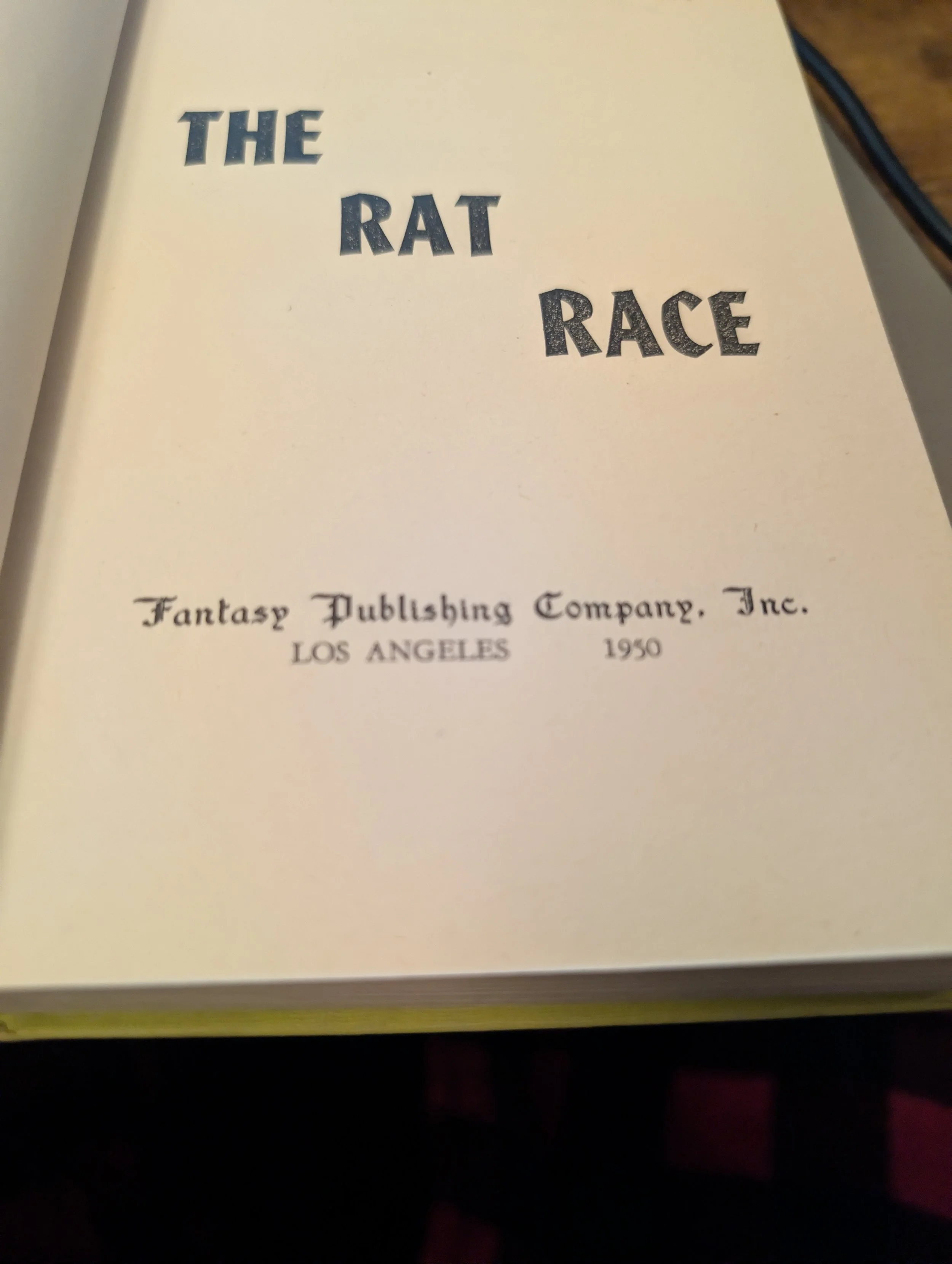
To use an example from Fantasy Publishing Company, we can look at “The Rat Race” by Jay Franklin. This book featured a dust jacket by Jack Gaughan. This was one of Gaughan’s first professional dust jackets, and he later became a giant in the world of science fiction book art.
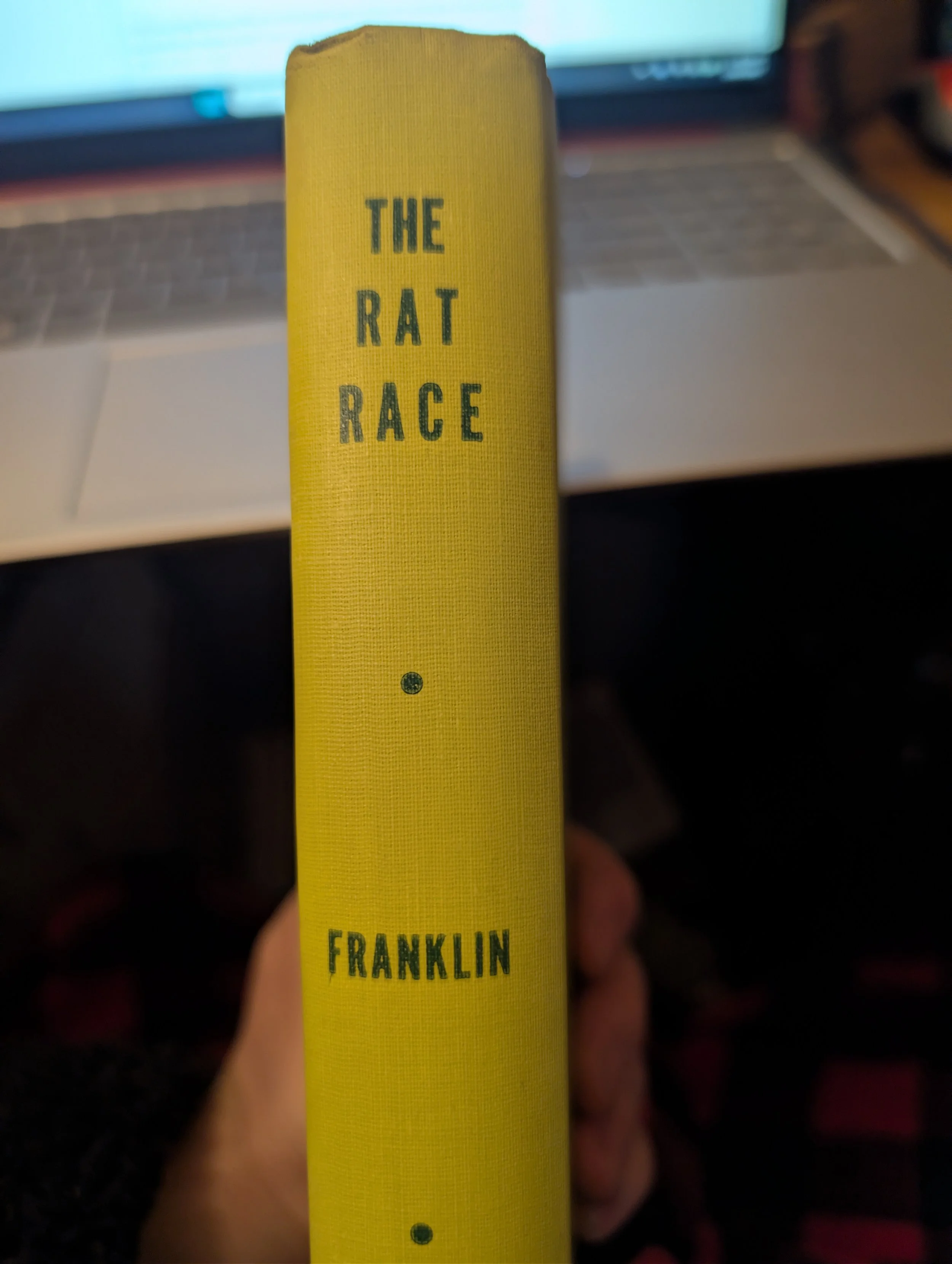
True first editions of this book should have bright yellow-green boards. Boards of other colors indicate a later edition or printing. The true first printings will have dark green lettering on the spine - later printings used black ink. “First Edition” is stated on the copyright page, and the dust jacket should display a price of $3.00.
With the potential of misidentifying a printing or edition, it’s especially important to source books for your collection from known and trusted sellers. At the Quill and Parchment we don’t just sell books; we source verified first editions with the points of issue that matter to serious collectors. Whether its the color of lettering on a rare binding or a pristine Jack Gaughan cover, we personally inspect every volume to ensure it meets the highest standards. Our most collectable works all include a detailed monograph explaining these points of issue, so you can be sure you’re purchasing a truly rare book or first edition.
Fantasy Press set the standard for the shift from pulp to serious sci-fi, but to see how other boutique publishers handled this transition—often with more volatile print runs—view our monograph on the legacy of Gnome Press.
You can browse our inventory of Fantasy Press and FPCI works, among others, here.
Have questions about a specific printing or need help identifying a “point of issue” in your own collection? Drop us a line - we’re always happy to talk shop with a fellow bibliophile.