Story & Significance
What makes a first edition of A Moveable Feast worth seeking out isn't just the Paris material, it's the fact that Hemingway never finished preparing it for publication himself. He died in 1961 with the manuscript in draft form, and it was his widow Mary Hemingway who edited and arranged the sketches into the book Scribner's published in 1964. Every first edition in circulation is therefore a posthumous text, shaped by an editorial hand that wasn't the author's own, which is part of why the ongoing scholarly debate over Mary's edits versus Hemingway's intentions (a debate that eventually produced a competing "Restored Edition" in 2009) gives this particular printing its own collecting identity. Owning the 1964 first isn't just owning early Hemingway, it's owning the version of the book that stood as the only version for over four decades.
This copy carries an added layer of provenance in the form of a previous owner's bookplate on the front pastedown, discussed further below.
Physical Description
This is a first edition, first printing, Charles Scribner's Sons, 1964, condition Near Fine minus. The binding is tight and square, the corners are unbumped, and the text block is clean throughout with no writing, underlining, or foxing. The book itself does contain a previous owner's bookplate affixed to the front pastedown; except for a miniscule mark on the front free end paper, pages are otherwise unmarked, and the bookplate does not affect any text or plate.
The dust jacket, rated Very Good, shows more wear than the book it covers: the front flap has been price clipped, there are chips along the edges and open tears, and a small open tear runs into the rear panel. Because the price has been clipped, the jacket alone can't be used to confirm which of Scribner's early price points this copy originally carried; the copyright page code, which is present and consistent with the first printing, is the primary evidence for the printing identification here, and is sufficient on its own to establish first edition status.
Collector's Note
Price clipped jackets are common on this title. A Moveable Feast has been reprinted steadily since 1964 and sold in volume through book clubs and later Scribner's printings, so first editions with an intact, unclipped price flap command a real premium over ones like this. That doesn't make a clipped copy undesirable, it just changes who the buyer is: this copy suits a reader collector or a Hemingway completist building a reading set of firsts rather than someone chasing a jacket in pristine, price-intact condition. A tight, unmarked text block with honestly disclosed jacket wear and a clearly documented bookplate is exactly the kind of copy that lets a buyer know precisely what they're getting, which matters more on a title this frequently misdescribed online.
The bookplate on the front pastedown is disclosed here and is shown clearly in the listing photographs, both for buyers who'll be reassured by seeing exactly what it looks like and for those who prefer a completely unmarked pastedown and will self-select out.
See our other classic literature titles.
Story & Significance
What makes a first edition of A Moveable Feast worth seeking out isn't just the Paris material, it's the fact that Hemingway never finished preparing it for publication himself. He died in 1961 with the manuscript in draft form, and it was his widow Mary Hemingway who edited and arranged the sketches into the book Scribner's published in 1964. Every first edition in circulation is therefore a posthumous text, shaped by an editorial hand that wasn't the author's own, which is part of why the ongoing scholarly debate over Mary's edits versus Hemingway's intentions (a debate that eventually produced a competing "Restored Edition" in 2009) gives this particular printing its own collecting identity. Owning the 1964 first isn't just owning early Hemingway, it's owning the version of the book that stood as the only version for over four decades.
This copy carries an added layer of provenance in the form of a previous owner's bookplate on the front pastedown, discussed further below.
Physical Description
This is a first edition, first printing, Charles Scribner's Sons, 1964, condition Near Fine minus. The binding is tight and square, the corners are unbumped, and the text block is clean throughout with no writing, underlining, or foxing. The book itself does contain a previous owner's bookplate affixed to the front pastedown; except for a miniscule mark on the front free end paper, pages are otherwise unmarked, and the bookplate does not affect any text or plate.
The dust jacket, rated Very Good, shows more wear than the book it covers: the front flap has been price clipped, there are chips along the edges and open tears, and a small open tear runs into the rear panel. Because the price has been clipped, the jacket alone can't be used to confirm which of Scribner's early price points this copy originally carried; the copyright page code, which is present and consistent with the first printing, is the primary evidence for the printing identification here, and is sufficient on its own to establish first edition status.
Collector's Note
Price clipped jackets are common on this title. A Moveable Feast has been reprinted steadily since 1964 and sold in volume through book clubs and later Scribner's printings, so first editions with an intact, unclipped price flap command a real premium over ones like this. That doesn't make a clipped copy undesirable, it just changes who the buyer is: this copy suits a reader collector or a Hemingway completist building a reading set of firsts rather than someone chasing a jacket in pristine, price-intact condition. A tight, unmarked text block with honestly disclosed jacket wear and a clearly documented bookplate is exactly the kind of copy that lets a buyer know precisely what they're getting, which matters more on a title this frequently misdescribed online.
The bookplate on the front pastedown is disclosed here and is shown clearly in the listing photographs, both for buyers who'll be reassured by seeing exactly what it looks like and for those who prefer a completely unmarked pastedown and will self-select out.
See our other classic literature titles.

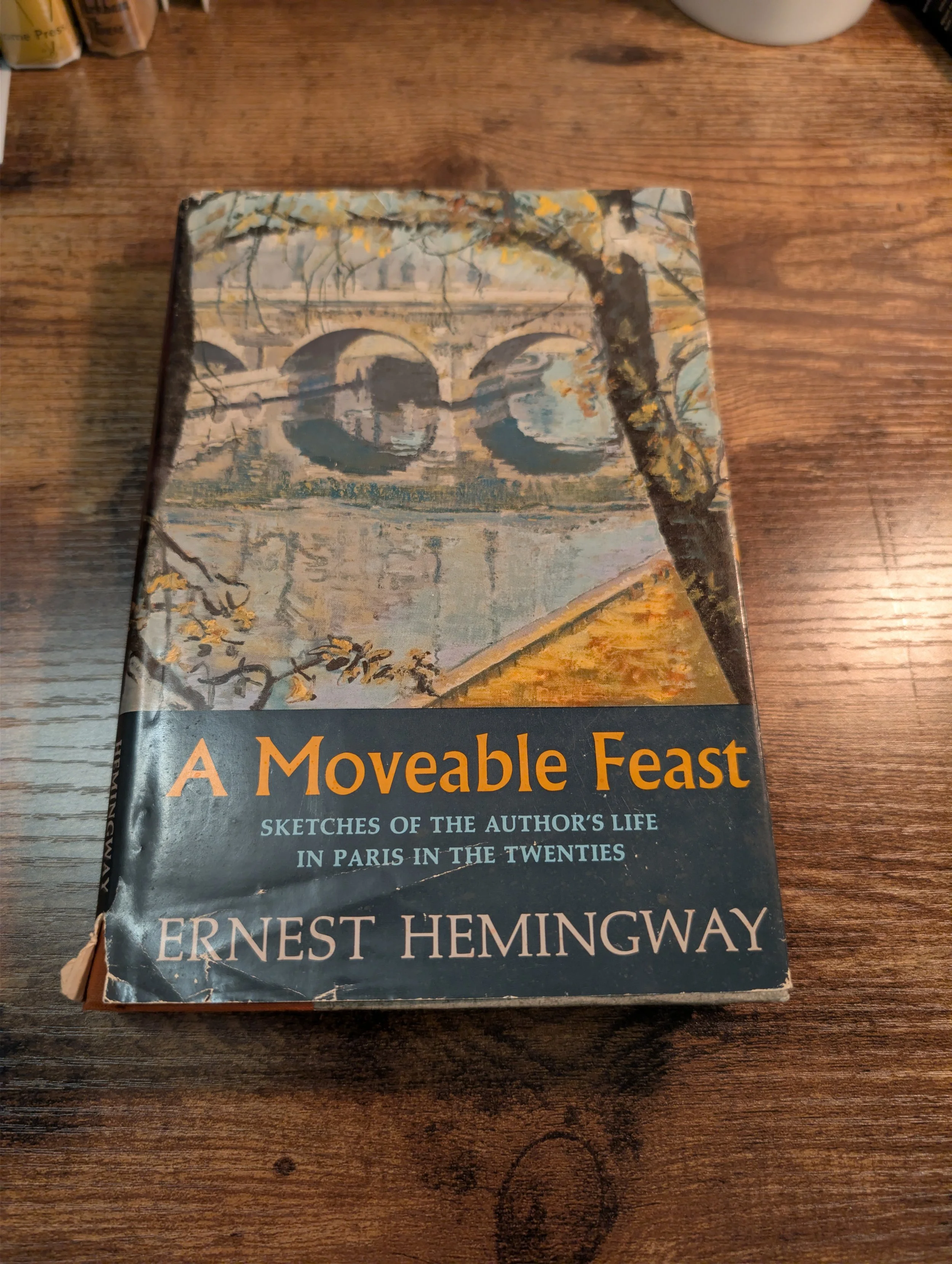 Image 1 of 11
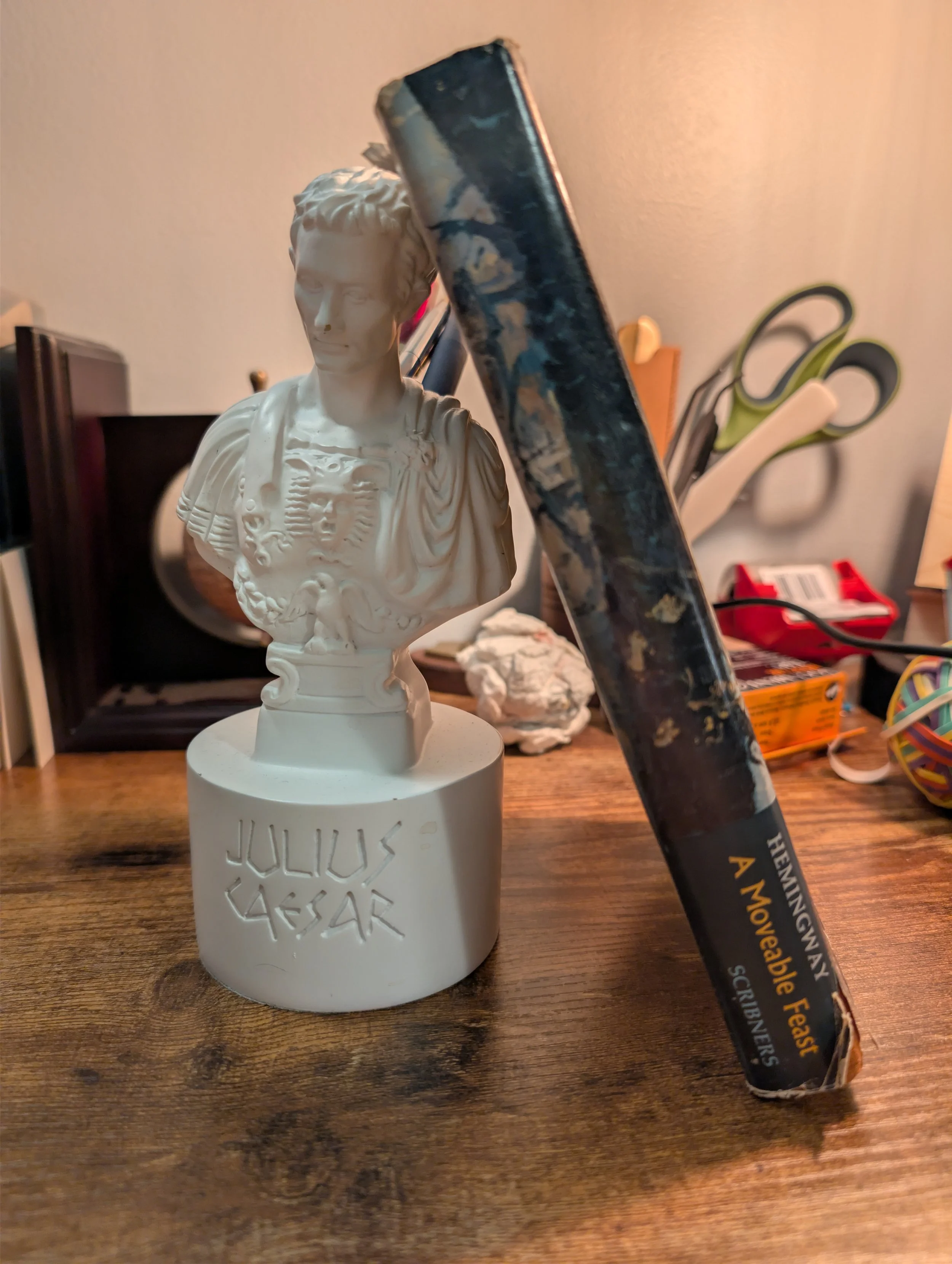 Image 2 of 11
 Image 3 of 11
 Image 4 of 11
 Image 5 of 11
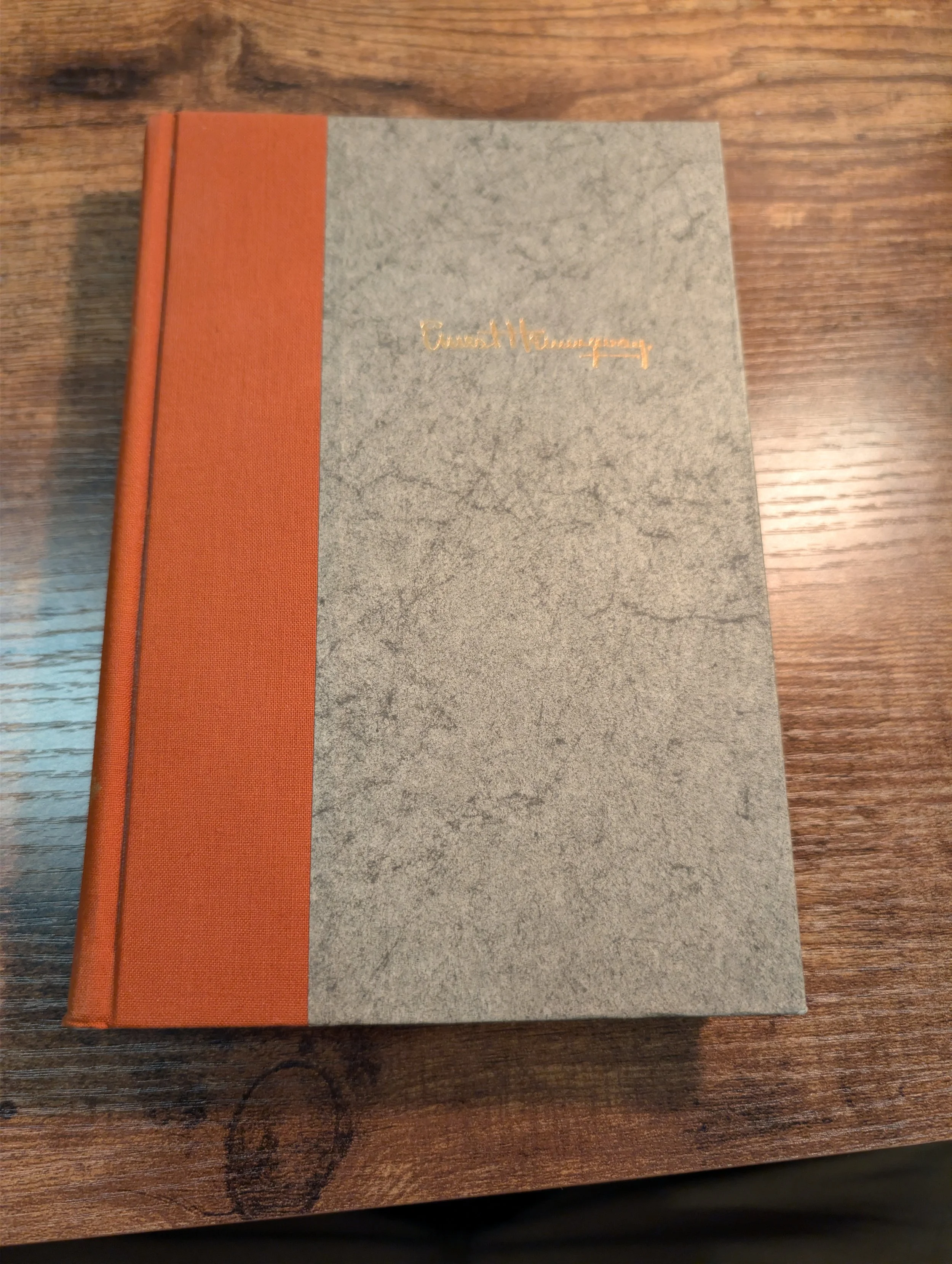 Image 6 of 11
 Image 7 of 11
 Image 8 of 11
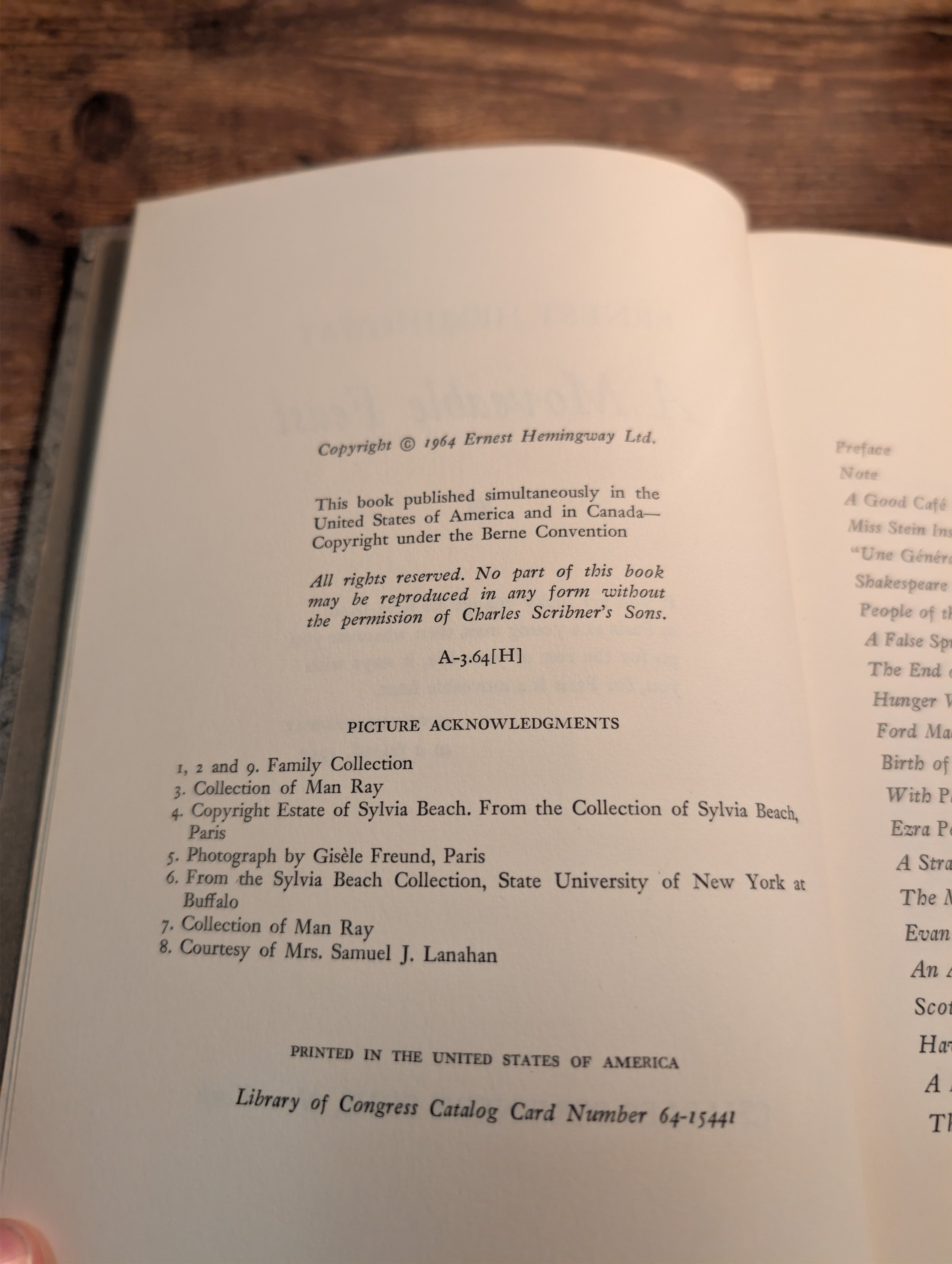 Image 9 of 11
 Image 10 of 11
 Image 11 of 11