Story & Significance
A Moveable Feast occupies an unusual place in Hemingway's bibliography. Published by Charles Scribner's Sons in 1964, three years after his death, the memoir was edited by Mary Hemingway from manuscripts he had worked on during the final years of his life. That circumstances of publication matter to collectors for a specific reason: the 1964 first printing represents the text as Mary Hemingway and Scribner's prepared it, before subsequent editorial revisions altered it. A restored edition published in 2009, edited by grandson Sean Hemingway, reordered chapters and added previously omitted sketches, making the 1964 text a distinct document rather than simply an earlier printing of the same book.
The book itself is a memoir of Hemingway's years in Paris in the 1920s, the period when he was writing The Sun Also Rises and trading drafts with Gertrude Stein and Ezra Pound. It is among the most readable things Hemingway ever wrote, and it has never gone out of print. First printings of the first edition nonetheless command consistent collector premiums, particularly in the original dust jacket.
The first printing is identified by the Scribner's code A-3.64[H] on the copyright page, a standard Scribner's date code indicating March 1964, first printing. Later printings carry a different or absent code.
Physical Description
The binding is the original Scribner's quarter-cloth format: brick red cloth spine, gray marbled boards, with a gilt facsimile of Hemingway's signature stamped on the front cover. The spine lettering is gilt. This copy is near fine: the binding is tight, the corners are unbumped, and there is a very slight lean to the spine, barely perceptible. No internal writing. Pages are crisp, with no foxing or soiling.
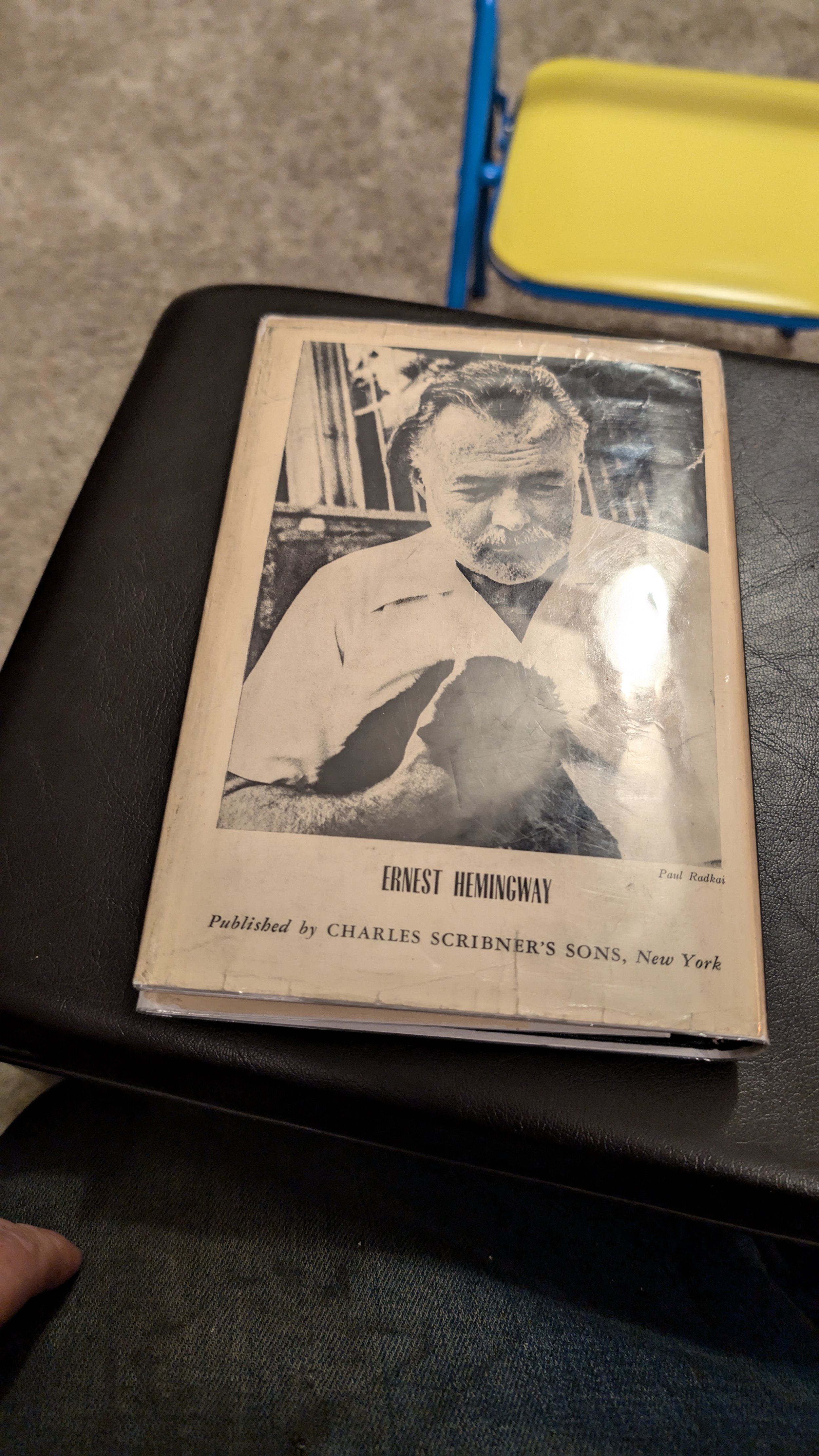
The dust jacket is price-clipped at the front flap. The rear flap carries the original text intact, including the statement that A Moveable Feast was a Book of the Month Club selection. The jacket shows some chipping, concentrated at the spine, which is consistent with typical attrition for this title. The front and rear panels remain intact.
The book includes eight pages of photographs.
Collector's Note
Price-clipped jackets are common on this title and don't substantially affect desirability for most collectors. The copyright page code A-3.64[H] confirms this as the trade first edition, first printing, and that's what matters. The Book of the Month Club statement on the rear flap sometimes raises questions, but it's not an indicator of a BCE. Scribner's printed it on the trade jacket. A BCE would be a physically distinct book, and this isn't one.
The jacket chipping is confined largely to the spine, exactly where it tends to appear on these jackets. A near fine book in a price-clipped jacket with localized spine chipping is a legitimate first printing at an accessible entry point into Hemingway's primary bibliography.
For the Hemingway collector, A Moveable Feast is a cornerstone acquisition. The Paris memoir has a sentimental following well beyond the collector market, which keeps demand steady. A tight, clean first printing with the original jacket is worth having on the shelf.
Story & Significance
A Moveable Feast occupies an unusual place in Hemingway's bibliography. Published by Charles Scribner's Sons in 1964, three years after his death, the memoir was edited by Mary Hemingway from manuscripts he had worked on during the final years of his life. That circumstances of publication matter to collectors for a specific reason: the 1964 first printing represents the text as Mary Hemingway and Scribner's prepared it, before subsequent editorial revisions altered it. A restored edition published in 2009, edited by grandson Sean Hemingway, reordered chapters and added previously omitted sketches, making the 1964 text a distinct document rather than simply an earlier printing of the same book.
The book itself is a memoir of Hemingway's years in Paris in the 1920s, the period when he was writing The Sun Also Rises and trading drafts with Gertrude Stein and Ezra Pound. It is among the most readable things Hemingway ever wrote, and it has never gone out of print. First printings of the first edition nonetheless command consistent collector premiums, particularly in the original dust jacket.
The first printing is identified by the Scribner's code A-3.64[H] on the copyright page, a standard Scribner's date code indicating March 1964, first printing. Later printings carry a different or absent code.
Physical Description
The binding is the original Scribner's quarter-cloth format: brick red cloth spine, gray marbled boards, with a gilt facsimile of Hemingway's signature stamped on the front cover. The spine lettering is gilt. This copy is near fine: the binding is tight, the corners are unbumped, and there is a very slight lean to the spine, barely perceptible. No internal writing. Pages are crisp, with no foxing or soiling.
The dust jacket is price-clipped at the front flap. The rear flap carries the original text intact, including the statement that A Moveable Feast was a Book of the Month Club selection. The jacket shows some chipping, concentrated at the spine, which is consistent with typical attrition for this title. The front and rear panels remain intact.
The book includes eight pages of photographs.
Collector's Note
Price-clipped jackets are common on this title and don't substantially affect desirability for most collectors. The copyright page code A-3.64[H] confirms this as the trade first edition, first printing, and that's what matters. The Book of the Month Club statement on the rear flap sometimes raises questions, but it's not an indicator of a BCE. Scribner's printed it on the trade jacket. A BCE would be a physically distinct book, and this isn't one.
The jacket chipping is confined largely to the spine, exactly where it tends to appear on these jackets. A near fine book in a price-clipped jacket with localized spine chipping is a legitimate first printing at an accessible entry point into Hemingway's primary bibliography.
For the Hemingway collector, A Moveable Feast is a cornerstone acquisition. The Paris memoir has a sentimental following well beyond the collector market, which keeps demand steady. A tight, clean first printing with the original jacket is worth having on the shelf.
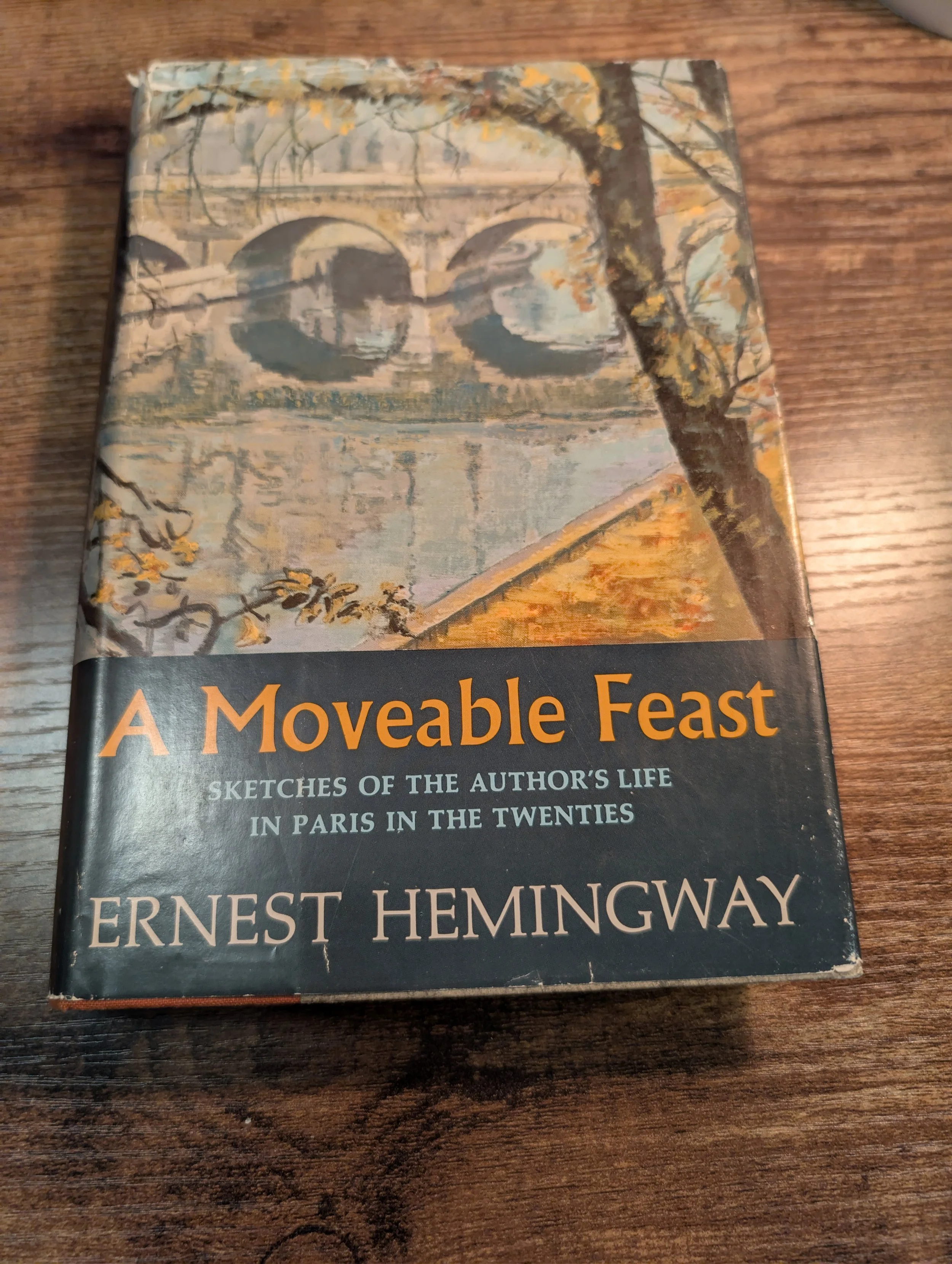 Image 1 of 9
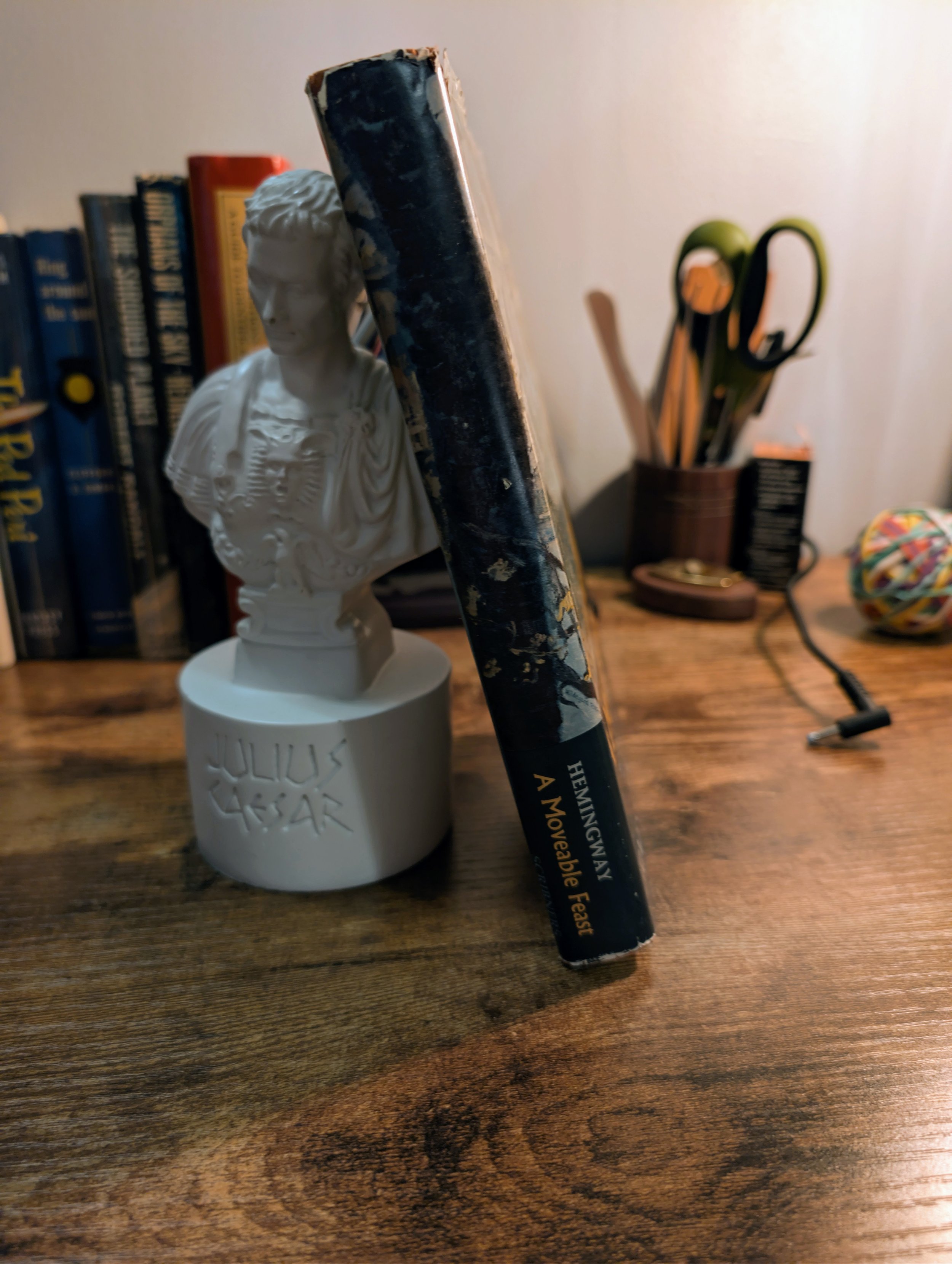 Image 2 of 9
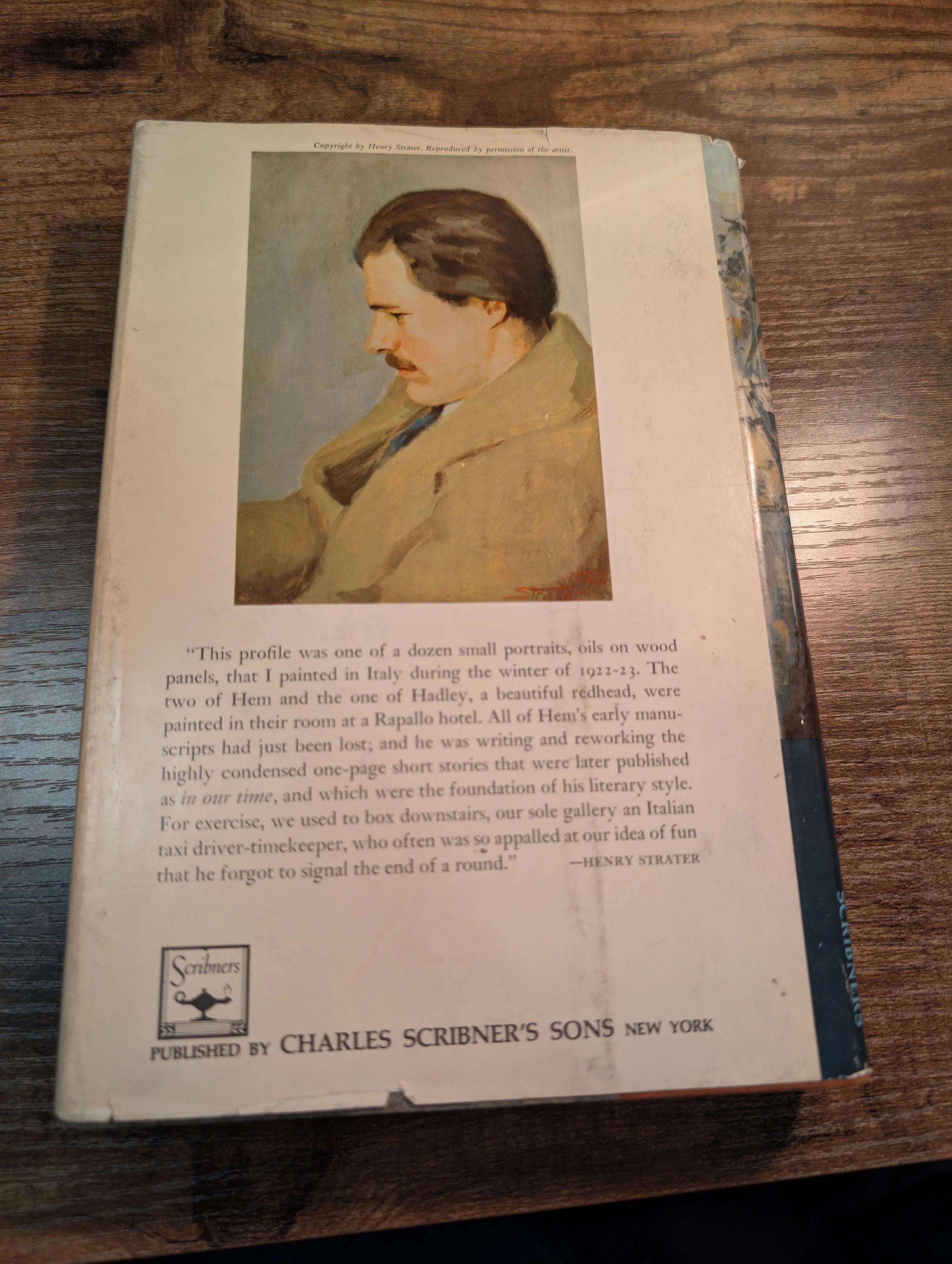 Image 3 of 9
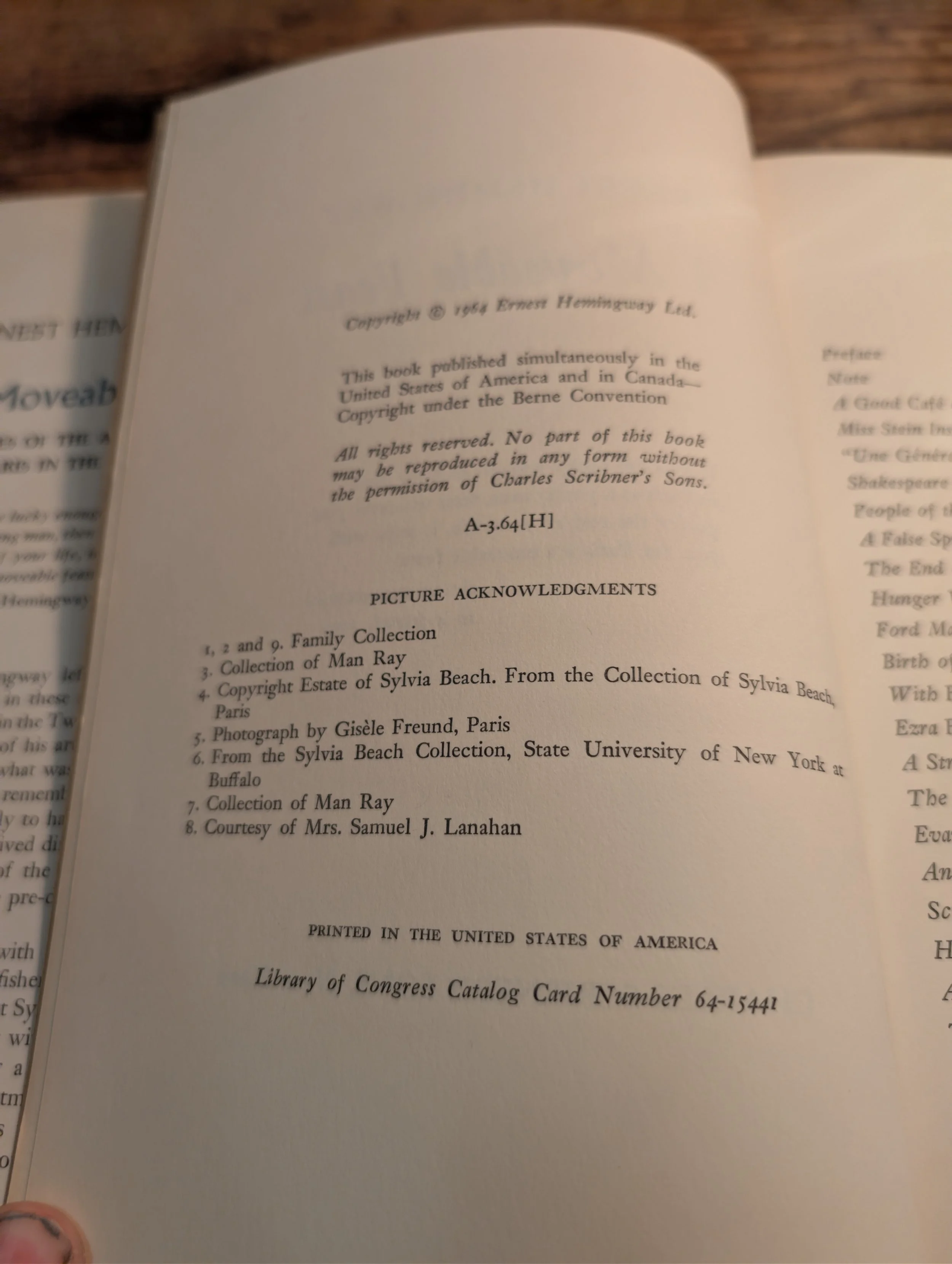 Image 4 of 9
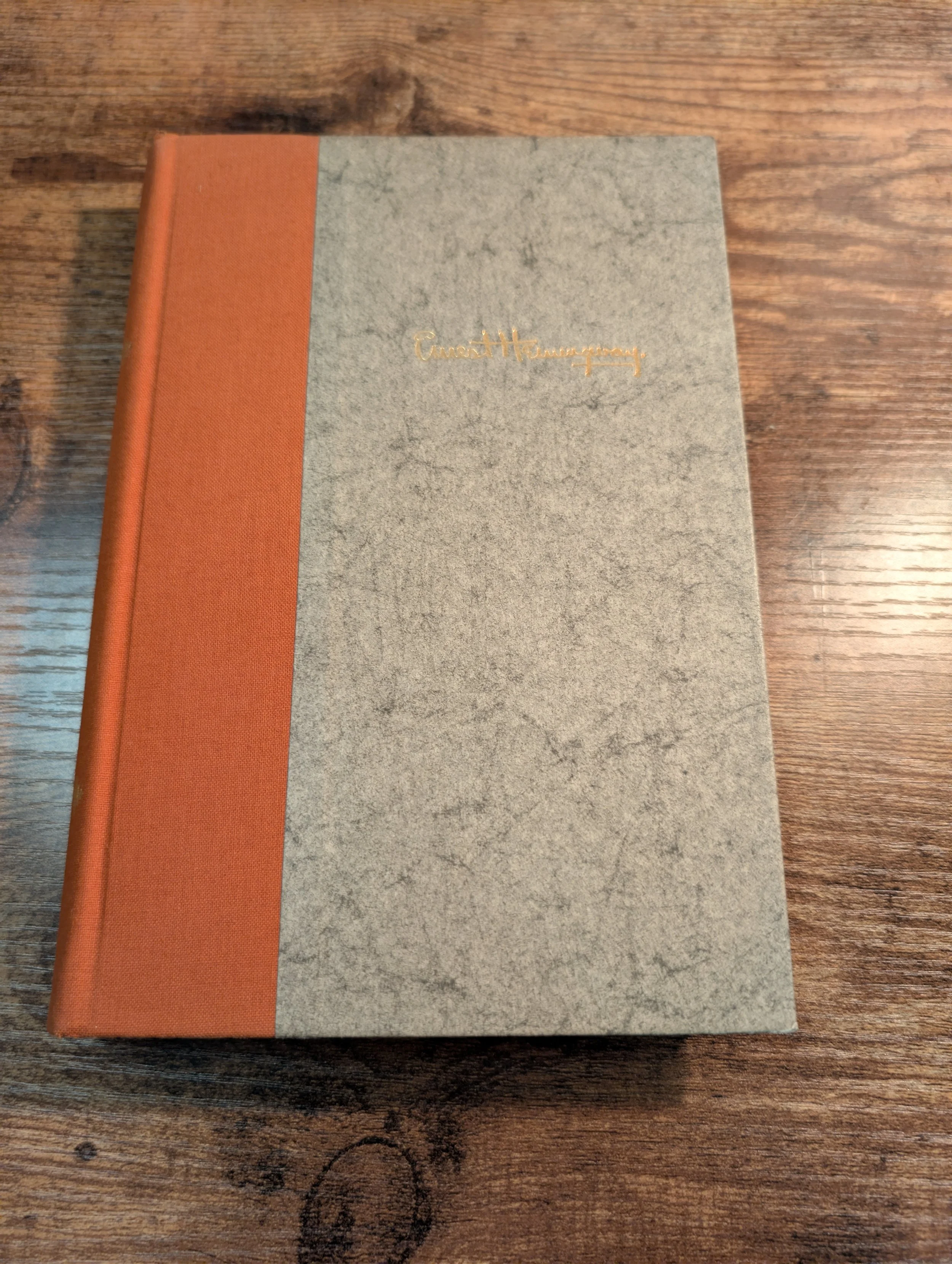 Image 5 of 9
 Image 6 of 9
 Image 7 of 9
 Image 8 of 9
 Image 9 of 9