Story & Significance
By 1953, Robert Heinlein had already placed landmark titles with the specialist small presses that built Golden Age science fiction in hardcover. Assignment in Eternity, his second collection for Lloyd Eshbach’s Fantasy Press, gathered four novellas that had appeared in the pulps between 1941 and 1949: “Gulf,” “Elsewhen,” “Lost Legacy,” and “Jerry Was a Man.” All four circle the same question: what actually distinguishes a human being from everything else. “Gulf” and “Lost Legacy” approach it from the direction of superhuman potential; “Jerry Was a Man” examines it from the other end, in a courtroom determining whether a genetically engineered creature qualifies for legal personhood. These were not casual entertainments. The ideas Heinlein planted here grew into the central arguments of Stranger in a Strange Land, Friday, and his late novels. The book was picked up almost immediately for mass-market paperback by New American Library’s Signet imprint, a signal of how quickly Heinlein’s audience had outgrown what the specialty presses could supply.
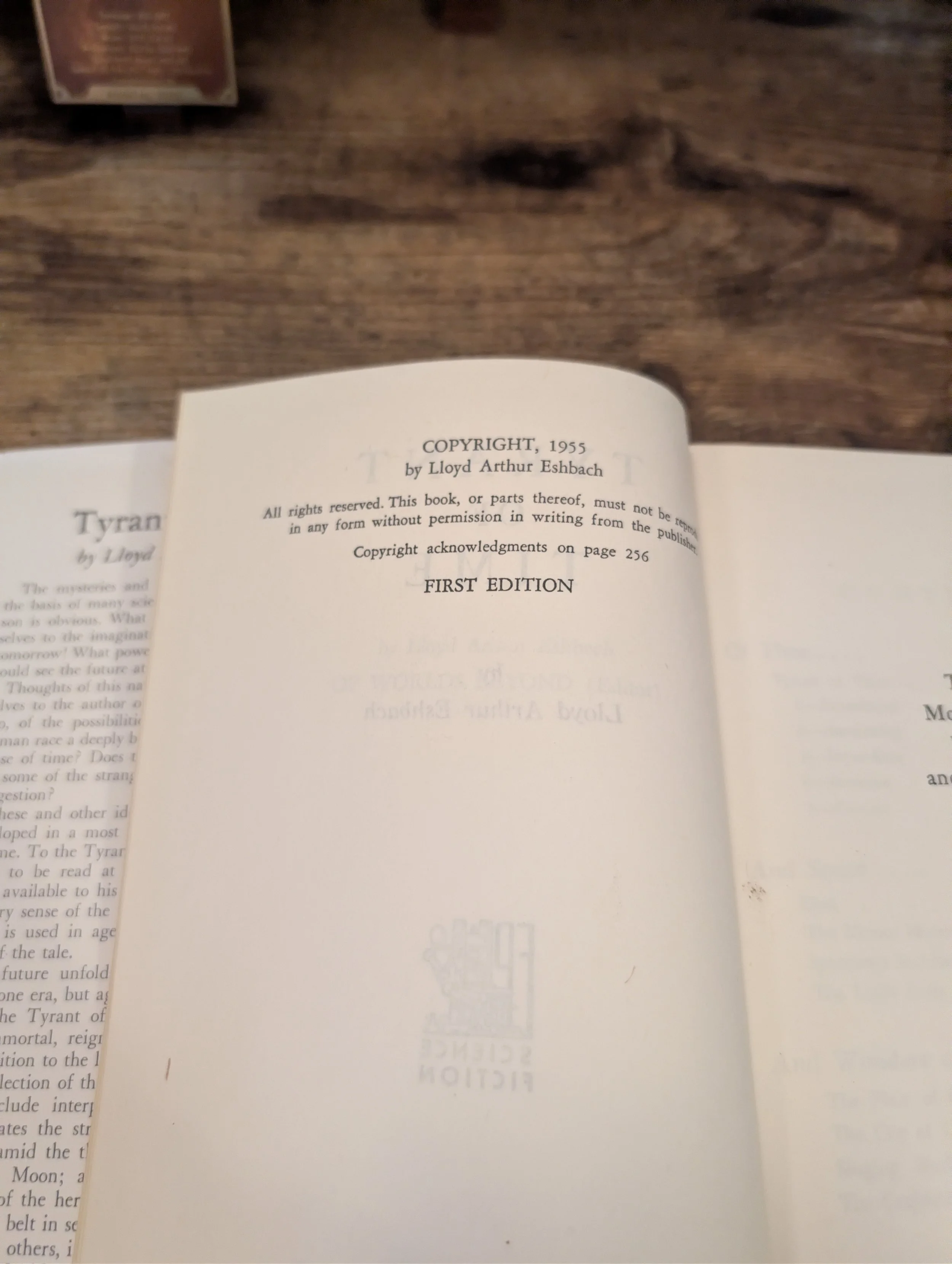
According to Chalker and Owings’ The Science-Fantasy Publishers, Fantasy Press produced 3,115 copies in the priority binding, with 500 of those going to the subscriber issue as numbered and signed copies. The remaining approximately 2,615 constitute the trade issue in Binding A. An additional 911 copies were bound in variant states (Greenberg and Grant remainders). Currey’s Science Fiction and Fantasy Authors (p. 232) identifies the priority binding by three physical markers: brick red cloth, gilt spine lettering, and “HEINLEIN” set in type 3 mm high on the spine. All three are present and confirmed on this copy. The copyright page carries the first edition statement.
Physical Description
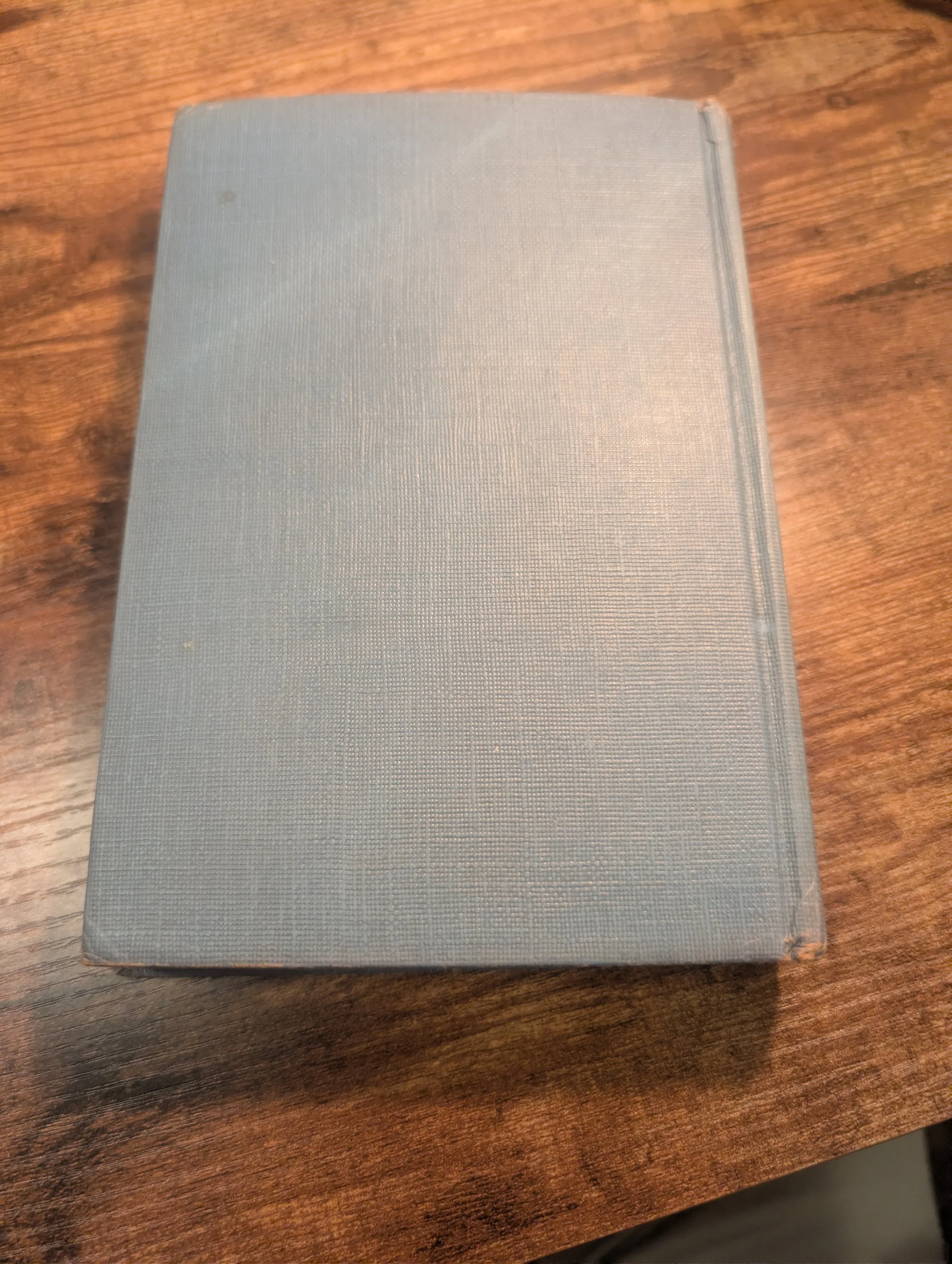
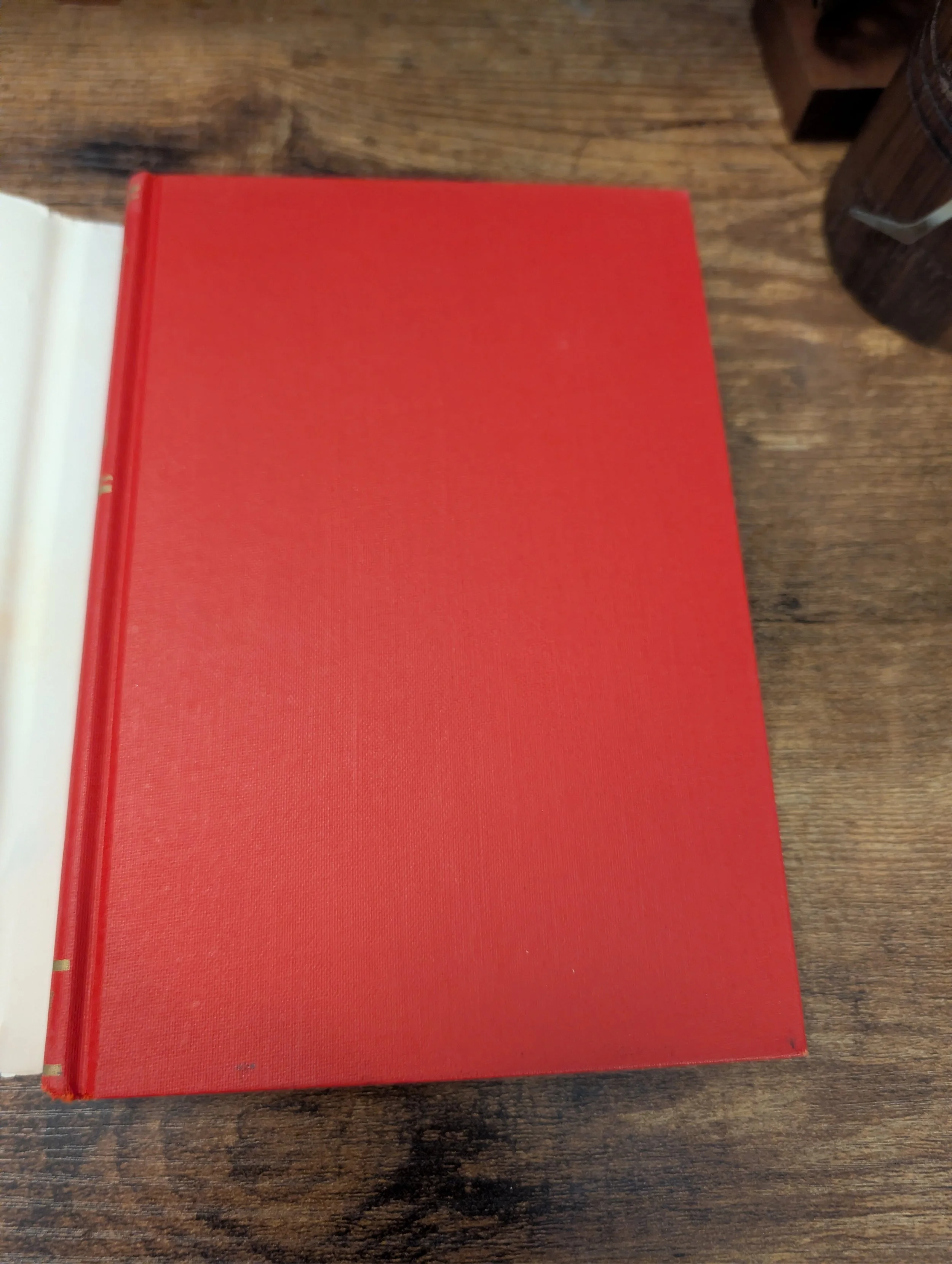
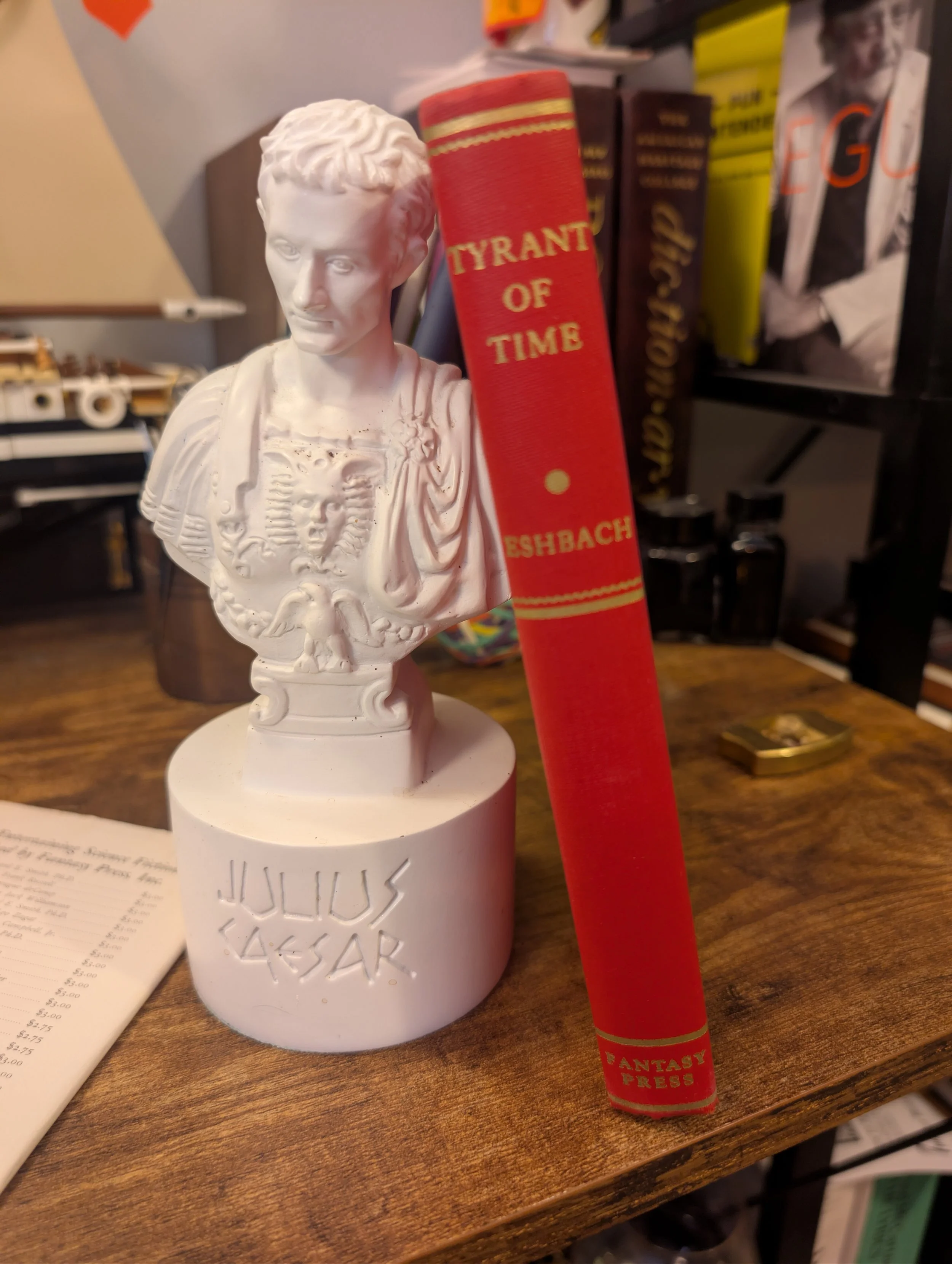
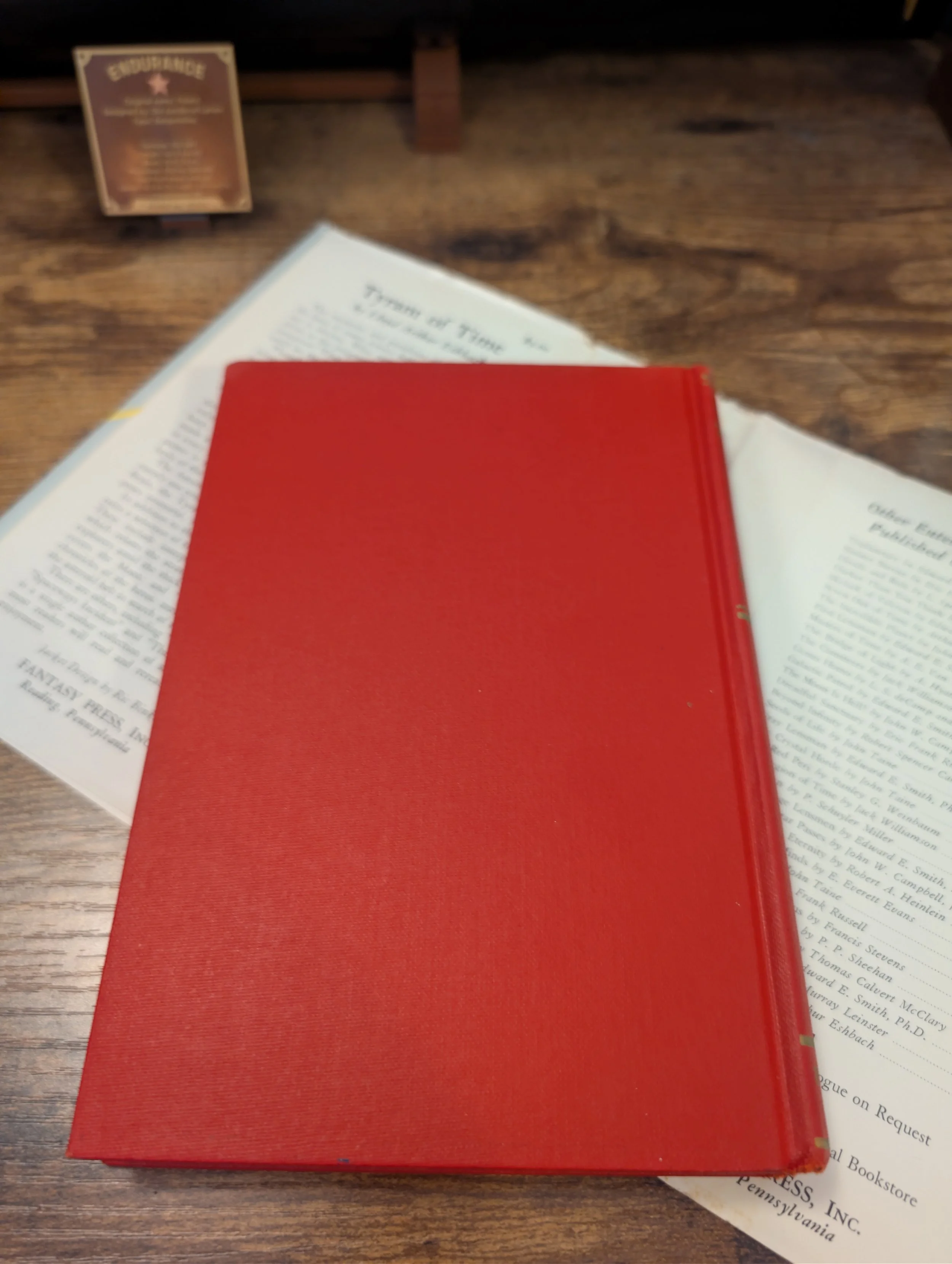
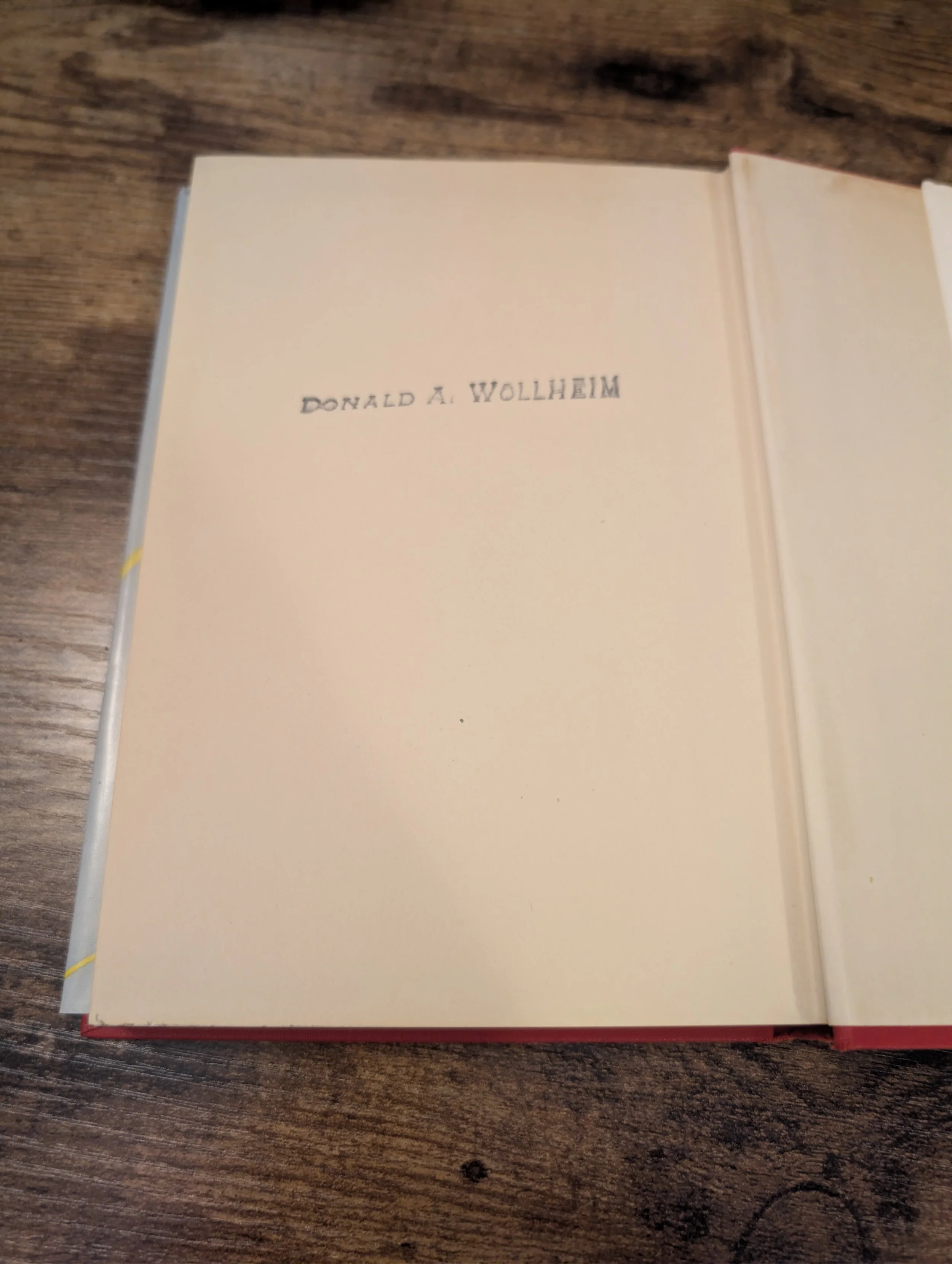
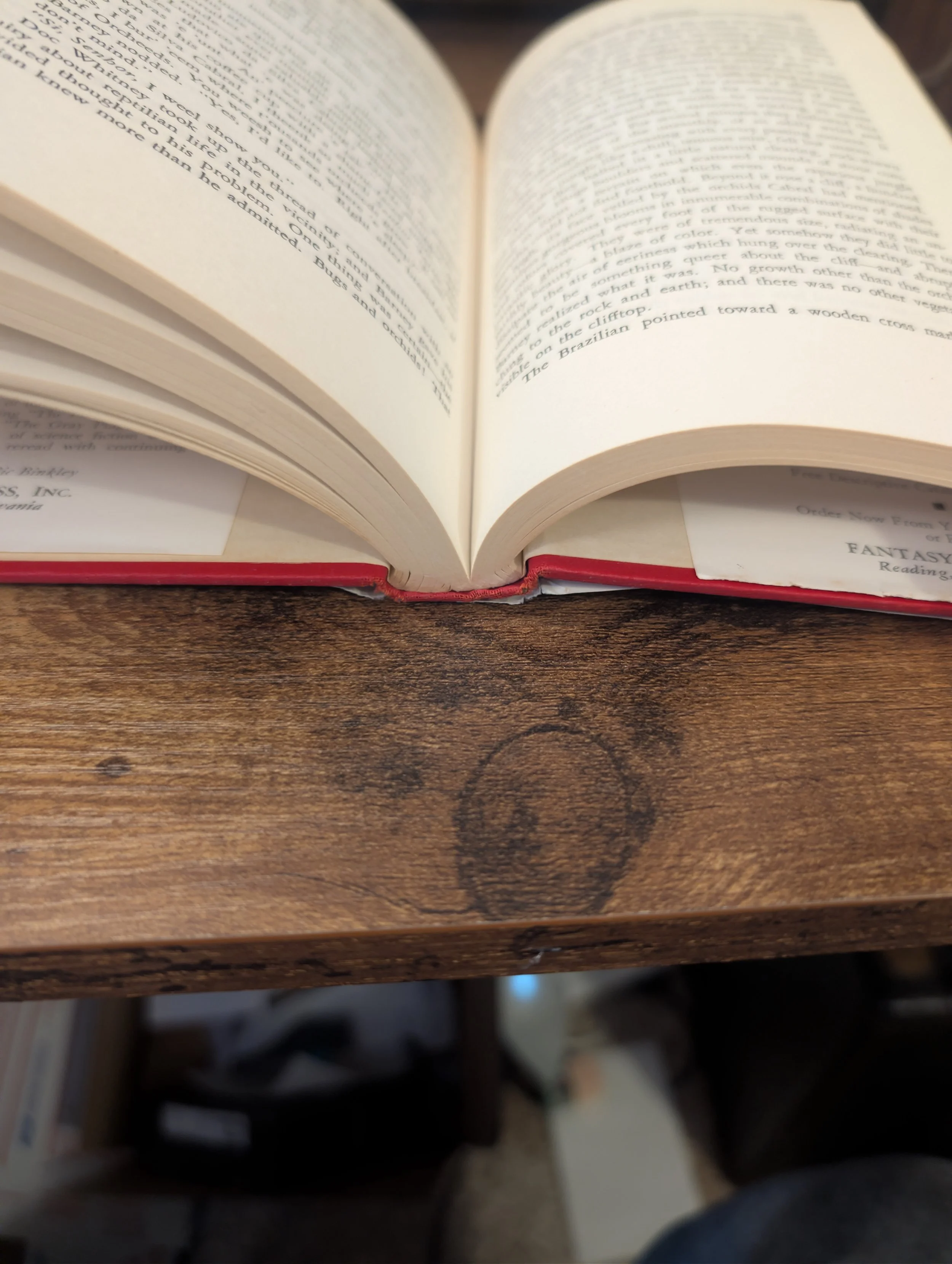
The binding is the priority state: brick red cloth with gilt lettering and six decorative bands on the spine, all remaining bright. Boards and spine are free of soiling or fading. Corners are sharp and unbumped. The text block is crisp and clean throughout, with no foxing, tanning, or prior owner markings of any kind beyond the following: the previous owner, Larry Mason, has written his name in ink on the front paste-down endpaper. No other writing is present anywhere in the volume.
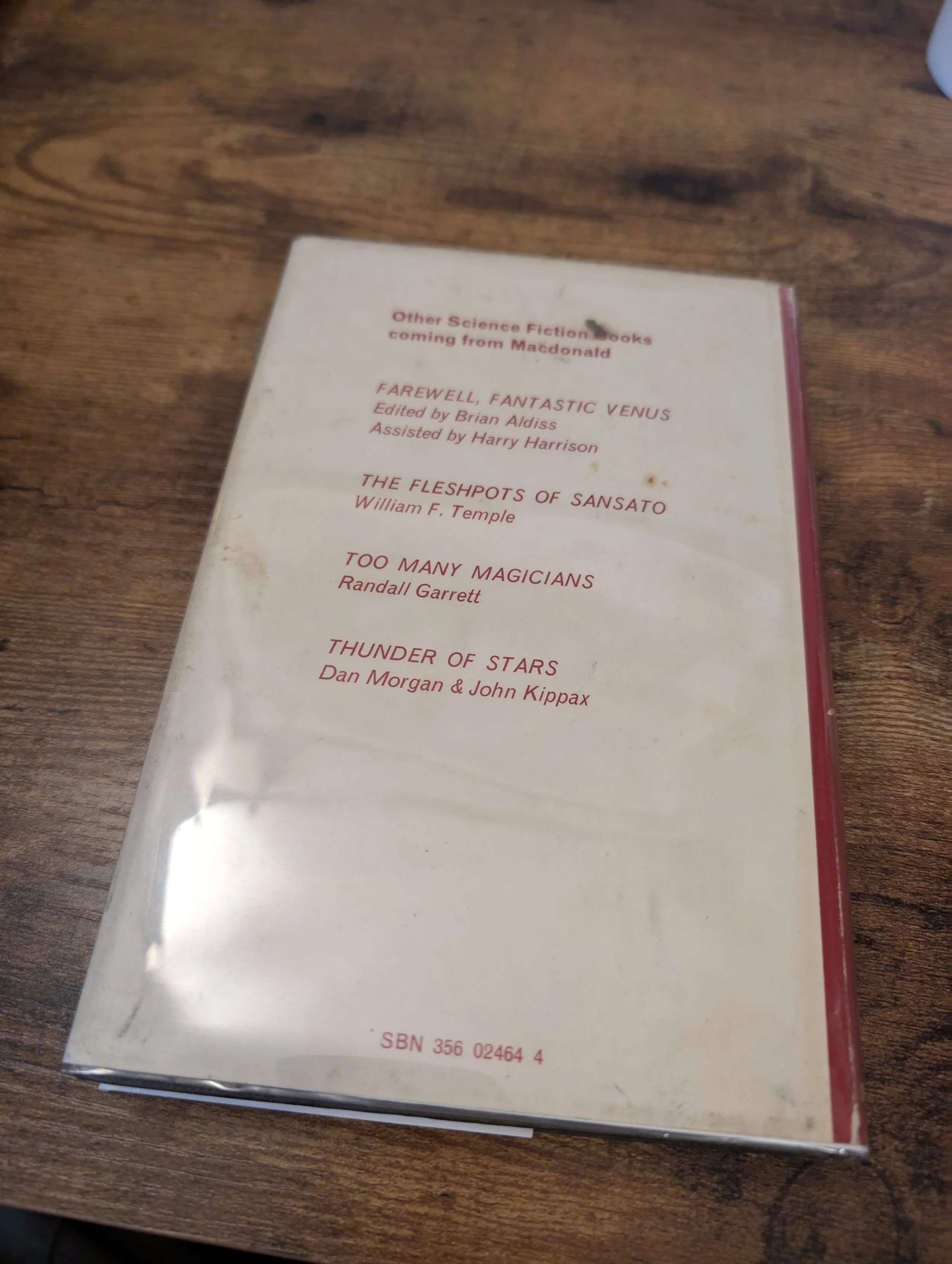
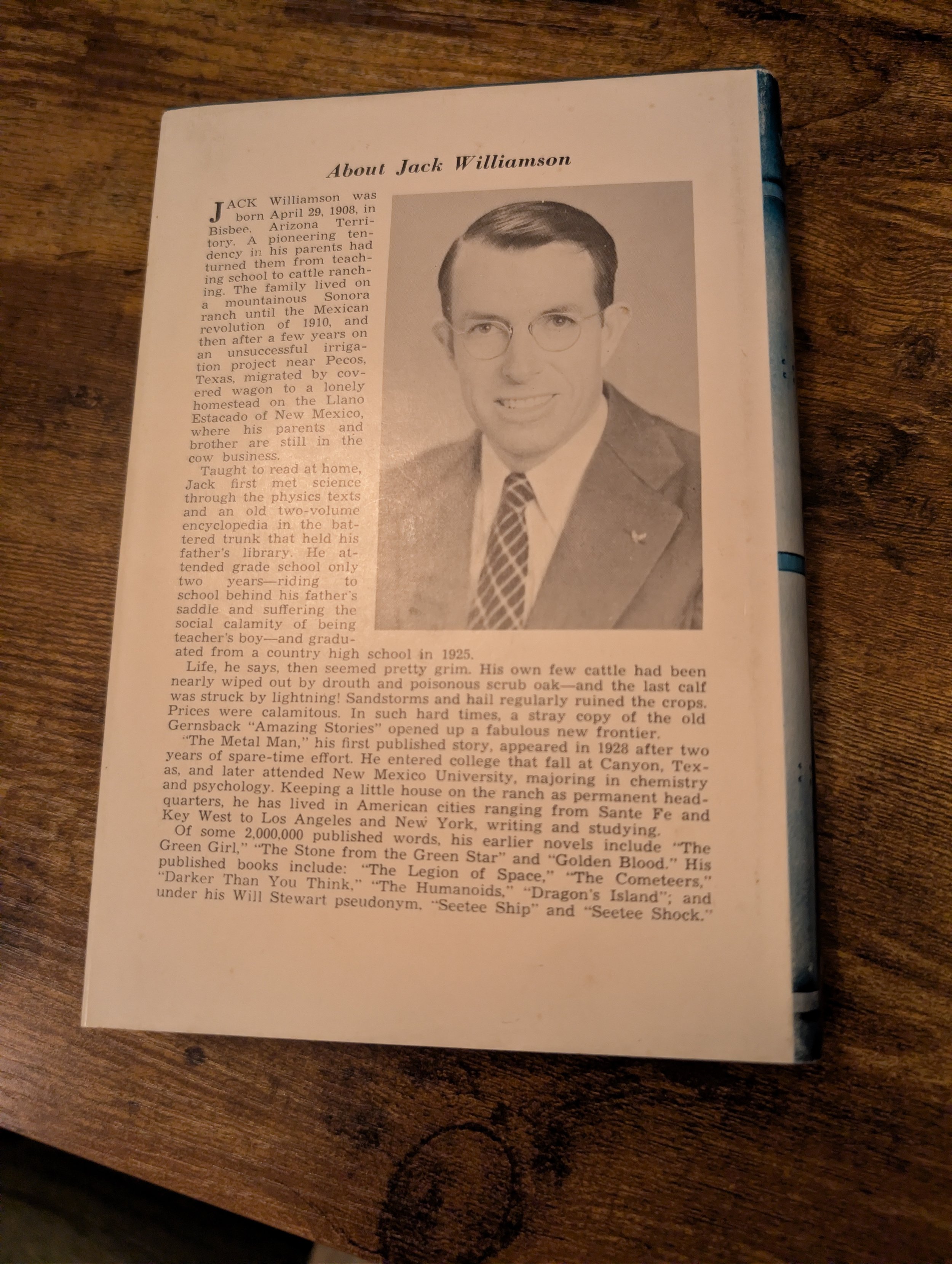
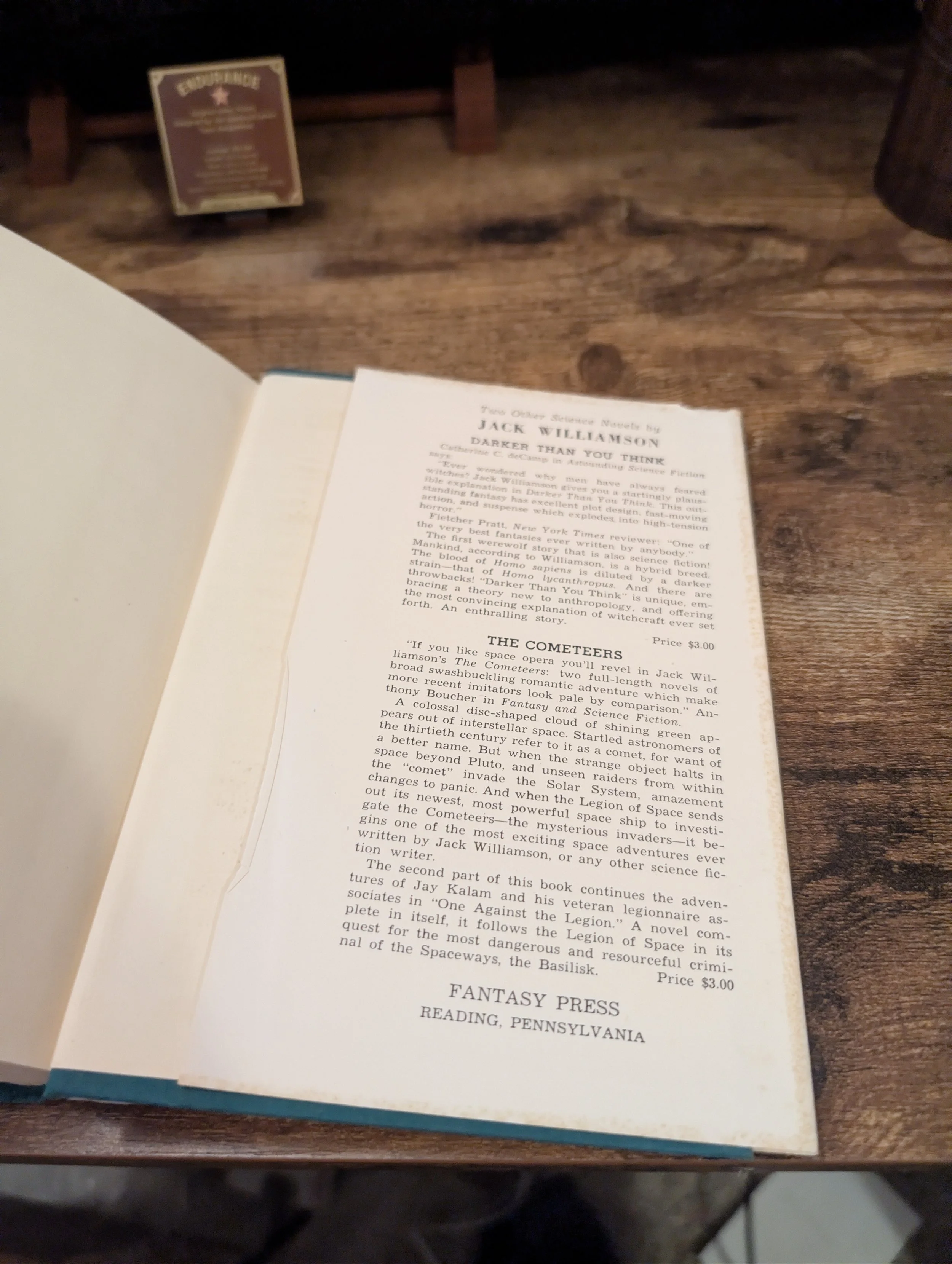
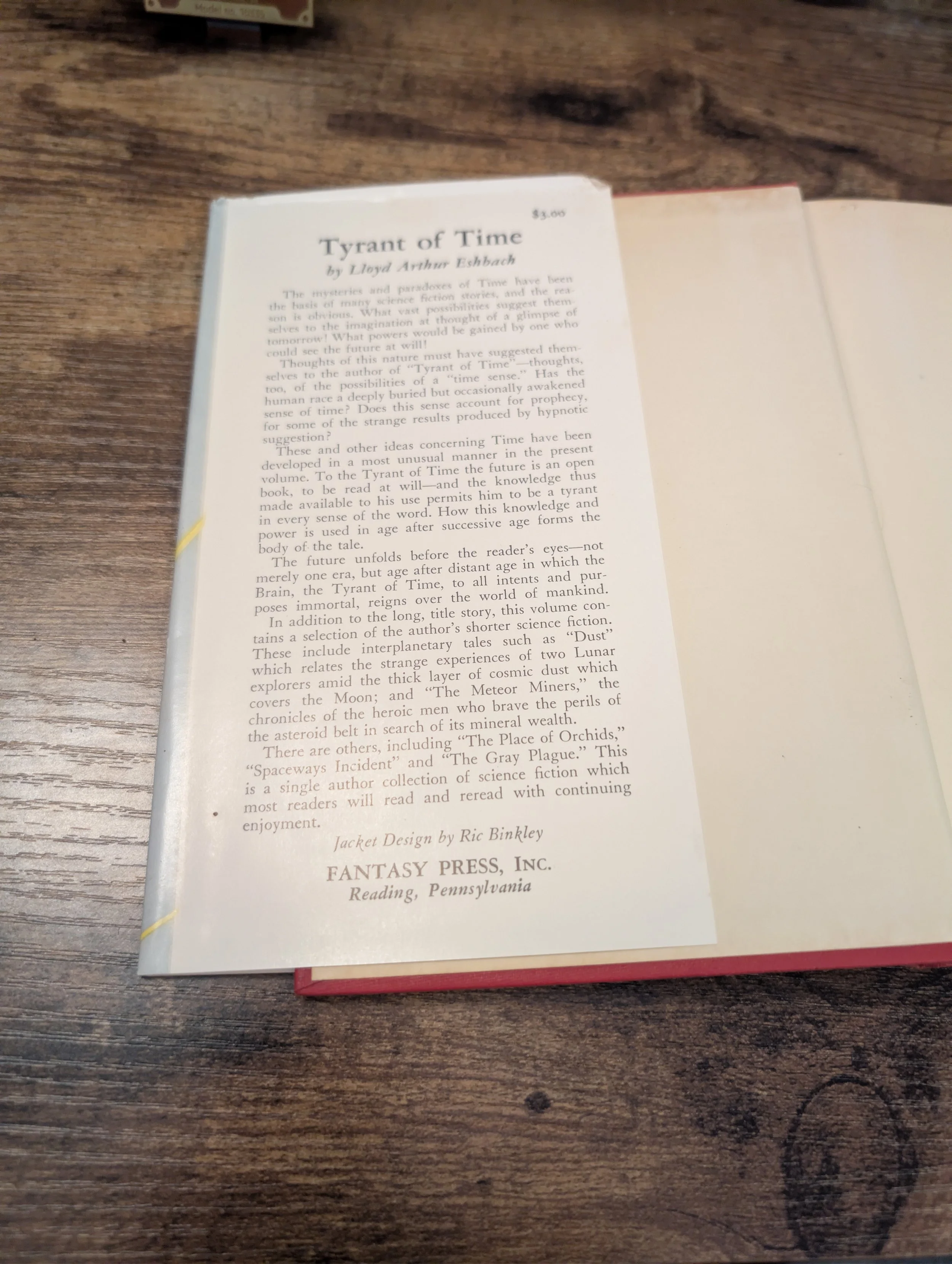
The dust jacket is unclipped, retaining the original $3.00 cover price, and grades near fine. It shows minor rubbing at the extremities, very small chips, and a single minimal closed tear. Ric Binkley’s pictorial design is vivid throughout. The jacket is housed in a fresh archival Mylar sleeve.
Collector's Note
Near fine copies of Assignment in Eternity in unclipped jackets are among the harder Fantasy Press titles to find at this grade. The specialist presses of the early 1950s printed short runs for readers who used the books, and attrition across seven decades has been significant. The signed and numbered subscriber copies command a substantial premium when they appear. This trade copy offers the same bibliographic standing, Binding A, first edition so stated, unclipped jacket, without the premium. For a Heinlein collection built around the Fantasy Press and Shasta imprints, it’s a key piece.
See our other Fantasy Press titles.
Story & Significance
By 1953, Robert Heinlein had already placed landmark titles with the specialist small presses that built Golden Age science fiction in hardcover. Assignment in Eternity, his second collection for Lloyd Eshbach’s Fantasy Press, gathered four novellas that had appeared in the pulps between 1941 and 1949: “Gulf,” “Elsewhen,” “Lost Legacy,” and “Jerry Was a Man.” All four circle the same question: what actually distinguishes a human being from everything else. “Gulf” and “Lost Legacy” approach it from the direction of superhuman potential; “Jerry Was a Man” examines it from the other end, in a courtroom determining whether a genetically engineered creature qualifies for legal personhood. These were not casual entertainments. The ideas Heinlein planted here grew into the central arguments of Stranger in a Strange Land, Friday, and his late novels. The book was picked up almost immediately for mass-market paperback by New American Library’s Signet imprint, a signal of how quickly Heinlein’s audience had outgrown what the specialty presses could supply.
According to Chalker and Owings’ The Science-Fantasy Publishers, Fantasy Press produced 3,115 copies in the priority binding, with 500 of those going to the subscriber issue as numbered and signed copies. The remaining approximately 2,615 constitute the trade issue in Binding A. An additional 911 copies were bound in variant states (Greenberg and Grant remainders). Currey’s Science Fiction and Fantasy Authors (p. 232) identifies the priority binding by three physical markers: brick red cloth, gilt spine lettering, and “HEINLEIN” set in type 3 mm high on the spine. All three are present and confirmed on this copy. The copyright page carries the first edition statement.
Physical Description
The binding is the priority state: brick red cloth with gilt lettering and six decorative bands on the spine, all remaining bright. Boards and spine are free of soiling or fading. Corners are sharp and unbumped. The text block is crisp and clean throughout, with no foxing, tanning, or prior owner markings of any kind beyond the following: the previous owner, Larry Mason, has written his name in ink on the front paste-down endpaper. No other writing is present anywhere in the volume.
The dust jacket is unclipped, retaining the original $3.00 cover price, and grades near fine. It shows minor rubbing at the extremities, very small chips, and a single minimal closed tear. Ric Binkley’s pictorial design is vivid throughout. The jacket is housed in a fresh archival Mylar sleeve.
Collector's Note
Near fine copies of Assignment in Eternity in unclipped jackets are among the harder Fantasy Press titles to find at this grade. The specialist presses of the early 1950s printed short runs for readers who used the books, and attrition across seven decades has been significant. The signed and numbered subscriber copies command a substantial premium when they appear. This trade copy offers the same bibliographic standing, Binding A, first edition so stated, unclipped jacket, without the premium. For a Heinlein collection built around the Fantasy Press and Shasta imprints, it’s a key piece.
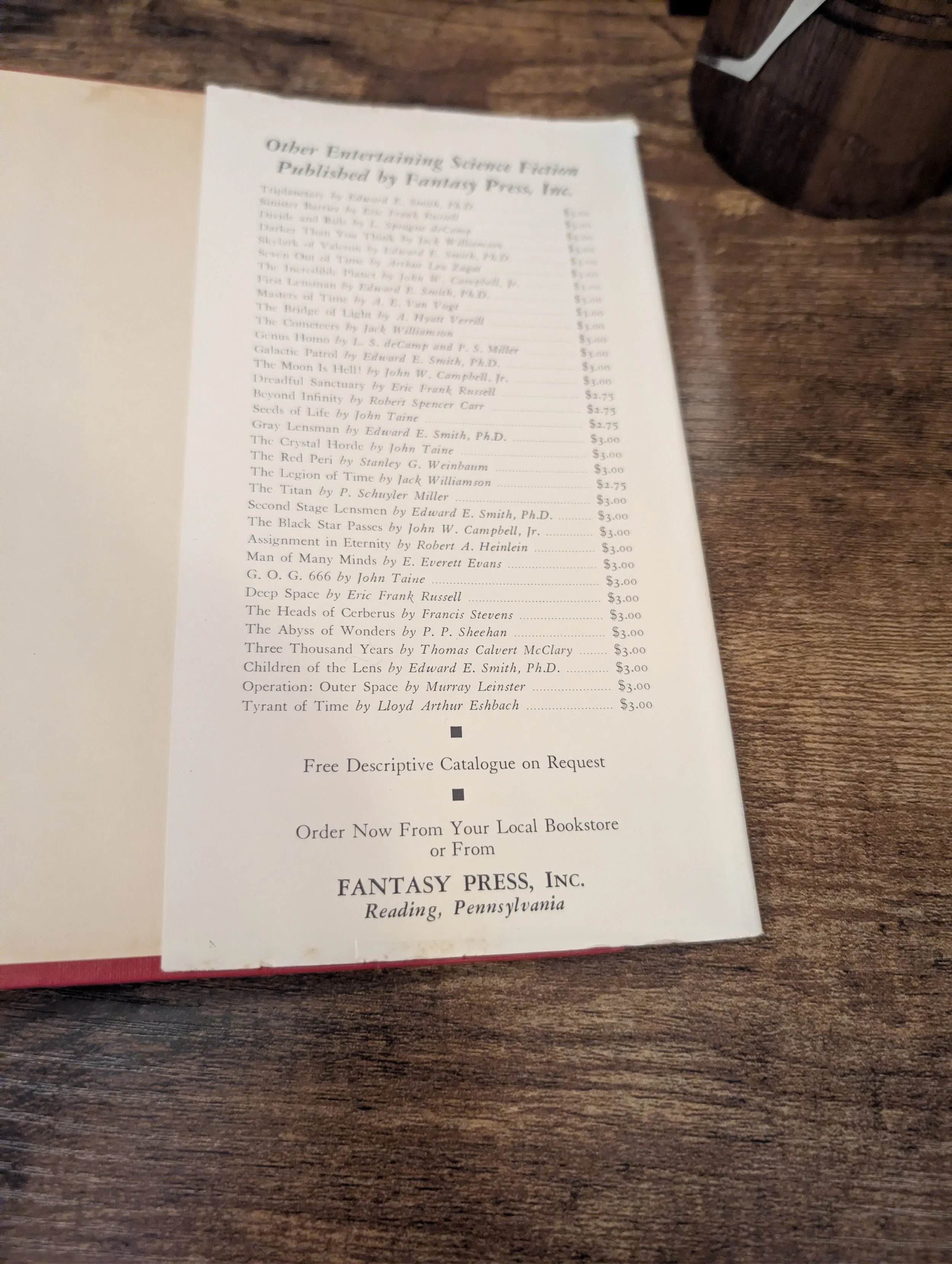
See our other Fantasy Press titles.
 Image 1 of 9
 Image 2 of 9
 Image 3 of 9
 Image 4 of 9
 Image 5 of 9
 Image 6 of 9
 Image 7 of 9
 Image 8 of 9
 Image 9 of 9