Story & Significance
This is the gray cloth binding, and on this title the binding is the whole conversation.
Currey lists Earthman's Burden under both authors with two bindings and probable priority as given: (A) pale blue boards printed in dark blue, (B) gray cloth printed in red. First edition so stated on the copyright page. This copy is binding B. Two things are worth flagging there. Currey's word is "probable," not established. And Chalker and Owings, the other standard reference for the small SF presses, records no binding variants for this title at all. So the priority everyone quotes rests on a single source that hedges it, and there is no second authority to check it against.
Where the two references do agree is on the print run, and that is what explains the bindings. Roughly 5,000 sets of sheets were printed. About 2,000 were bound in pale blue boards in 1957. About 1,000 more were bound in gray cloth in 1959, and the remaining sheets are believed never to have been bound, destroyed when the firm was liquidated. Binding B is therefore not a second printing or a later edition. It is the same 1957 first edition sheets, bound up two years later as Gnome Press was winding down, in a smaller quantity than the pale blue. Same book, later dress, fewer copies bound.
A third binding in red boards lettered in black is recorded by the Gnome Press bibliography and appears in neither Currey nor Chalker and Owings. Anyone working from the standard references alone will not know it exists. Gaps like this are ordinary with Gnome Press, whose records were never tidy, and they are worth knowing before you decide what a given copy is.
The book collects six Hoka stories, four previously published in the magazines and two appearing here for the first time, along with connecting interludes written for the volume. "The Adventure of the Misplaced Hound," the Sherlock Holmes pastiche, is the piece most often singled out. Edd Cartier did the jacket and the interior illustrations, which is a meaningful part of the appeal for collectors following Cartier's work across the imprint.
Physical Description
First edition, so stated on the copyright page, published by Gnome Press, Inc., New York, 1957. Binding B in Currey's listing: gray cloth with the spine panel printed in red. The binding is tight and square. There is a previous owner's stamp on the front free endpaper reading "Thomas Cheung / Oct 5 1966." Apart from that stamp the pages are clean and free of writing, underlining, or other marks. The text block shows heavy toning throughout. In our experience handling Gnome Press books, that is the norm for the imprint rather than a fault peculiar to this copy: the paper stock the press used in the 1950s browns reliably, and a Gnome title with a bright white text block is the unusual one. The lower front corner of the front board is slightly bumped, there is tape residue on the boards, and there is light soiling at the head of the spine. The title page and copyright page also suffer from a small, three-quarter inch closed tear.
The dust jacket is unclipped and retains the $3.00 price, with Edd Cartier's design intact. The spine panel shows fading, which is the common fault on this jacket: the pink and red ink Cartier used on the spine is fugitive, and copies otherwise graded Fine are still described as showing some fade there. Very Good book in a Very Good jacket.
Collector's Note
Two things to know if you are shopping this title. Most listings say "Gnome Press first edition" and stop, without stating which binding is in hand, so the boards are worth asking about before you buy. Pale blue boards and gray cloth are both first edition sheets and both carry the same copyright page statement, but they are not the same object and the market does not always treat them the same way. And the jacket spine fade is close to universal, so a listing photograph showing a bright red spine panel is worth a second look rather than an automatic bonus.
The faults on this copy are honest ones, and they are the faults this title tends to have. Heavy toning is what Gnome Press paper does. Spine fade is what this jacket does. The tape residue on the boards and the bumped corner are ordinary shelf history, and the Thomas Cheung ownership stamp dated October 1966 is the kind of dated provenance mark some collectors like and others do not, which is why it is photographed in the listing images. Nothing here touches the text, which is clean and unmarked apart from that stamp.
This suits a Gnome Press collector working toward a complete imprint run, a Cartier collector, or an Anderson or Dickson collector who wants the first book appearance of the Hoka stories in an unclipped original jacket and is willing to accept an honestly worn copy to get it.
Story & Significance
This is the gray cloth binding, and on this title the binding is the whole conversation.
Currey lists Earthman's Burden under both authors with two bindings and probable priority as given: (A) pale blue boards printed in dark blue, (B) gray cloth printed in red. First edition so stated on the copyright page. This copy is binding B. Two things are worth flagging there. Currey's word is "probable," not established. And Chalker and Owings, the other standard reference for the small SF presses, records no binding variants for this title at all. So the priority everyone quotes rests on a single source that hedges it, and there is no second authority to check it against.
Where the two references do agree is on the print run, and that is what explains the bindings. Roughly 5,000 sets of sheets were printed. About 2,000 were bound in pale blue boards in 1957. About 1,000 more were bound in gray cloth in 1959, and the remaining sheets are believed never to have been bound, destroyed when the firm was liquidated. Binding B is therefore not a second printing or a later edition. It is the same 1957 first edition sheets, bound up two years later as Gnome Press was winding down, in a smaller quantity than the pale blue. Same book, later dress, fewer copies bound.
A third binding in red boards lettered in black is recorded by the Gnome Press bibliography and appears in neither Currey nor Chalker and Owings. Anyone working from the standard references alone will not know it exists. Gaps like this are ordinary with Gnome Press, whose records were never tidy, and they are worth knowing before you decide what a given copy is.
The book collects six Hoka stories, four previously published in the magazines and two appearing here for the first time, along with connecting interludes written for the volume. "The Adventure of the Misplaced Hound," the Sherlock Holmes pastiche, is the piece most often singled out. Edd Cartier did the jacket and the interior illustrations, which is a meaningful part of the appeal for collectors following Cartier's work across the imprint.
Physical Description
First edition, so stated on the copyright page, published by Gnome Press, Inc., New York, 1957. Binding B in Currey's listing: gray cloth with the spine panel printed in red. The binding is tight and square. There is a previous owner's stamp on the front free endpaper reading "Thomas Cheung / Oct 5 1966." Apart from that stamp the pages are clean and free of writing, underlining, or other marks. The text block shows heavy toning throughout. In our experience handling Gnome Press books, that is the norm for the imprint rather than a fault peculiar to this copy: the paper stock the press used in the 1950s browns reliably, and a Gnome title with a bright white text block is the unusual one. The lower front corner of the front board is slightly bumped, there is tape residue on the boards, and there is light soiling at the head of the spine. The title page and copyright page also suffer from a small, three-quarter inch closed tear.
The dust jacket is unclipped and retains the $3.00 price, with Edd Cartier's design intact. The spine panel shows fading, which is the common fault on this jacket: the pink and red ink Cartier used on the spine is fugitive, and copies otherwise graded Fine are still described as showing some fade there. Very Good book in a Very Good jacket.
Collector's Note
Two things to know if you are shopping this title. Most listings say "Gnome Press first edition" and stop, without stating which binding is in hand, so the boards are worth asking about before you buy. Pale blue boards and gray cloth are both first edition sheets and both carry the same copyright page statement, but they are not the same object and the market does not always treat them the same way. And the jacket spine fade is close to universal, so a listing photograph showing a bright red spine panel is worth a second look rather than an automatic bonus.
The faults on this copy are honest ones, and they are the faults this title tends to have. Heavy toning is what Gnome Press paper does. Spine fade is what this jacket does. The tape residue on the boards and the bumped corner are ordinary shelf history, and the Thomas Cheung ownership stamp dated October 1966 is the kind of dated provenance mark some collectors like and others do not, which is why it is photographed in the listing images. Nothing here touches the text, which is clean and unmarked apart from that stamp.
This suits a Gnome Press collector working toward a complete imprint run, a Cartier collector, or an Anderson or Dickson collector who wants the first book appearance of the Hoka stories in an unclipped original jacket and is willing to accept an honestly worn copy to get it.

 Image 1 of 11
 Image 2 of 11
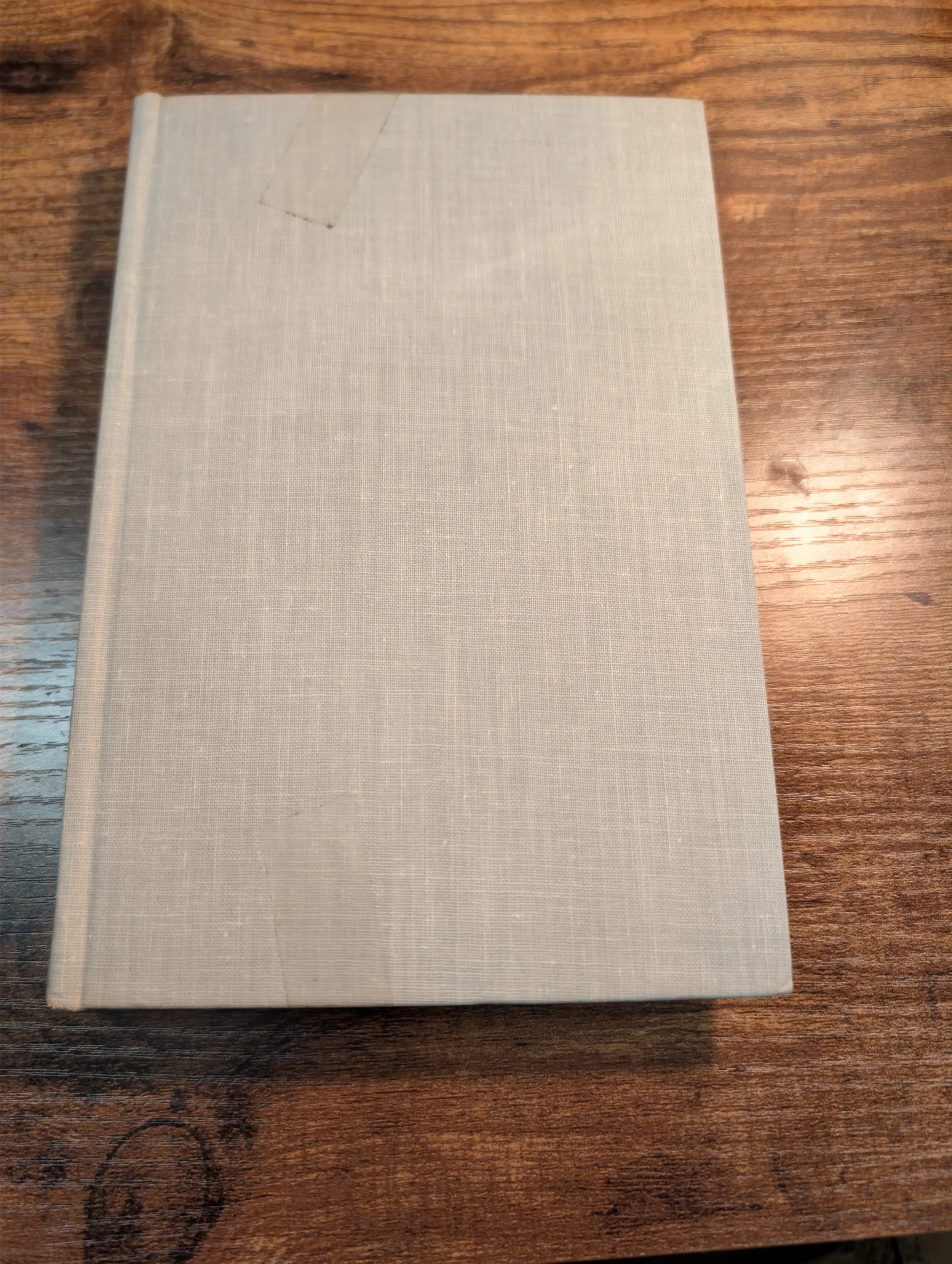 Image 3 of 11
 Image 4 of 11
 Image 5 of 11
 Image 6 of 11
 Image 7 of 11
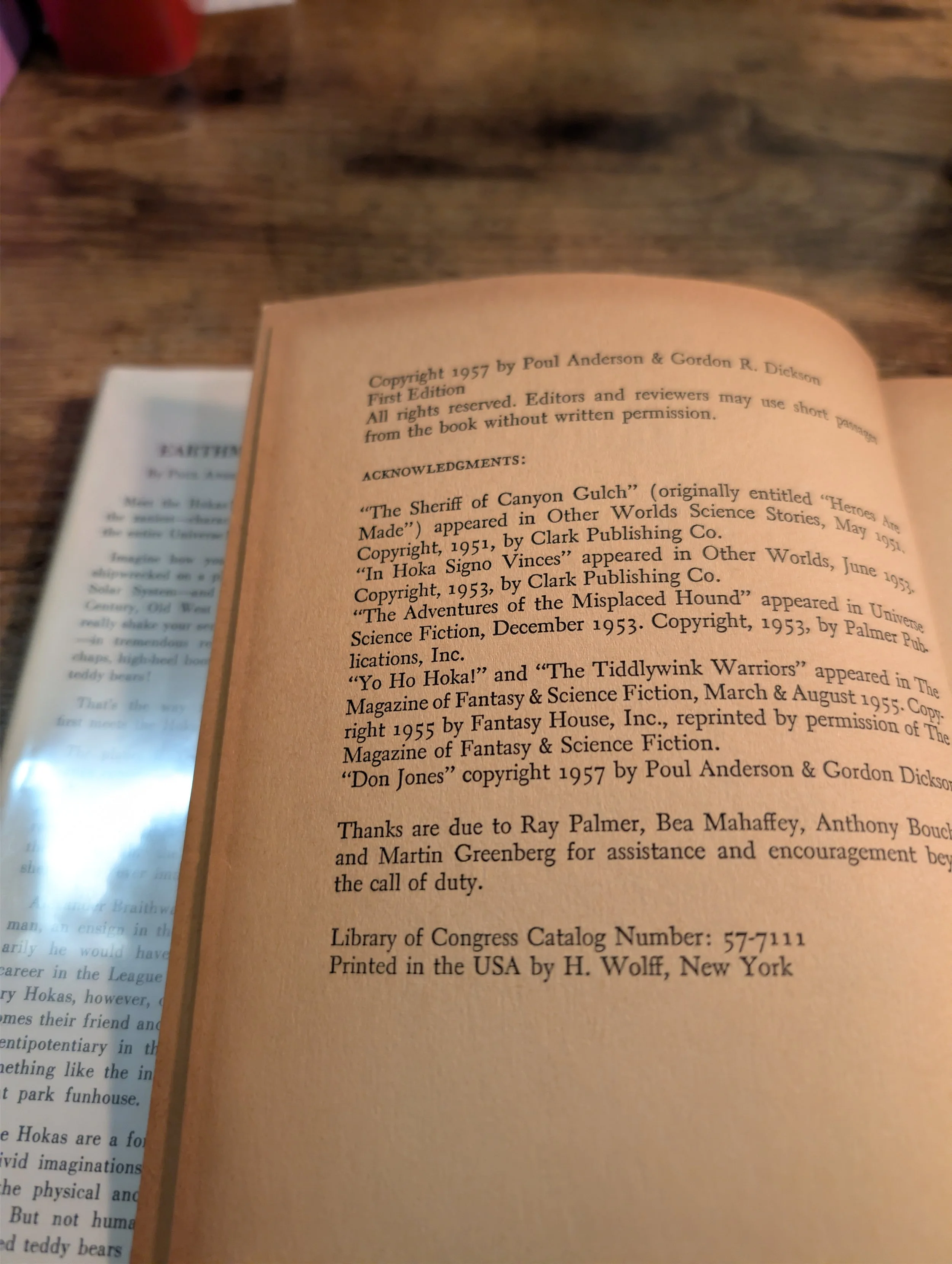 Image 8 of 11
 Image 9 of 11
 Image 10 of 11
 Image 11 of 11