Story & Significance
Herzog sold in enormous numbers, which is exactly why the first printing takes some care to identify. Viking went back to press quickly and kept going, so the market is full of 1964-dated later printings, jacketless copies, and clipped jackets sitting alongside genuine firsts at similar asking prices. Three things settle it on this copy. The copyright page reads "First published in 1964 by The Viking Press, Inc." with no later printing line beneath it. The jacket is unclipped and retains the $5.75 price, and it carries the Mel Williamson design credit. And the drop cap opening each chapter prints gray rather than solid black, the inking flaw associated with the first printing.
That gray initial is the point most often cited and the one most often misunderstood. It is a press fault, not a design choice, and it varies in depth from copy to copy, so it works as corroboration rather than as the primary test. The copyright statement is what carries the identification. The gray initials confirm what the copyright page already says.
The novel itself is Bellow's breakthrough, the book that took him from a respected literary novelist to a bestselling one, and it won the National Book Award for Fiction in 1965. For a collector, the interest sits in that intersection: a genuinely important postwar American novel that was also a mass-market success, which means firsts survive in quantity but firsts in an honest, unclipped jacket survive in rather fewer.
Physical Description
First edition, first printing, published by The Viking Press, New York, in 1964. The binding is tight and square, with one bumped corner noted. The text block is clean throughout, with no writing, underlining, foxing, or staining, and the pages are free of the toning that often shows up in books of this period. The drop cap letters opening the chapters print gray, consistent with the first printing.
The dust jacket is unclipped and retains the $5.75 price on the front flap, with the Mel Williamson design credit present. It shows shelf wear along the edges, a small closed tear on the front panel, and minor chipping. There is also a small hole at the fold where the jacket sits over the hinge, which reads as ordinary opening and closing wear rather than damage from handling or storage. The jacket is not protected by any prior owner's cover and has not been restored or color touched. Very Good book in a Very Good jacket.
Collector's Note
The single most useful thing to know when shopping this title is that the price on the flap is the fastest disqualifier. A clipped jacket on Herzog removes the easiest corroborating evidence and takes a real bite out of the copy's standing, and given how many copies were printed, there is no strong argument for accepting a clipped one unless the price reflects it. This copy is unclipped with the price intact, which is the harder half of the equation to find.
The faults here are honest and visible ones. A bumped corner and edge wear on the jacket are what a sixty-year-old trade novel looks like when it was read and shelved rather than sealed away, and the small hole at the hinge fold is the signature of a book that was actually opened. None of it touches the text block, which is clean. This suits a collector who wants a verified first printing of an important American novel in its original unrestored jacket and is not chasing a Fine copy, and it suits a reader collector who intends to handle the book. Anyone building toward a high-grade Bellow shelf will want to hold out for a sharper jacket.
Story & Significance
Herzog sold in enormous numbers, which is exactly why the first printing takes some care to identify. Viking went back to press quickly and kept going, so the market is full of 1964-dated later printings, jacketless copies, and clipped jackets sitting alongside genuine firsts at similar asking prices. Three things settle it on this copy. The copyright page reads "First published in 1964 by The Viking Press, Inc." with no later printing line beneath it. The jacket is unclipped and retains the $5.75 price, and it carries the Mel Williamson design credit. And the drop cap opening each chapter prints gray rather than solid black, the inking flaw associated with the first printing.
That gray initial is the point most often cited and the one most often misunderstood. It is a press fault, not a design choice, and it varies in depth from copy to copy, so it works as corroboration rather than as the primary test. The copyright statement is what carries the identification. The gray initials confirm what the copyright page already says.
The novel itself is Bellow's breakthrough, the book that took him from a respected literary novelist to a bestselling one, and it won the National Book Award for Fiction in 1965. For a collector, the interest sits in that intersection: a genuinely important postwar American novel that was also a mass-market success, which means firsts survive in quantity but firsts in an honest, unclipped jacket survive in rather fewer.
Physical Description
First edition, first printing, published by The Viking Press, New York, in 1964. The binding is tight and square, with one bumped corner noted. The text block is clean throughout, with no writing, underlining, foxing, or staining, and the pages are free of the toning that often shows up in books of this period. The drop cap letters opening the chapters print gray, consistent with the first printing.
The dust jacket is unclipped and retains the $5.75 price on the front flap, with the Mel Williamson design credit present. It shows shelf wear along the edges, a small closed tear on the front panel, and minor chipping. There is also a small hole at the fold where the jacket sits over the hinge, which reads as ordinary opening and closing wear rather than damage from handling or storage. The jacket is not protected by any prior owner's cover and has not been restored or color touched. Very Good book in a Very Good jacket.
Collector's Note
The single most useful thing to know when shopping this title is that the price on the flap is the fastest disqualifier. A clipped jacket on Herzog removes the easiest corroborating evidence and takes a real bite out of the copy's standing, and given how many copies were printed, there is no strong argument for accepting a clipped one unless the price reflects it. This copy is unclipped with the price intact, which is the harder half of the equation to find.
The faults here are honest and visible ones. A bumped corner and edge wear on the jacket are what a sixty-year-old trade novel looks like when it was read and shelved rather than sealed away, and the small hole at the hinge fold is the signature of a book that was actually opened. None of it touches the text block, which is clean. This suits a collector who wants a verified first printing of an important American novel in its original unrestored jacket and is not chasing a Fine copy, and it suits a reader collector who intends to handle the book. Anyone building toward a high-grade Bellow shelf will want to hold out for a sharper jacket.

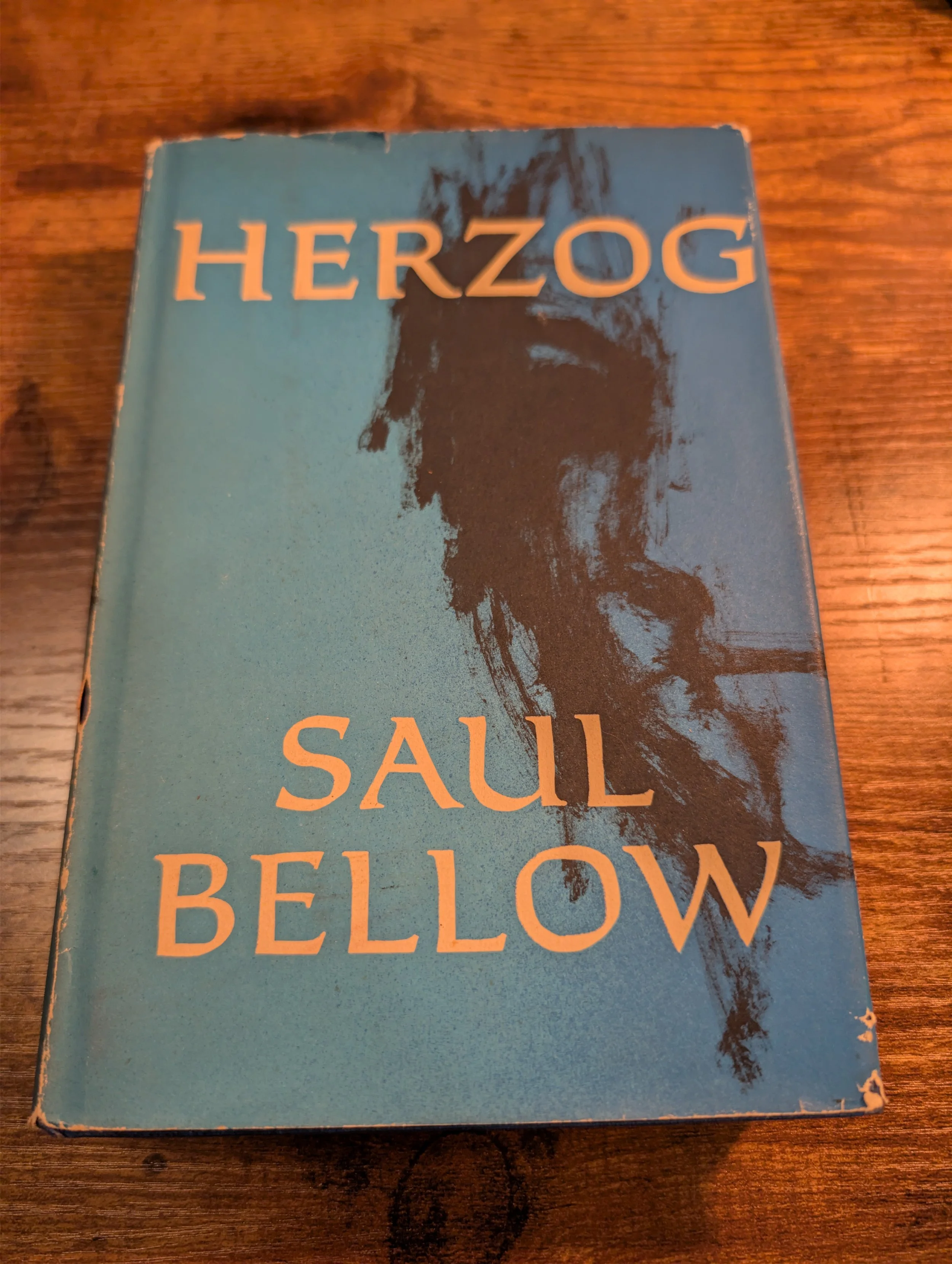 Image 1 of 11
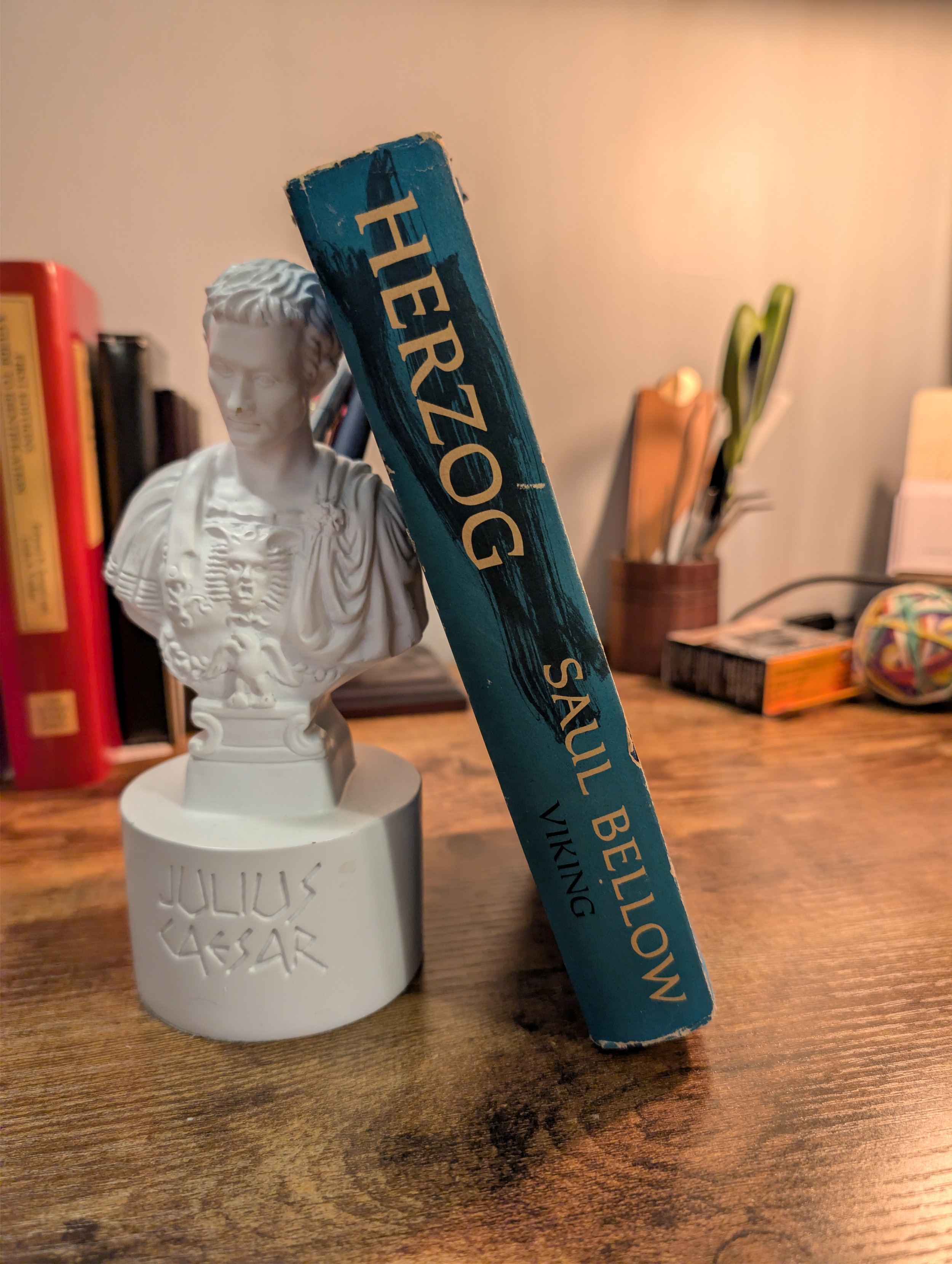 Image 2 of 11
 Image 3 of 11
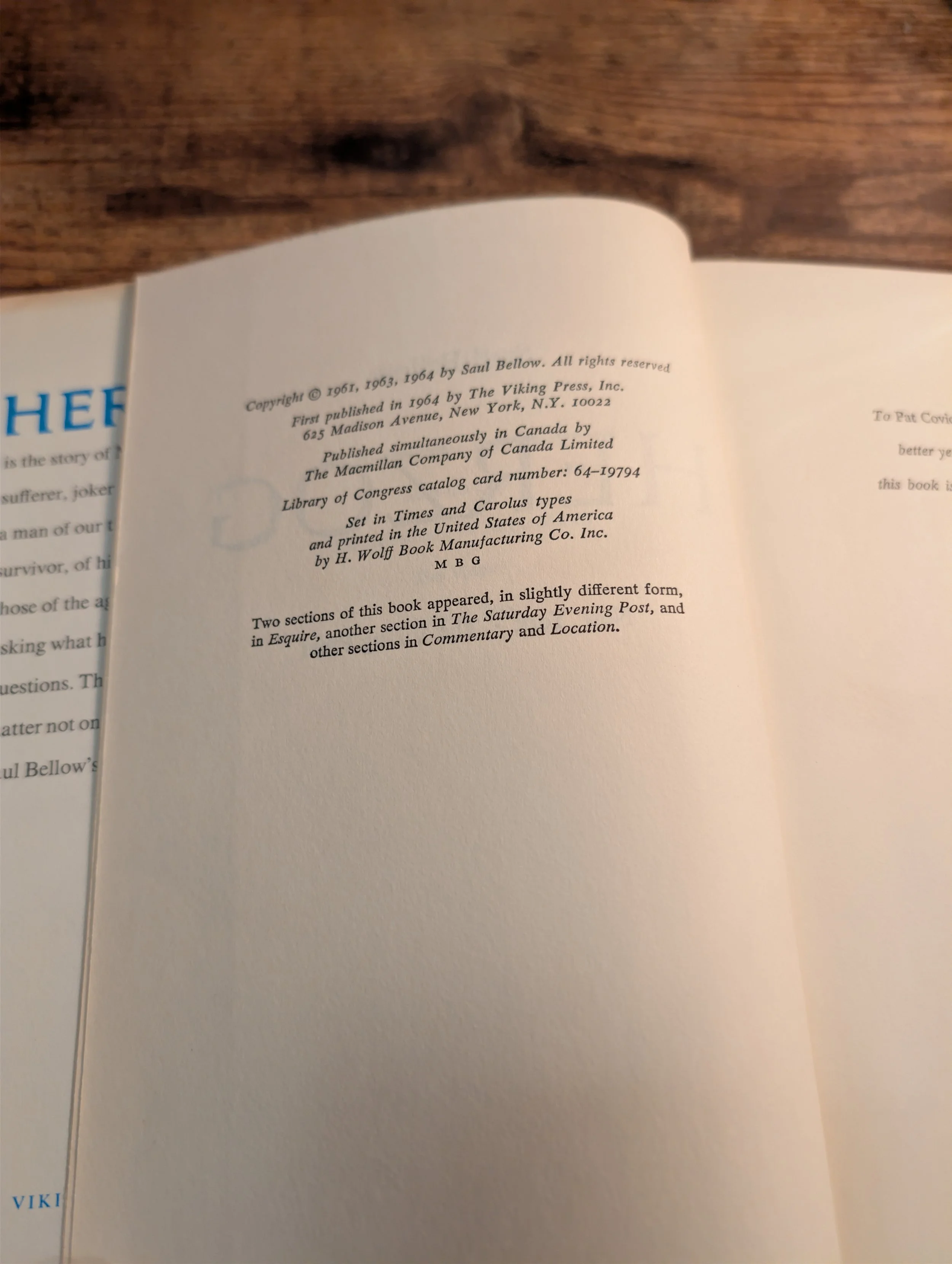 Image 4 of 11
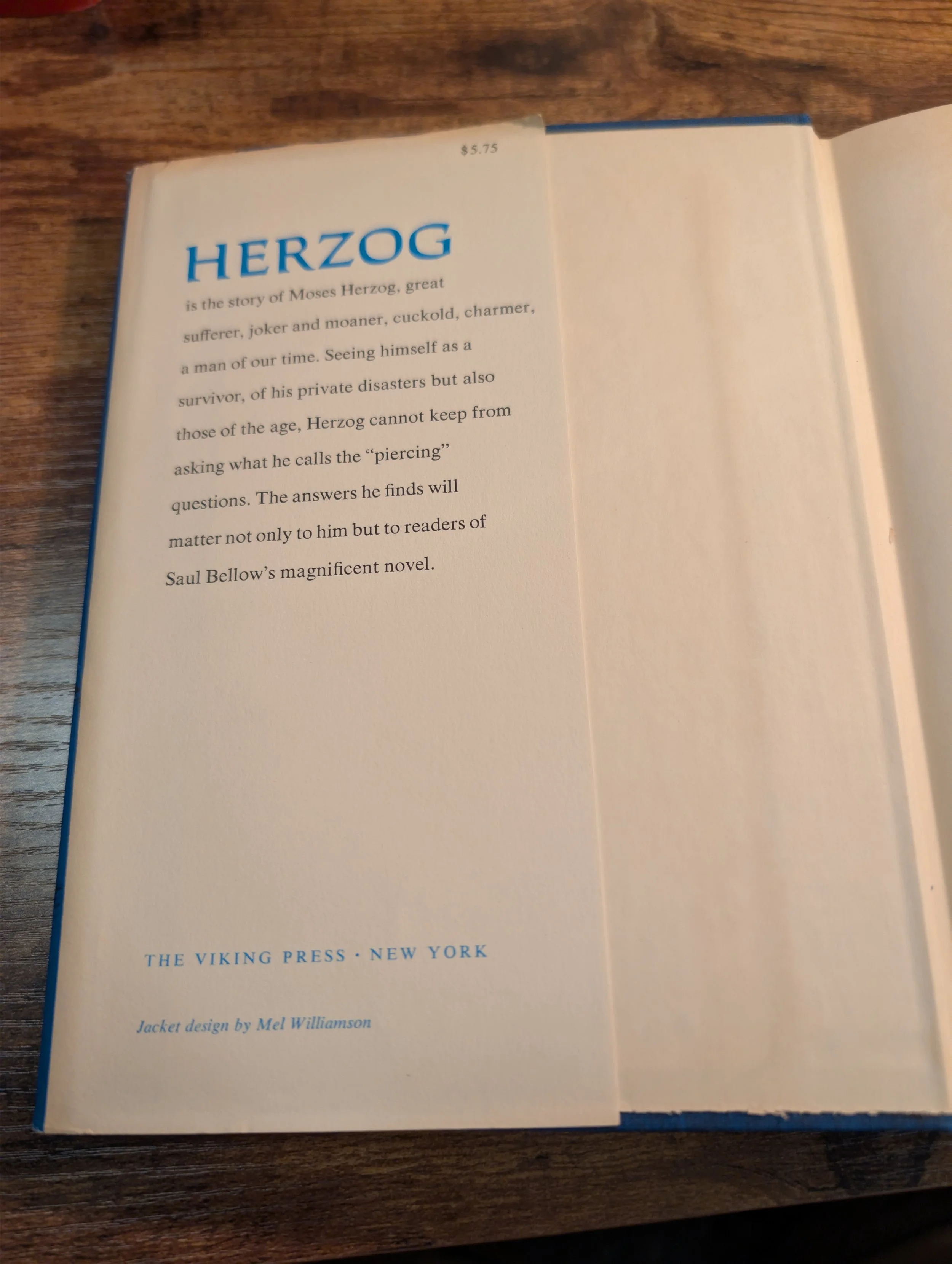 Image 5 of 11
 Image 6 of 11
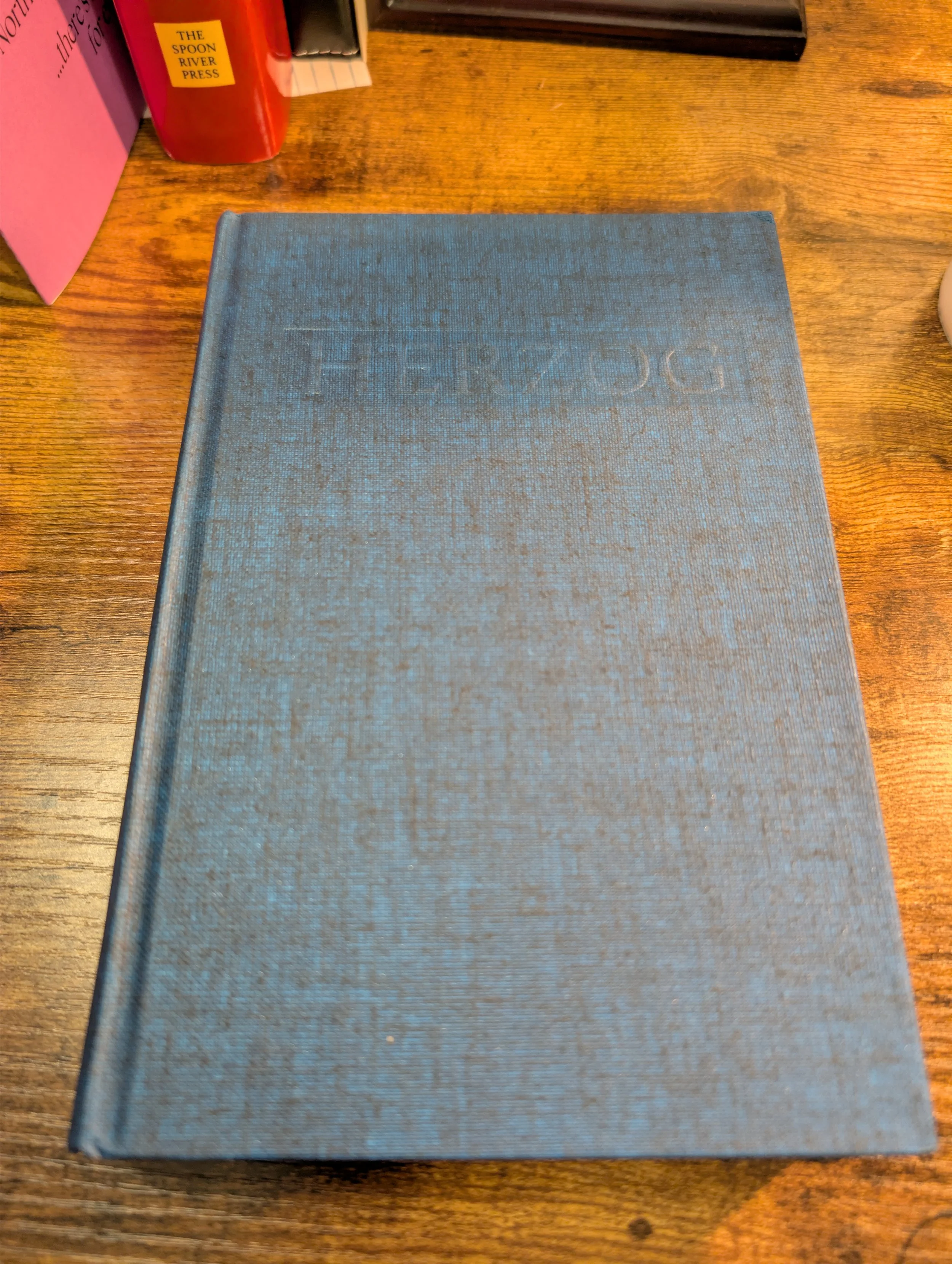 Image 7 of 11
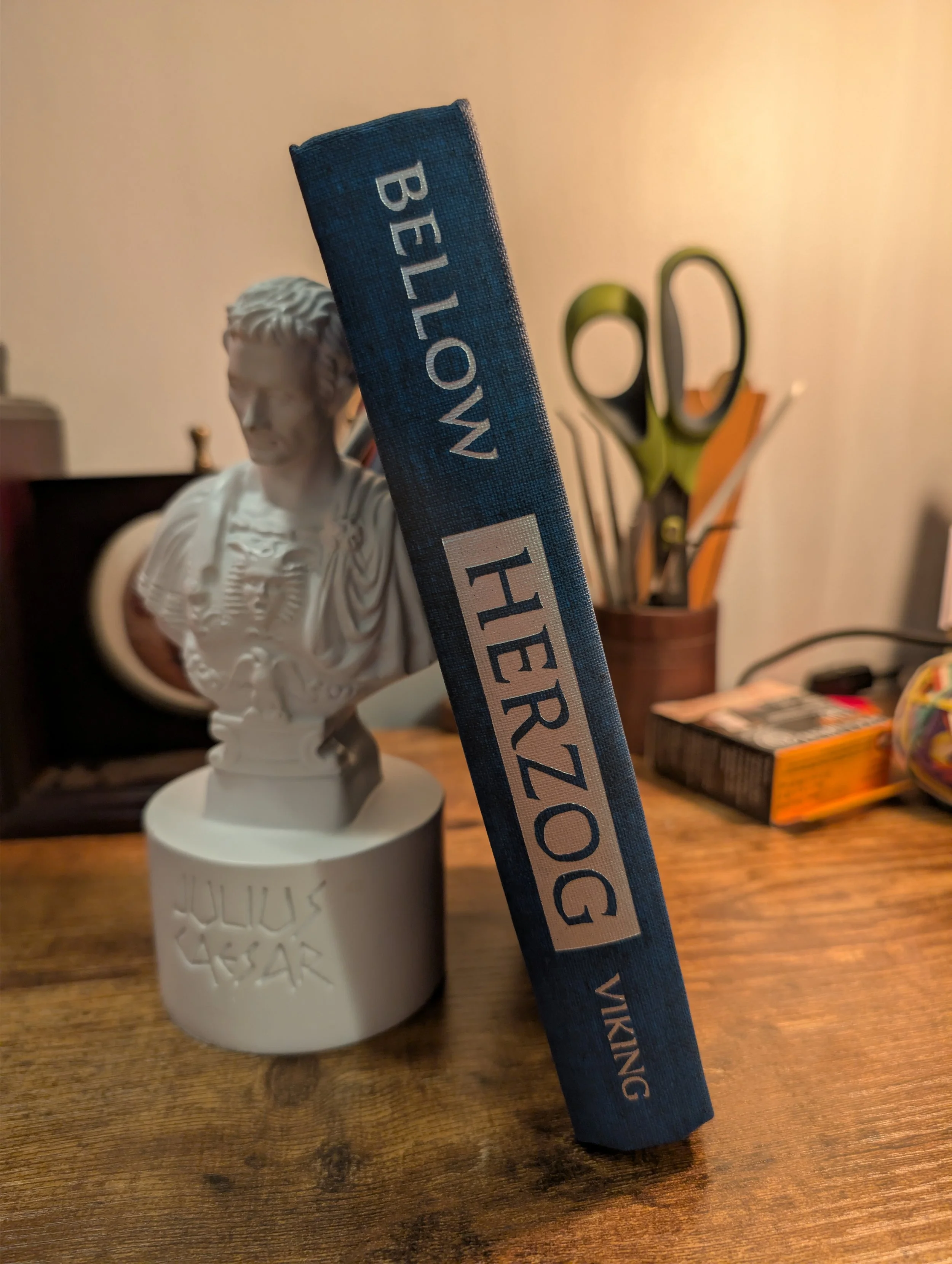 Image 8 of 11
 Image 9 of 11
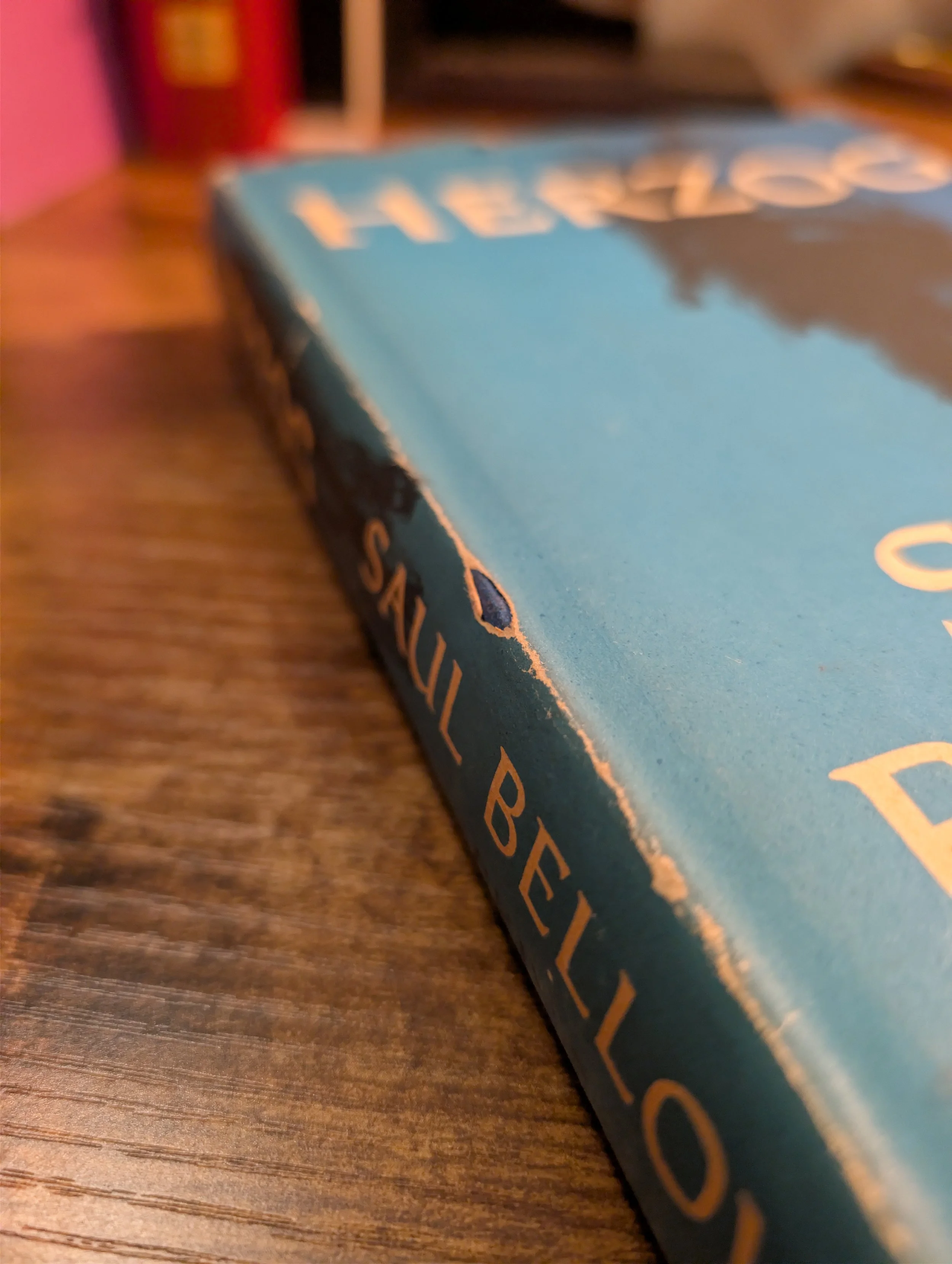 Image 10 of 11
 Image 11 of 11