Story & Significance
Ray Bradbury published Long After Midnight in 1976, late in a career that had already produced The Martian Chronicles, Fahrenheit 451, and Something Wicked This Way Comes, and it showed him still in full command of the short story form that made his name. The collection gathers twenty-two tales ranging from science fiction to dark fantasy to quiet domestic horror, the kind of work only a writer who has spent decades listening to the rhythms of ordinary American life can produce. Bradbury at his best doesn’t frighten so much as unsettle, finding the strange at the edge of the familiar, and Long After Midnight is full of that quality. Alfred A. Knopf, his publisher for much of his mature work, issued the book with the bibliographic care the author deserved: according to L.W. Currey’s Science Fiction and Fantasy Authors, the first edition carries the “first edition so stated on copyright page”, the point of issue that distinguishes this printing from those that followed.
The dust jacket choice is worth noting on its own terms. Knopf commissioned use of Henry Fuseli’s The Nightmare (1781, oil on canvas), one of the most famous and unsettling images in Western painting, depicting a sleeping woman prostrate beneath a crouching incubus while a wild-eyed horse peers from the shadows behind her. First shown at the Royal Academy of London in 1782, the painting shocked and fascinated viewers in equal measure. It is a peculiarly apt choice for a Bradbury collection: the painting and the prose share the same territory, the border country between waking and dreaming where dread lives.
Physical Description
This copy is quarter bound in dark brown cloth over tan boards, with gilt lettering to the spine, a handsome and restrained presentation that suits the book well. Currey describes the binding as “Boards with cloth shelf back,” and this copy conforms precisely to that description. The text block carries a red topstain, and the pages are deckled, giving the volume a tactile distinction unusual for a commercial trade edition of the period.
The dust jacket is unclipped, retaining the original price of $7.95 on the front flap. Condition is Very Good / Very Good. The jacket shows light chipping to the top of the spine and light soiling to the back panel, minor wear consistent with a book that has been read and shelved with reasonable care. The boards themselves display the slightest shelfwear, with light fading to the cloth; corners remain square. The binding carries a slight lean. There is light foxing on the front pastedown and free endpaper, and on the rear pastedown, a common characteristic in books of this vintage and one that does not affect the text or reading experience.
Collector’s Note
For Bradbury collectors, the points of issue here are clean: the copyright page carries the “first edition” statement Currey identifies for this title, and the jacket is unclipped at the original $7.95 price, the combination that defines a first-issue copy in the condition a collector wants to find it. The Fuseli jacket art elevates this above an ordinary shelf copy. The Nightmare was already nearly two centuries old when Knopf chose it for this cover, and its pairing with Bradbury’s late-career stories about fear, wonder, and the hours after midnight feels less like a design choice than an editorial one. Copies in this jacket condition, unclipped and showing only cosmetic wear, are not difficult to find, but they’re not always offered with documentation. This one is.
Be sure to see our other science fiction selections.
Bibliographic source: L.W. Currey, Science Fiction and Fantasy Authors: A Bibliography of First Printings of Their Fiction and Selected Nonfiction, revised edition.
Story & Significance
Ray Bradbury published Long After Midnight in 1976, late in a career that had already produced The Martian Chronicles, Fahrenheit 451, and Something Wicked This Way Comes, and it showed him still in full command of the short story form that made his name. The collection gathers twenty-two tales ranging from science fiction to dark fantasy to quiet domestic horror, the kind of work only a writer who has spent decades listening to the rhythms of ordinary American life can produce. Bradbury at his best doesn’t frighten so much as unsettle, finding the strange at the edge of the familiar, and Long After Midnight is full of that quality. Alfred A. Knopf, his publisher for much of his mature work, issued the book with the bibliographic care the author deserved: according to L.W. Currey’s Science Fiction and Fantasy Authors, the first edition carries the “first edition so stated on copyright page”, the point of issue that distinguishes this printing from those that followed.
The dust jacket choice is worth noting on its own terms. Knopf commissioned use of Henry Fuseli’s The Nightmare (1781, oil on canvas), one of the most famous and unsettling images in Western painting, depicting a sleeping woman prostrate beneath a crouching incubus while a wild-eyed horse peers from the shadows behind her. First shown at the Royal Academy of London in 1782, the painting shocked and fascinated viewers in equal measure. It is a peculiarly apt choice for a Bradbury collection: the painting and the prose share the same territory, the border country between waking and dreaming where dread lives.
Physical Description
This copy is quarter bound in dark brown cloth over tan boards, with gilt lettering to the spine, a handsome and restrained presentation that suits the book well. Currey describes the binding as “Boards with cloth shelf back,” and this copy conforms precisely to that description. The text block carries a red topstain, and the pages are deckled, giving the volume a tactile distinction unusual for a commercial trade edition of the period.
The dust jacket is unclipped, retaining the original price of $7.95 on the front flap. Condition is Very Good / Very Good. The jacket shows light chipping to the top of the spine and light soiling to the back panel, minor wear consistent with a book that has been read and shelved with reasonable care. The boards themselves display the slightest shelfwear, with light fading to the cloth; corners remain square. The binding carries a slight lean. There is light foxing on the front pastedown and free endpaper, and on the rear pastedown, a common characteristic in books of this vintage and one that does not affect the text or reading experience.
Collector’s Note
For Bradbury collectors, the points of issue here are clean: the copyright page carries the “first edition” statement Currey identifies for this title, and the jacket is unclipped at the original $7.95 price, the combination that defines a first-issue copy in the condition a collector wants to find it. The Fuseli jacket art elevates this above an ordinary shelf copy. The Nightmare was already nearly two centuries old when Knopf chose it for this cover, and its pairing with Bradbury’s late-career stories about fear, wonder, and the hours after midnight feels less like a design choice than an editorial one. Copies in this jacket condition, unclipped and showing only cosmetic wear, are not difficult to find, but they’re not always offered with documentation. This one is.
Be sure to see our other science fiction selections.
Bibliographic source: L.W. Currey, Science Fiction and Fantasy Authors: A Bibliography of First Printings of Their Fiction and Selected Nonfiction, revised edition.

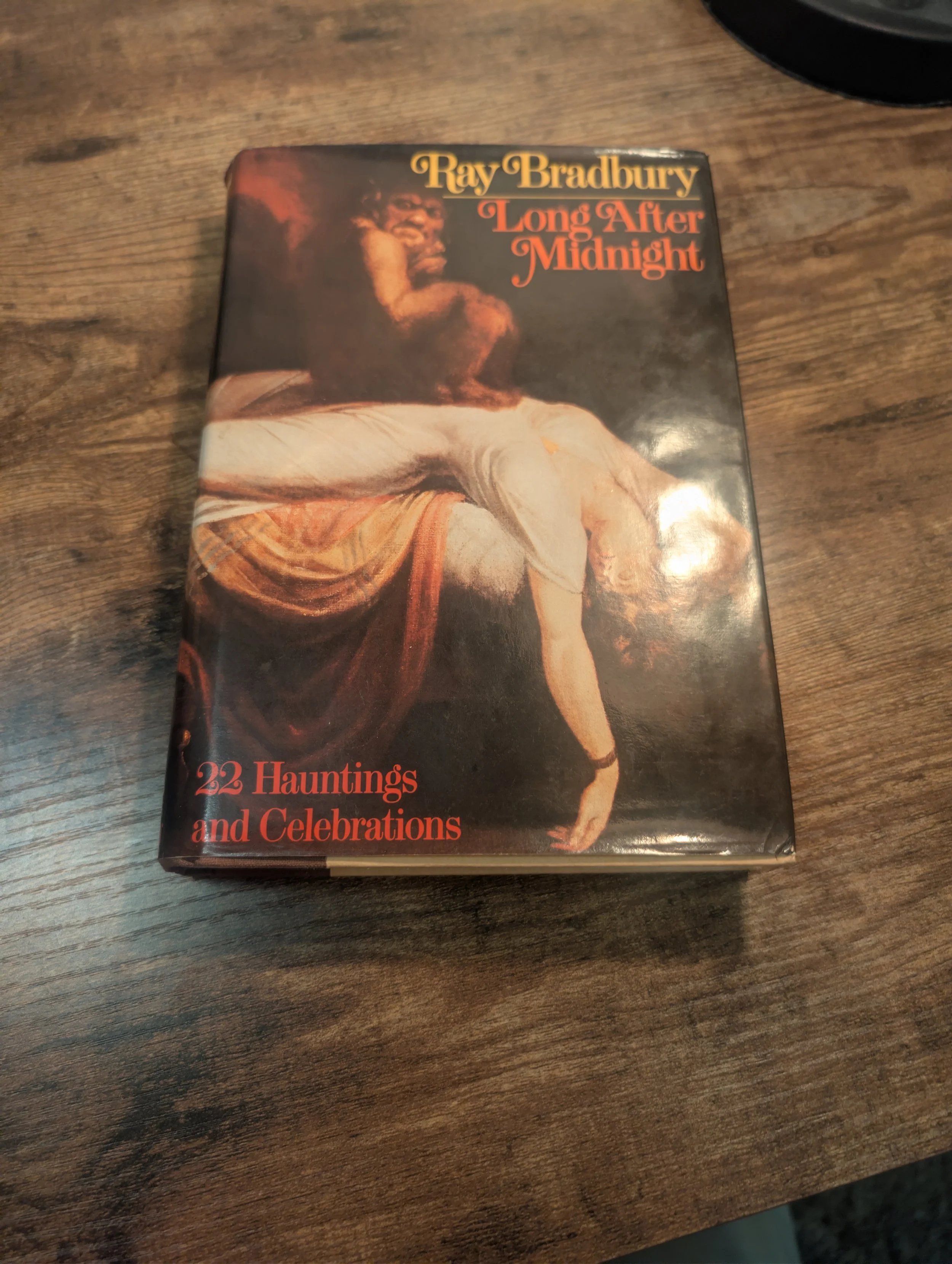 Image 1 of 11
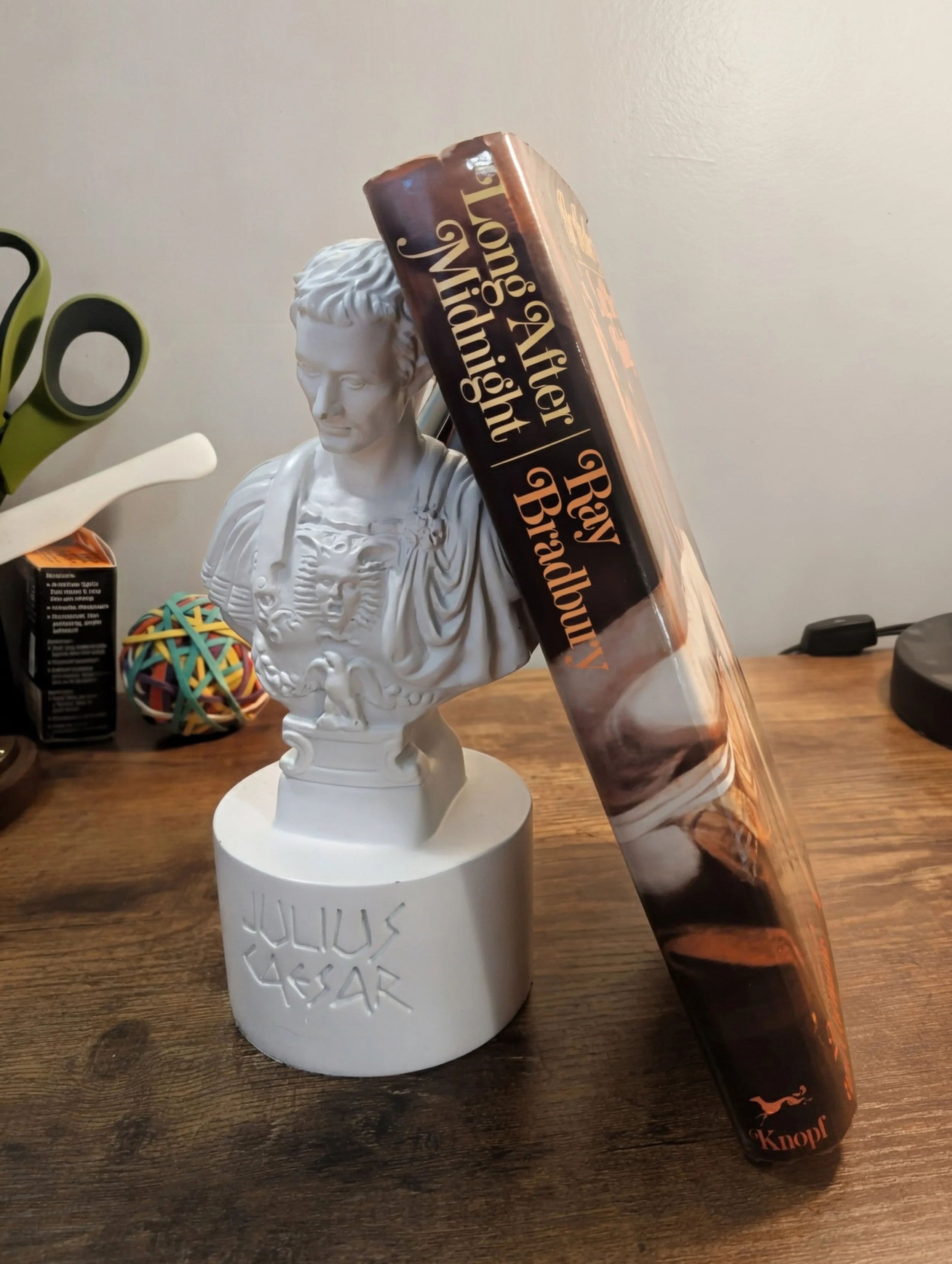 Image 2 of 11
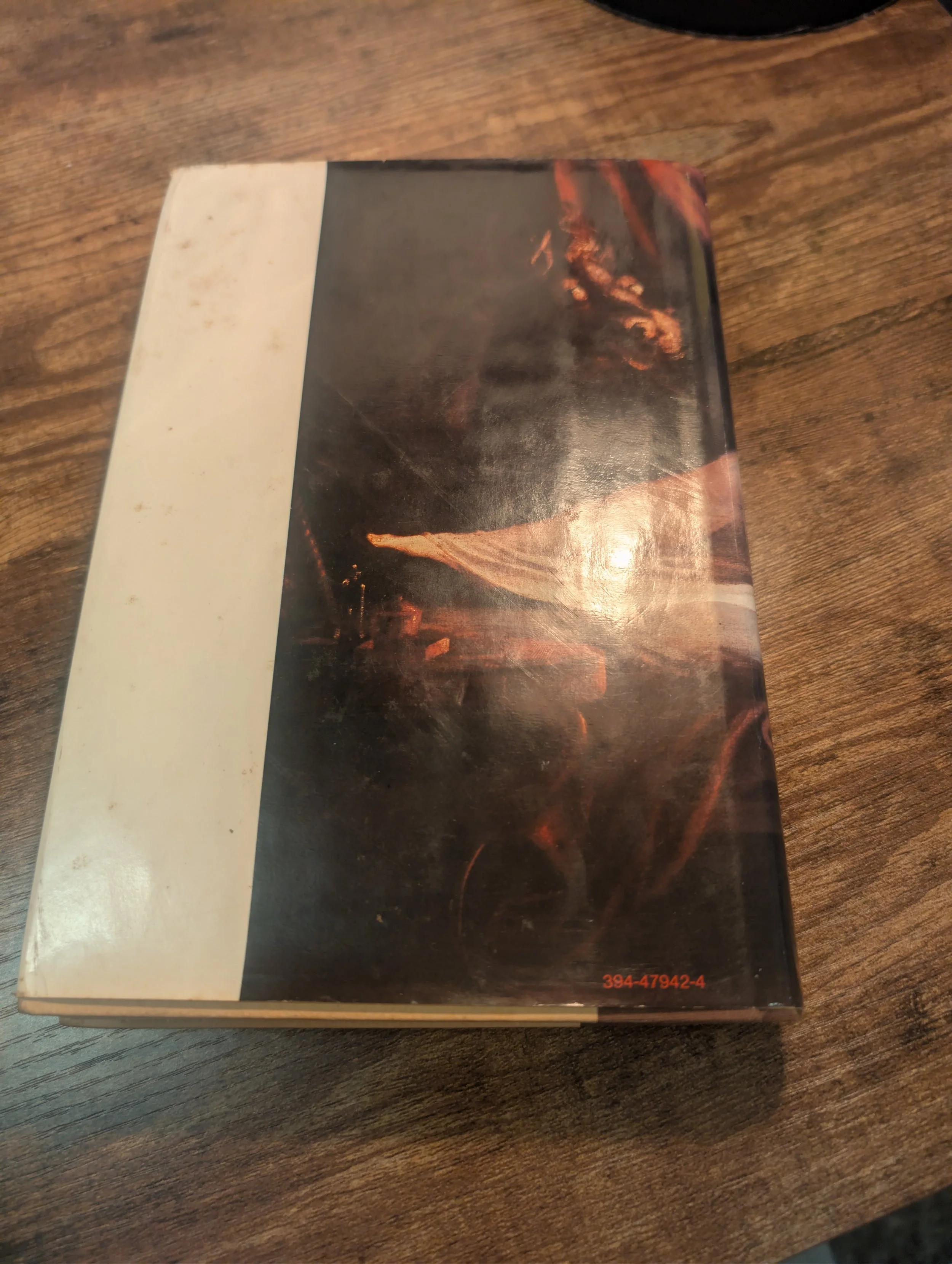 Image 3 of 11
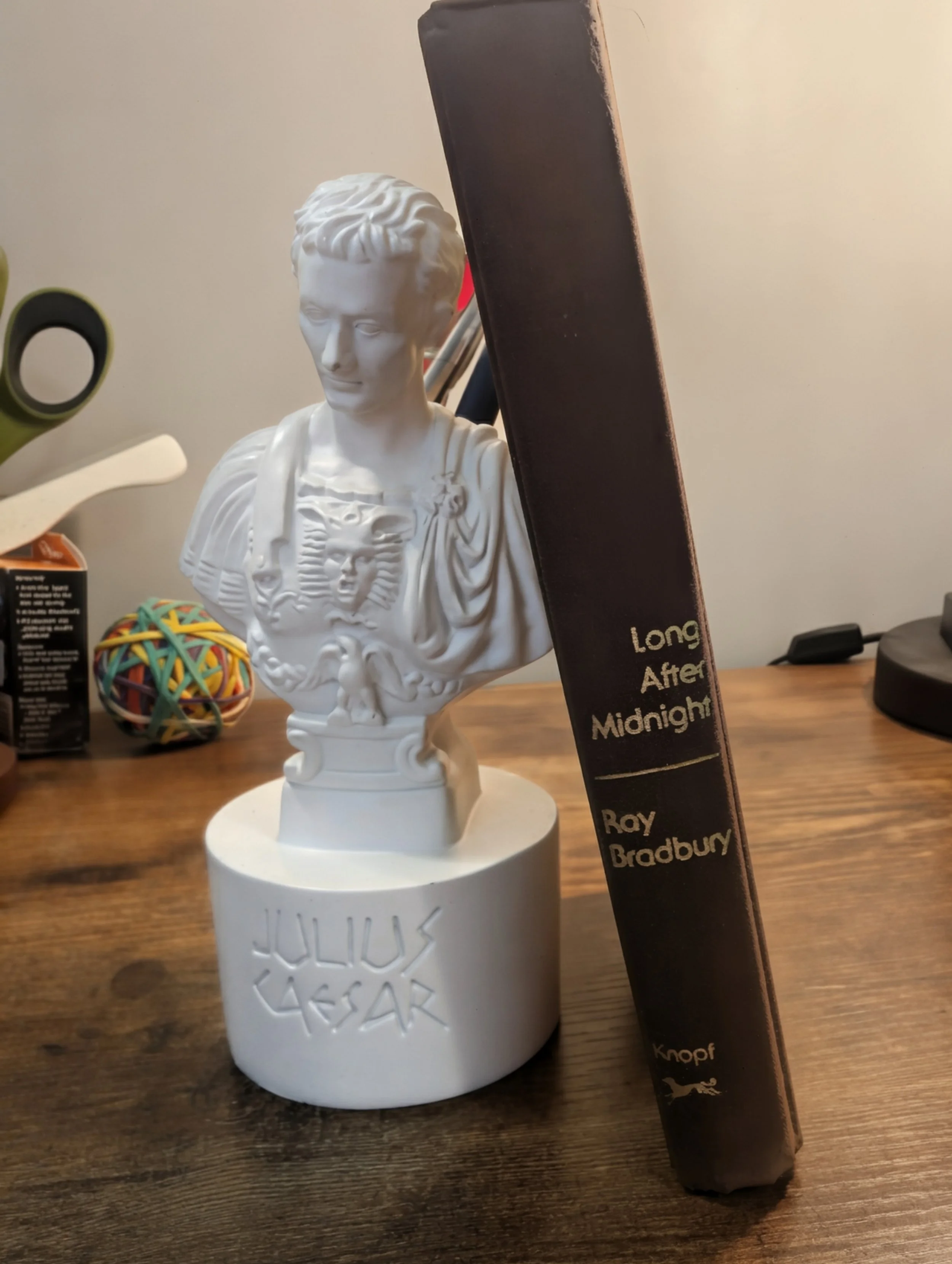 Image 4 of 11
 Image 5 of 11
 Image 6 of 11
 Image 7 of 11
 Image 8 of 11
 Image 9 of 11
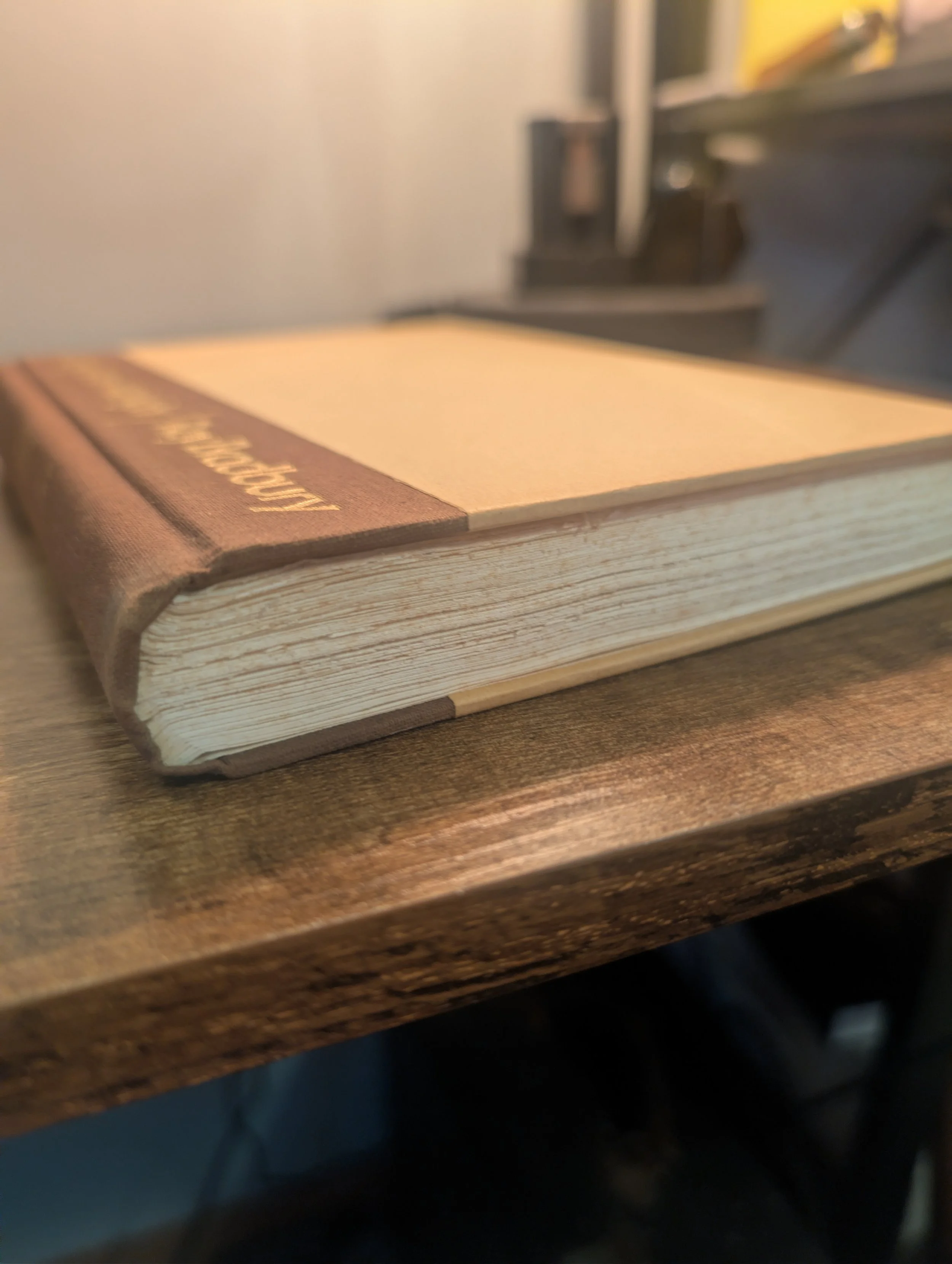 Image 10 of 11
 Image 11 of 11