
 Image 1 of 5
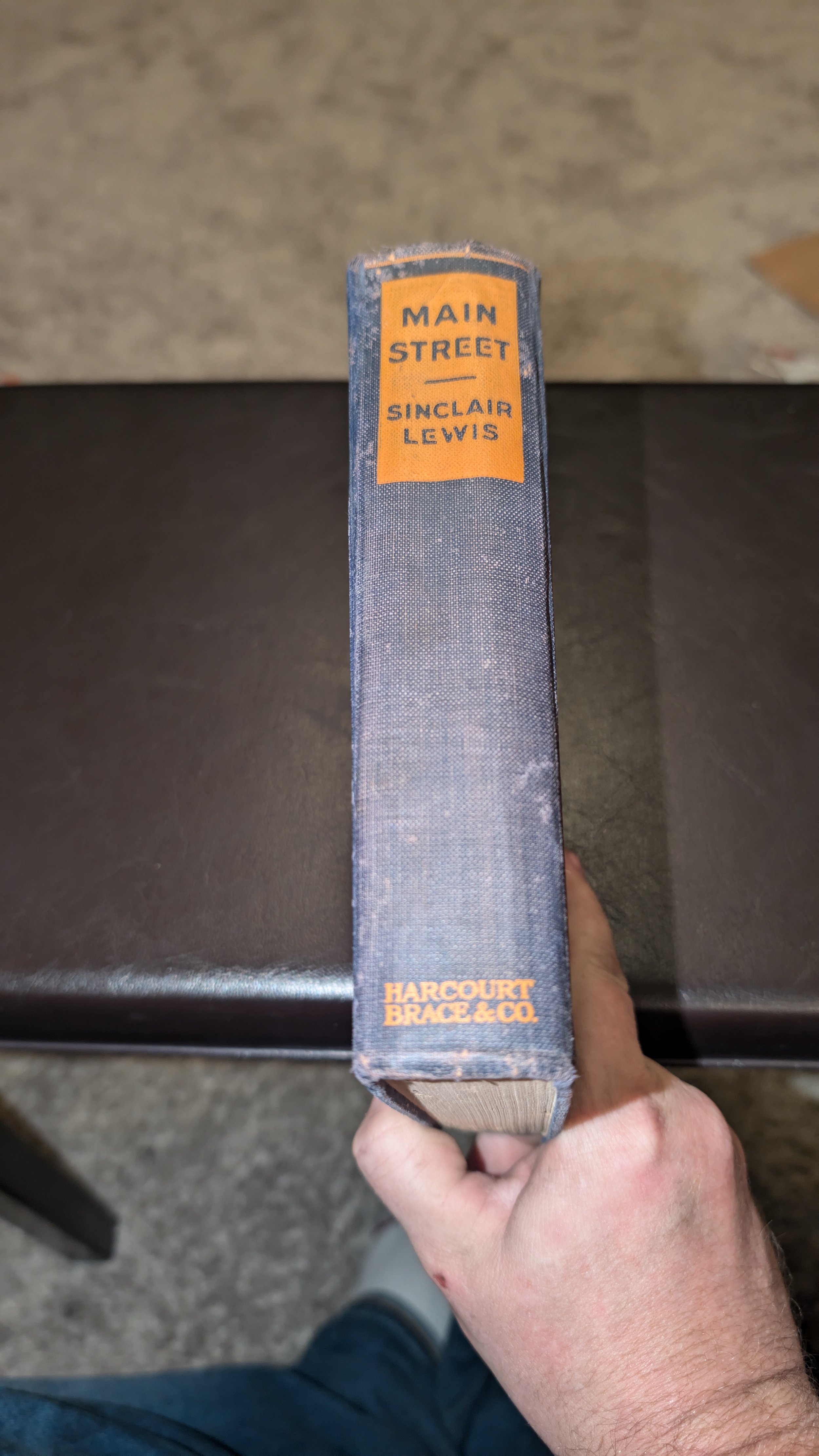 Image 2 of 5
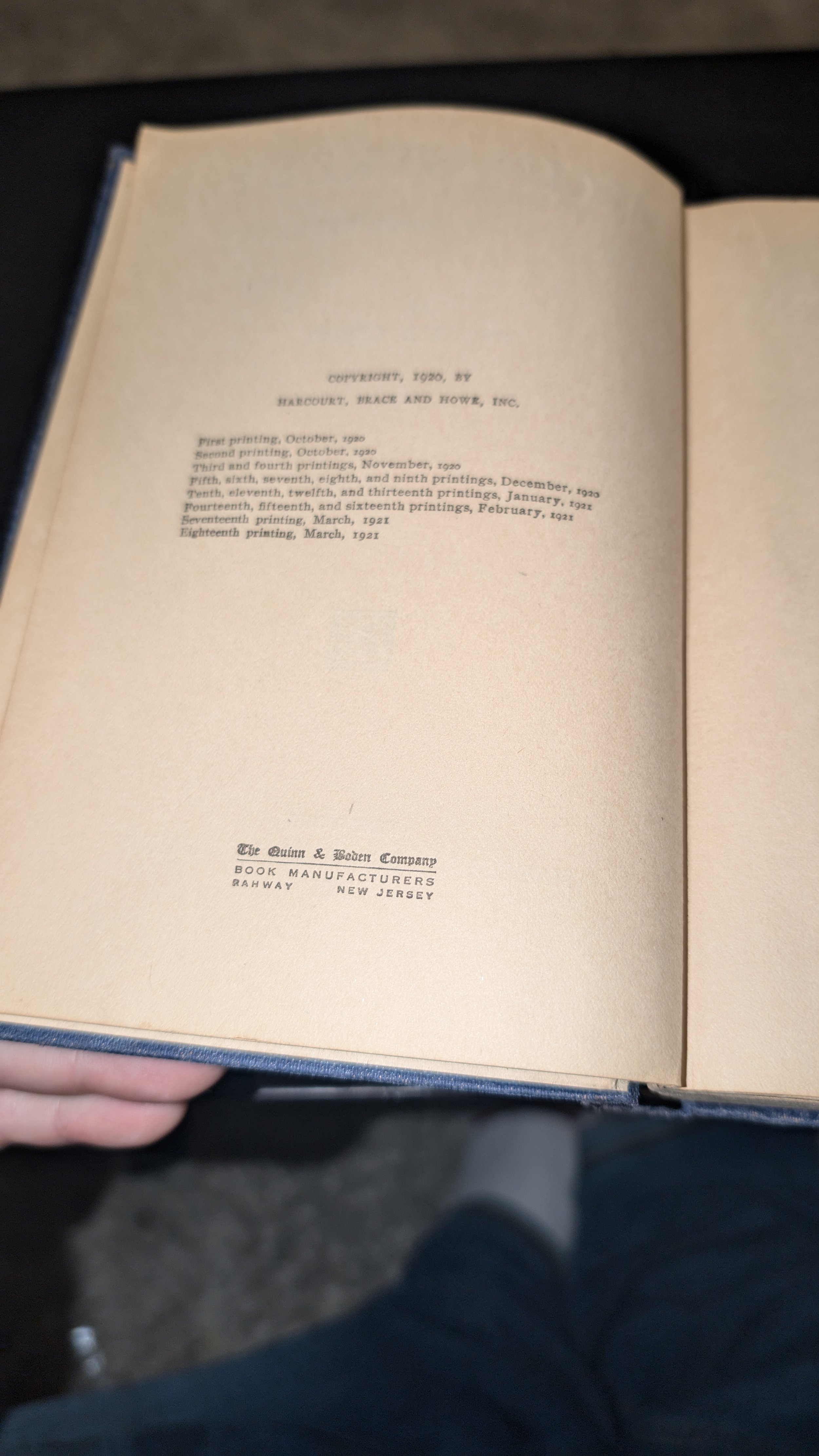 Image 3 of 5
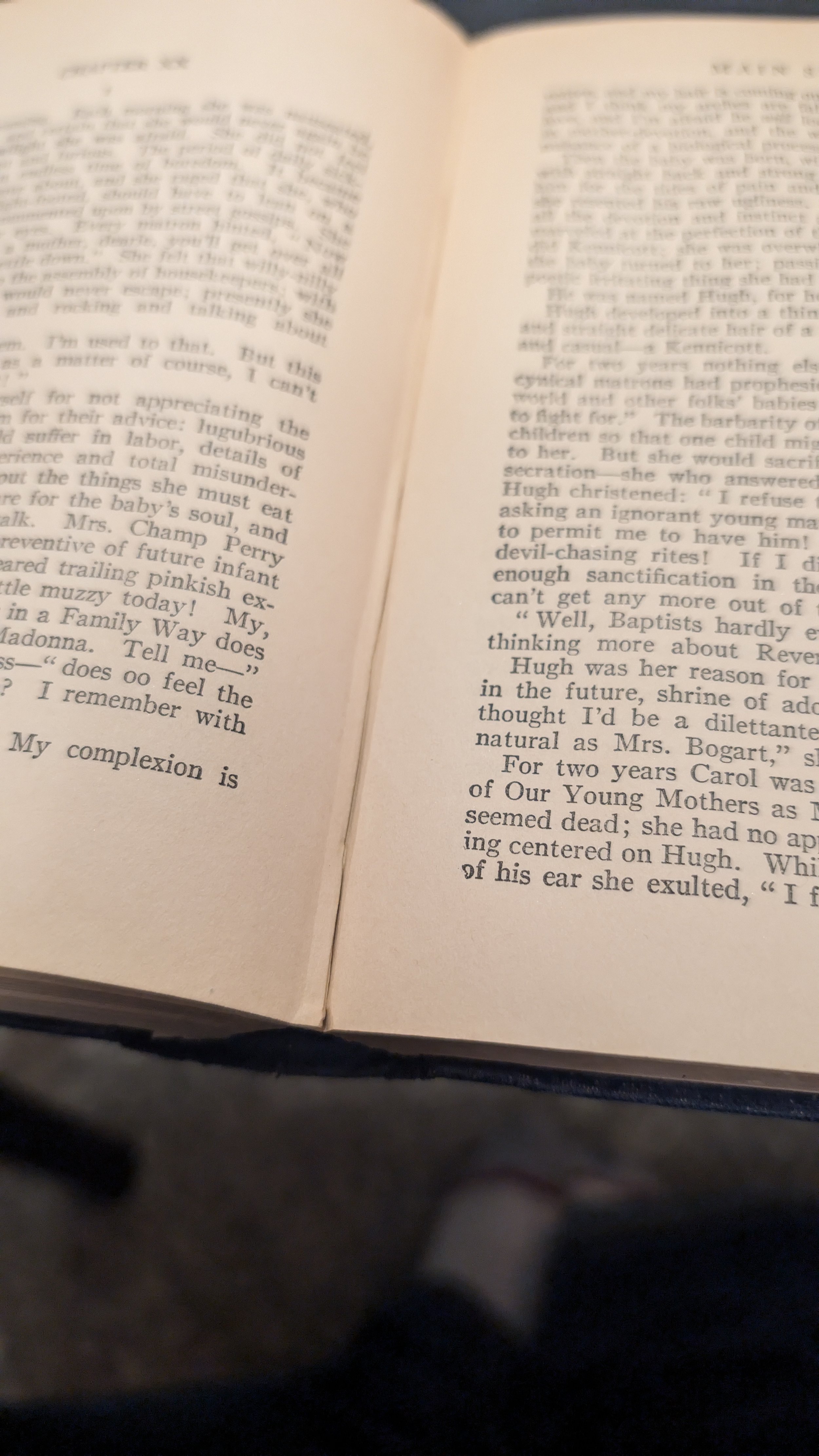 Image 4 of 5
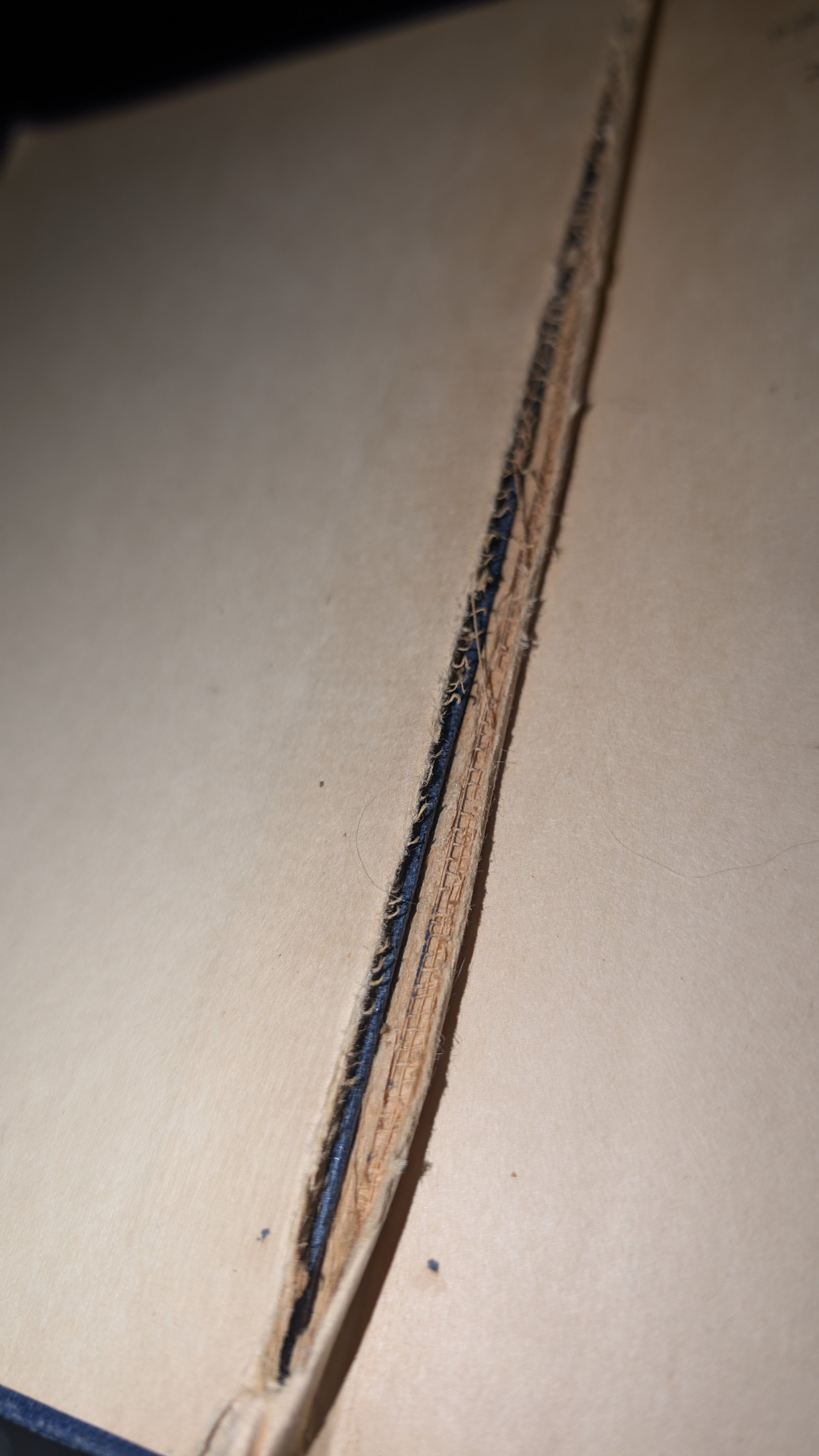 Image 5 of 5
Published in 1920, Sinclair Lewis’s Main Street is a monumental work of American realism that shattered the romanticized myth of the small town. Set in the fictional "Gopher Prairie," the novel serves as a scathing critique of provincialism, cultural stagnation, and the stifling conformity of middle America. Through the eyes of the idealistic Carol Kennicott, Lewis exposes the "village virus" that infects the spirit of those who seek intellectual or aesthetic growth. A massive commercial success that helped Lewis become the first American to win the Nobel Prize in Literature, Main Street remains a vital sociological study of the tensions between tradition and modernity.
Edition: Eighteenth Printing (c. 1921).
Publisher: Harcourt, Brace and Howe, New York.
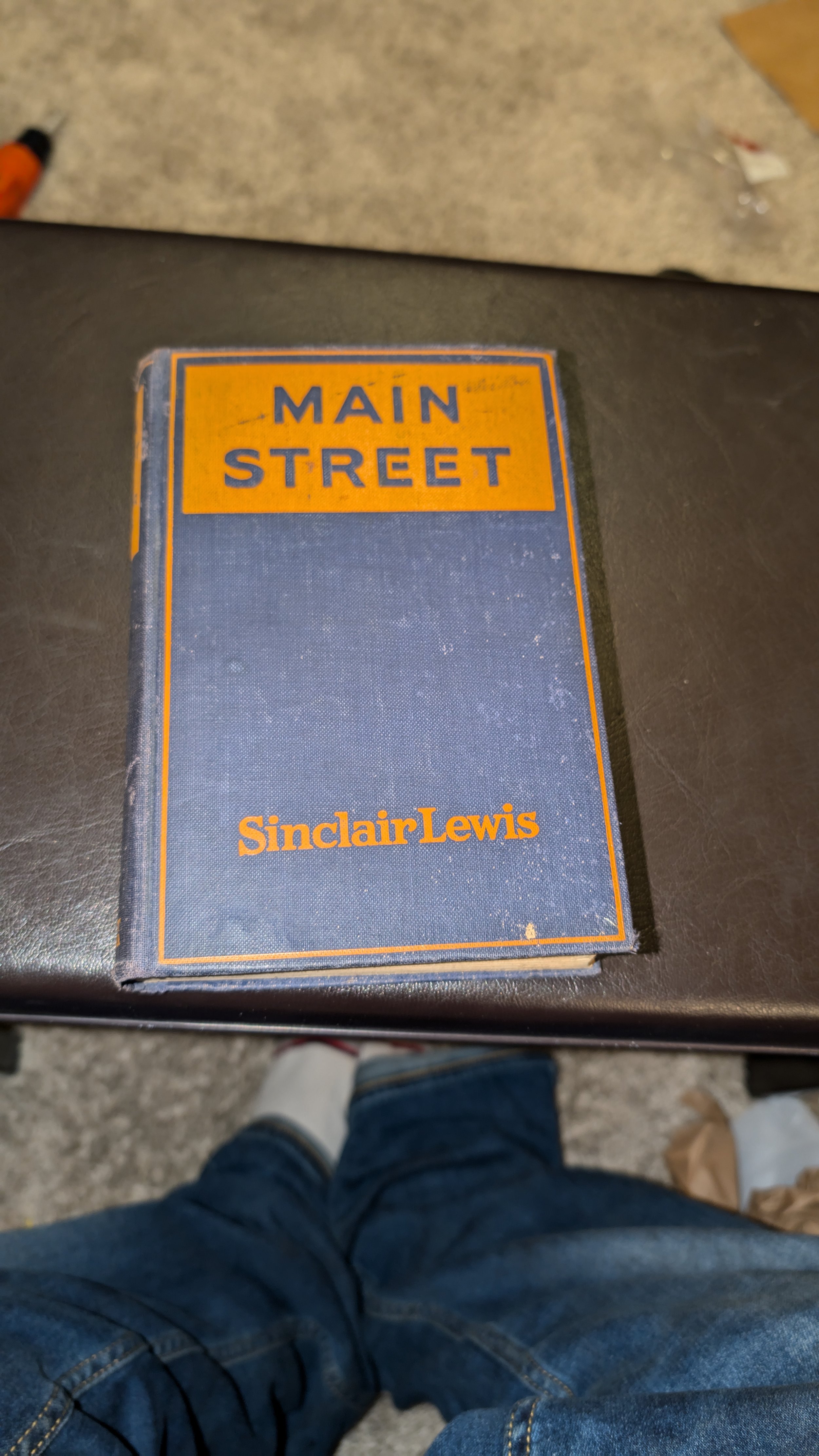
Binding: Original blue cloth boards with orange-stamped lettering.
Condition Points: This copy is in Acceptable condition. While the boards are well-preserved with only slight bumping to the corners, the internal front hinge has split, resulting in a loose binding. The internal pages remain clean and legible, though minor creasing is present on several leaves.
Provenance: An early trade printing from the height of the book's initial popularity, offering a tangible connection to the cultural phenomenon that defined the American 1920s.
As an eighteenth printing, this volume represents the incredible velocity at which Main Street captured the national imagination following its 1920 debut. Although the split hinge makes this a delicate specimen, the external cloth remains vibrant, making it an excellent candidate for shelf display or for a collector who desires an authentic period edition at an entry-level price point. For those with an interest in Minnesota literary history or the evolution of the American social novel, this is an affordable artifact from a Nobel-winning career.
See all of our later printings and classic literature.
Published in 1920, Sinclair Lewis’s Main Street is a monumental work of American realism that shattered the romanticized myth of the small town. Set in the fictional "Gopher Prairie," the novel serves as a scathing critique of provincialism, cultural stagnation, and the stifling conformity of middle America. Through the eyes of the idealistic Carol Kennicott, Lewis exposes the "village virus" that infects the spirit of those who seek intellectual or aesthetic growth. A massive commercial success that helped Lewis become the first American to win the Nobel Prize in Literature, Main Street remains a vital sociological study of the tensions between tradition and modernity.
Edition: Eighteenth Printing (c. 1921).
Publisher: Harcourt, Brace and Howe, New York.
Binding: Original blue cloth boards with orange-stamped lettering.
Condition Points: This copy is in Acceptable condition. While the boards are well-preserved with only slight bumping to the corners, the internal front hinge has split, resulting in a loose binding. The internal pages remain clean and legible, though minor creasing is present on several leaves.
Provenance: An early trade printing from the height of the book's initial popularity, offering a tangible connection to the cultural phenomenon that defined the American 1920s.
As an eighteenth printing, this volume represents the incredible velocity at which Main Street captured the national imagination following its 1920 debut. Although the split hinge makes this a delicate specimen, the external cloth remains vibrant, making it an excellent candidate for shelf display or for a collector who desires an authentic period edition at an entry-level price point. For those with an interest in Minnesota literary history or the evolution of the American social novel, this is an affordable artifact from a Nobel-winning career.
See all of our later printings and classic literature.