Story & Significance
By 1950, A. E. van Vogt was one of the undisputed architects of Golden Age science fiction. Masters of Time brings together two of his most celebrated novellas — "Masters of Time" (originally published as "Recruiting Station") and "The Changeling" — in a single volume that showcases the relentless inventiveness and breakneck plotting that made van Vogt a defining voice of the era. Fantasy Press, the Reading, Pennsylvania specialty publisher that served as one of the great custodians of Golden Age SF in hardcover form, produced this edition with illustrations by Edd Cartier, whose work for Unknown and Astounding Science Fiction made him one of the most beloved artists of the pulp era. For collectors of Fantasy Press imprints, van Vogt firsts, or Golden Age SF more broadly, this title checks every box.
Physical Description
First edition, first printing, Fantasy Press, Reading, Pennsylvania, 1950. Illustrations by Edd Cartier. Condition: Near Fine in Very Good dust jacket.
The boards are tan cloth with title stamped in black — identifying this as the Greenberg variant, produced from Fantasy Press sheets sold to Martin Greenberg's Pick-A-Book operation. According to Chalker and Owings' The Science-Fantasy Publishers, only 30 copies were produced in this binding, making it considerably scarcer by the numbers than the standard dark red cloth Fantasy Press issue of 4,034 copies. However, the authors note that complete records of Greenberg’s acquistions don’t exist. The true number may be higher.
The Greenberg binding is easy to distinguish from the primary Fantasy Press issue: where the dark red cloth carries gold spine stamping, the tan cloth carries black — a characteristic of the cheaper binding stock used for the Pick-A-Book trade.
Chalker and Owings characterize Greenberg bindings as cheaply produced — vinyl-covered pressboard rather than true cloth, textured to approximate the look of the original Fantasy Press binding. On close examination, this copy is consistent with that description. What makes it unusual is condition: the pressboard covering is intact and presents exceptionally well, without the wear and deterioration that typically reveals the limitations of this binding style over time. Seventy-five years in, it has held up better than the materials would lead you to expect.
The book itself presents well above what the binding's origins might suggest: tight with no lean, corners sharp and unbumped, pages extraordinarily clean — a genuinely uncommon find in a 75-year-old copy. The front board carries a very small black spot, noted for transparency; pastedowns show light toning consistent with age. The back board and spine display the slightest amount of soiling.
The dust jacket is unclipped and presents very well, with sunning to the spine — a characteristic and well-documented trait of Fantasy Press jackets from this period. The sunning here is moderate rather than extreme; the spine retains clear color and has not faded to white.
Collector's Note
Collector's Note
This copy occupies an unusual and well-documented place in the bibliography of Masters of Time. The standard Fantasy Press first edition — dark red cloth, gold spine stamping — was produced in 4,034 copies, of which 500 include a signed and numbered limitation sheet. The tan cloth Greenberg variant documented here represents a separate issue of only 30 copies, produced from the same sheets and sold through Greenberg's Pick-A-Book discount operation. Per Chalker and Owings, Greenberg acquired small quantities of unbound Fantasy Press sheets across multiple titles in the early 1950s, binding them cheaply for remainder sale — a now-obscure chapter of specialty press history that produced some of the scarcest physical variants in Golden Age SF collecting.
The result is a copy that is rarer by the numbers than the signed limited issue, while being less prestigious by conventional collecting standards. For the bibliographically sophisticated collector, that's a distinction worth understanding rather than glossing over. Full documentation is available on request.
The combination of a tight, well-preserved book with an unclipped jacket and a fully documented, 30-copy binding variant makes this an acquisition for the serious collector who wants the research done before they buy — which is exactly what The Quill & Parchment is for.
Take a look at our other first editions and science fiction selections.
Story & Significance
By 1950, A. E. van Vogt was one of the undisputed architects of Golden Age science fiction. Masters of Time brings together two of his most celebrated novellas — "Masters of Time" (originally published as "Recruiting Station") and "The Changeling" — in a single volume that showcases the relentless inventiveness and breakneck plotting that made van Vogt a defining voice of the era. Fantasy Press, the Reading, Pennsylvania specialty publisher that served as one of the great custodians of Golden Age SF in hardcover form, produced this edition with illustrations by Edd Cartier, whose work for Unknown and Astounding Science Fiction made him one of the most beloved artists of the pulp era. For collectors of Fantasy Press imprints, van Vogt firsts, or Golden Age SF more broadly, this title checks every box.
Physical Description
First edition, first printing, Fantasy Press, Reading, Pennsylvania, 1950. Illustrations by Edd Cartier. Condition: Near Fine in Very Good dust jacket.
The boards are tan cloth with title stamped in black — identifying this as the Greenberg variant, produced from Fantasy Press sheets sold to Martin Greenberg's Pick-A-Book operation. According to Chalker and Owings' The Science-Fantasy Publishers, only 30 copies were produced in this binding, making it considerably scarcer by the numbers than the standard dark red cloth Fantasy Press issue of 4,034 copies. However, the authors note that complete records of Greenberg’s acquistions don’t exist. The true number may be higher.
The Greenberg binding is easy to distinguish from the primary Fantasy Press issue: where the dark red cloth carries gold spine stamping, the tan cloth carries black — a characteristic of the cheaper binding stock used for the Pick-A-Book trade.
Chalker and Owings characterize Greenberg bindings as cheaply produced — vinyl-covered pressboard rather than true cloth, textured to approximate the look of the original Fantasy Press binding. On close examination, this copy is consistent with that description. What makes it unusual is condition: the pressboard covering is intact and presents exceptionally well, without the wear and deterioration that typically reveals the limitations of this binding style over time. Seventy-five years in, it has held up better than the materials would lead you to expect.
The book itself presents well above what the binding's origins might suggest: tight with no lean, corners sharp and unbumped, pages extraordinarily clean — a genuinely uncommon find in a 75-year-old copy. The front board carries a very small black spot, noted for transparency; pastedowns show light toning consistent with age. The back board and spine display the slightest amount of soiling.
The dust jacket is unclipped and presents very well, with sunning to the spine — a characteristic and well-documented trait of Fantasy Press jackets from this period. The sunning here is moderate rather than extreme; the spine retains clear color and has not faded to white.
Collector's Note
Collector's Note
This copy occupies an unusual and well-documented place in the bibliography of Masters of Time. The standard Fantasy Press first edition — dark red cloth, gold spine stamping — was produced in 4,034 copies, of which 500 include a signed and numbered limitation sheet. The tan cloth Greenberg variant documented here represents a separate issue of only 30 copies, produced from the same sheets and sold through Greenberg's Pick-A-Book discount operation. Per Chalker and Owings, Greenberg acquired small quantities of unbound Fantasy Press sheets across multiple titles in the early 1950s, binding them cheaply for remainder sale — a now-obscure chapter of specialty press history that produced some of the scarcest physical variants in Golden Age SF collecting.
The result is a copy that is rarer by the numbers than the signed limited issue, while being less prestigious by conventional collecting standards. For the bibliographically sophisticated collector, that's a distinction worth understanding rather than glossing over. Full documentation is available on request.
The combination of a tight, well-preserved book with an unclipped jacket and a fully documented, 30-copy binding variant makes this an acquisition for the serious collector who wants the research done before they buy — which is exactly what The Quill & Parchment is for.
Take a look at our other first editions and science fiction selections.

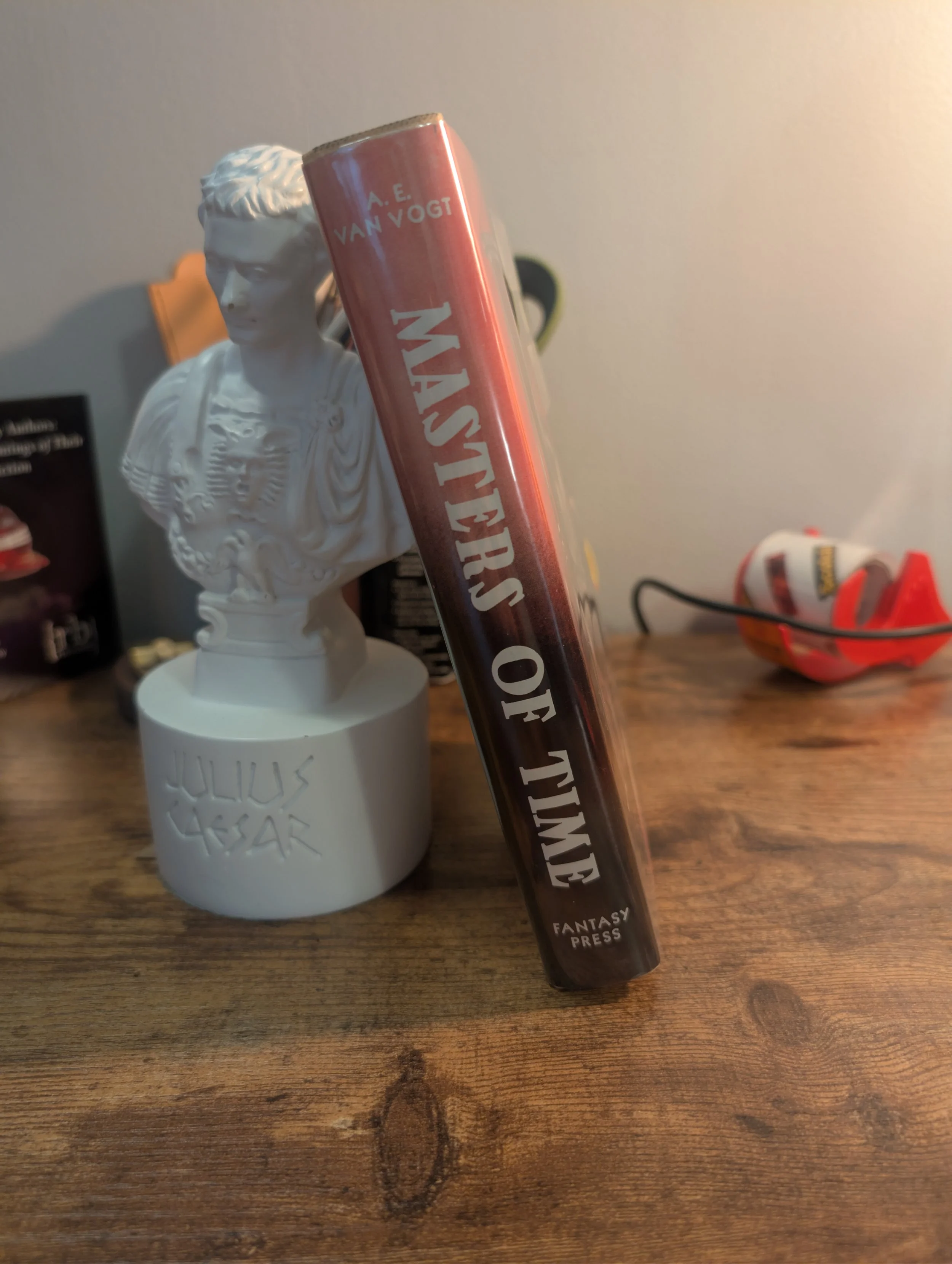 Image 1 of 9
 Image 2 of 9
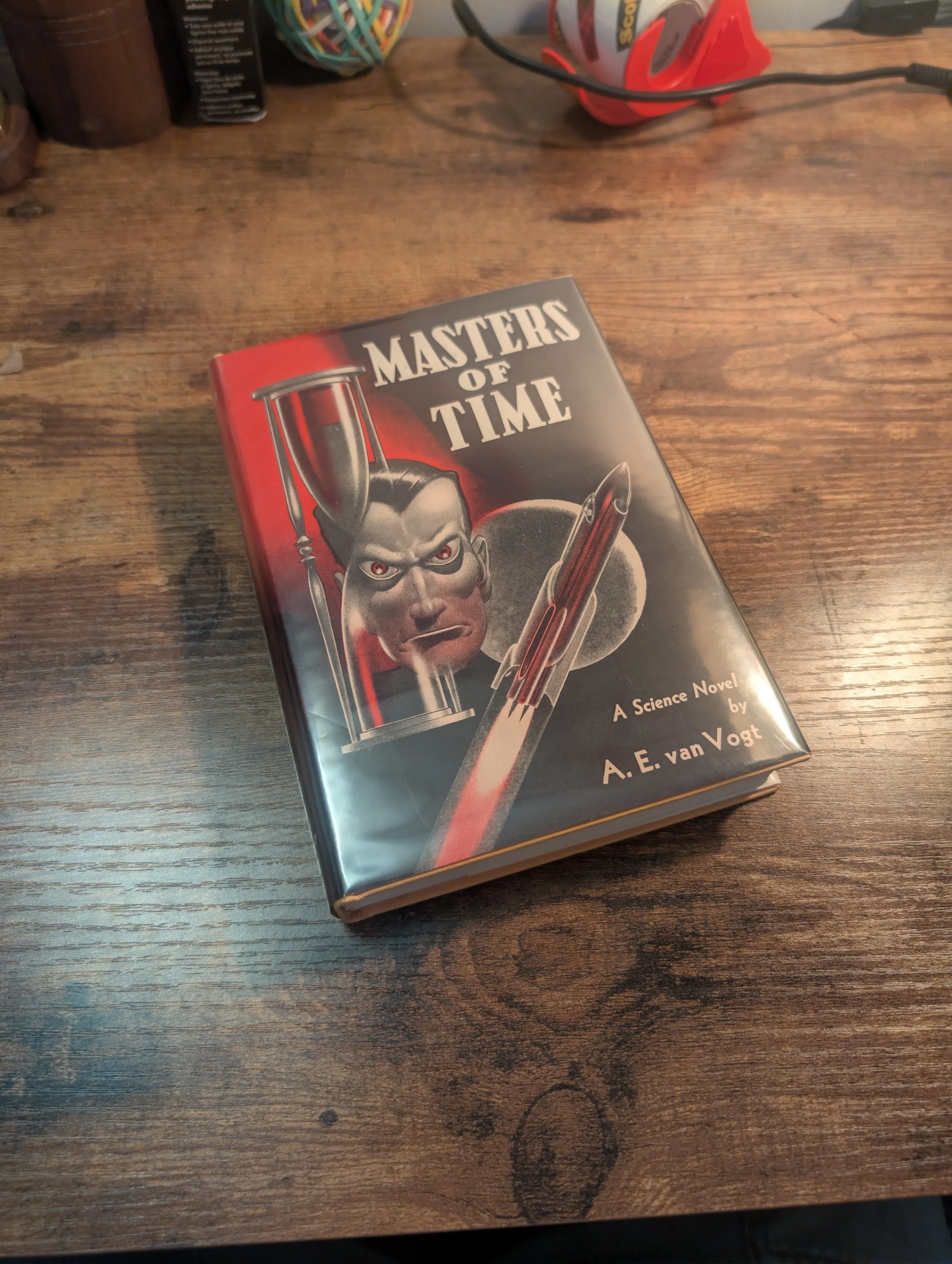 Image 3 of 9
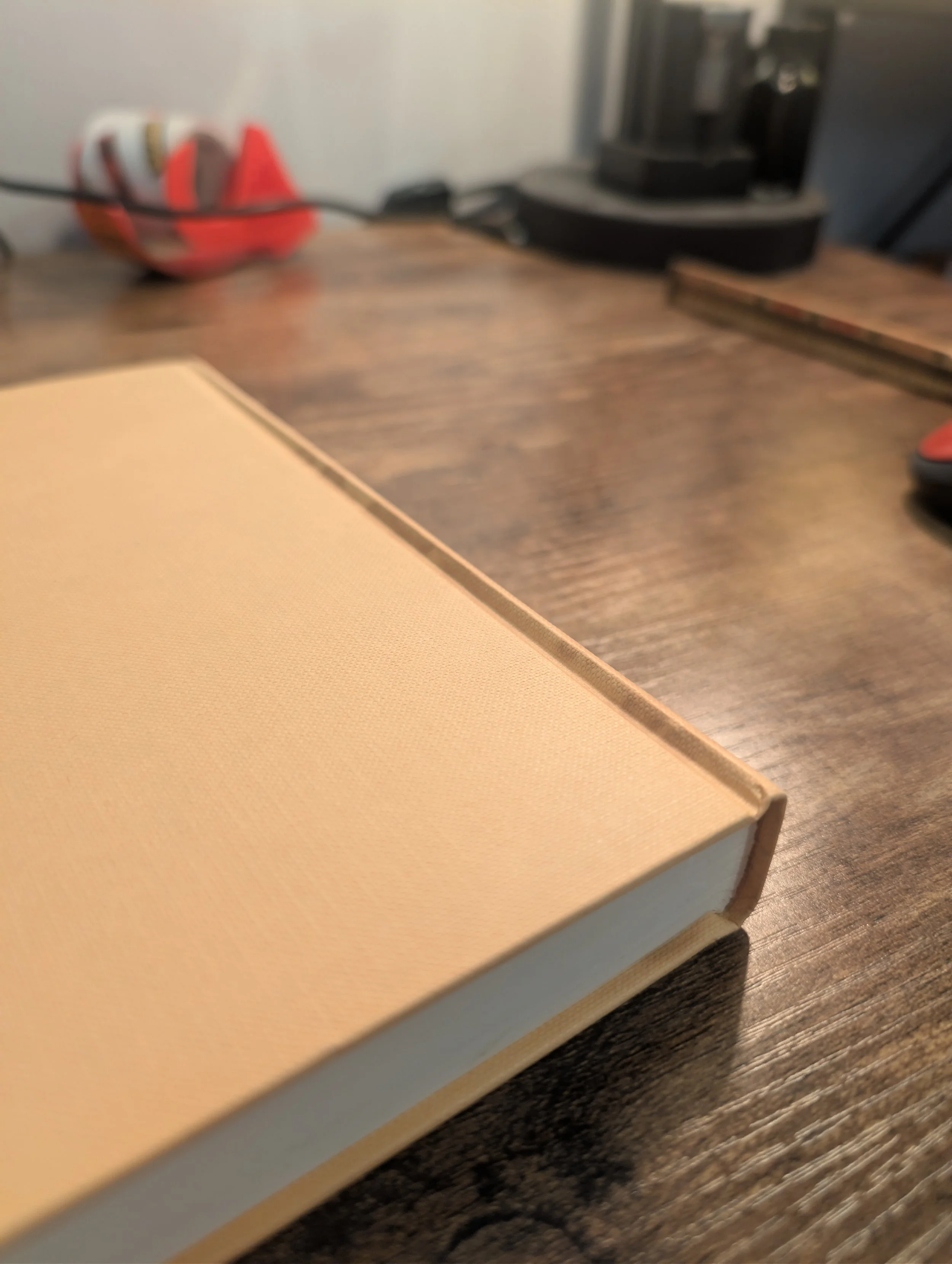 Image 4 of 9
 Image 5 of 9
 Image 6 of 9
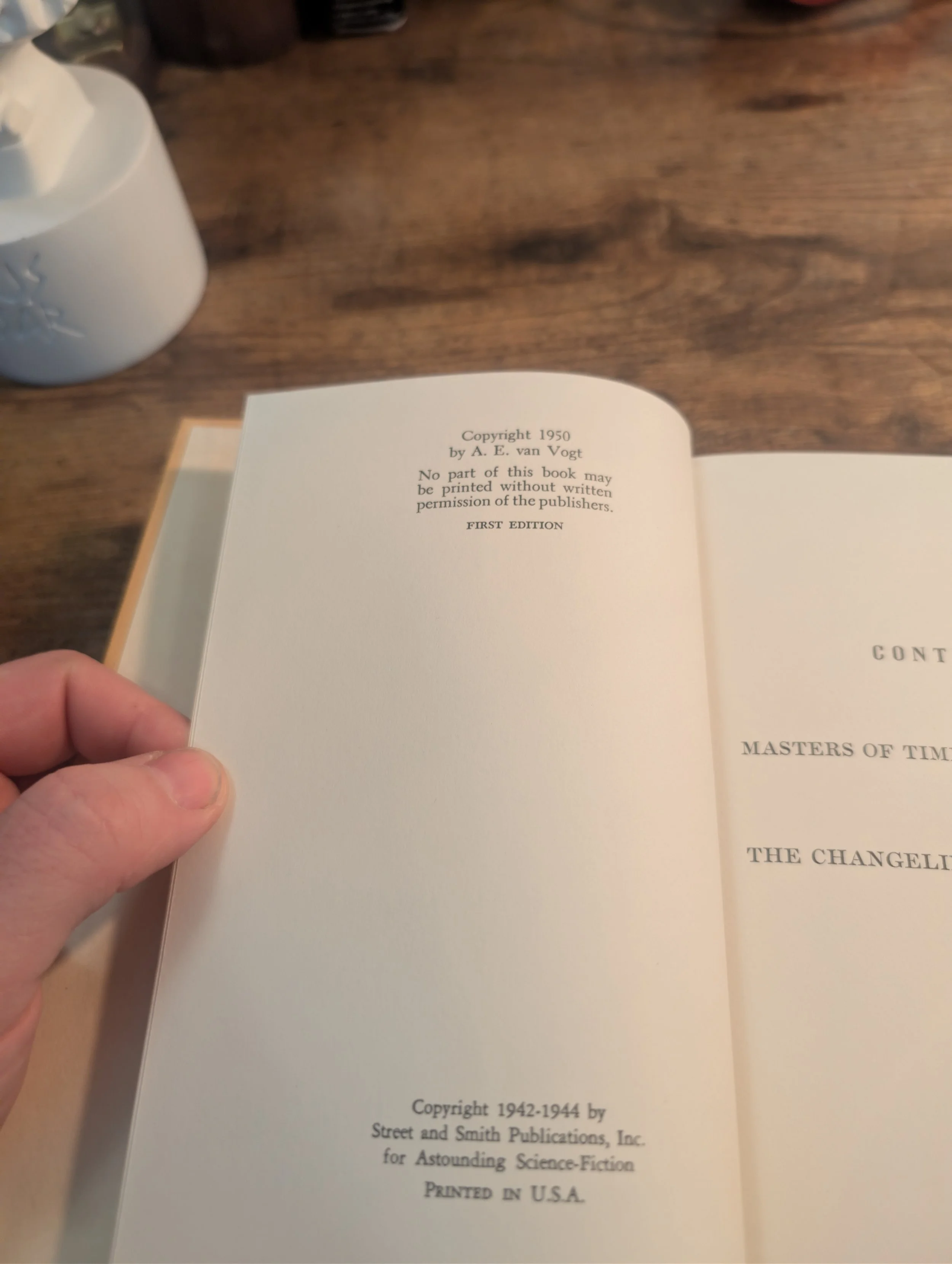 Image 7 of 9
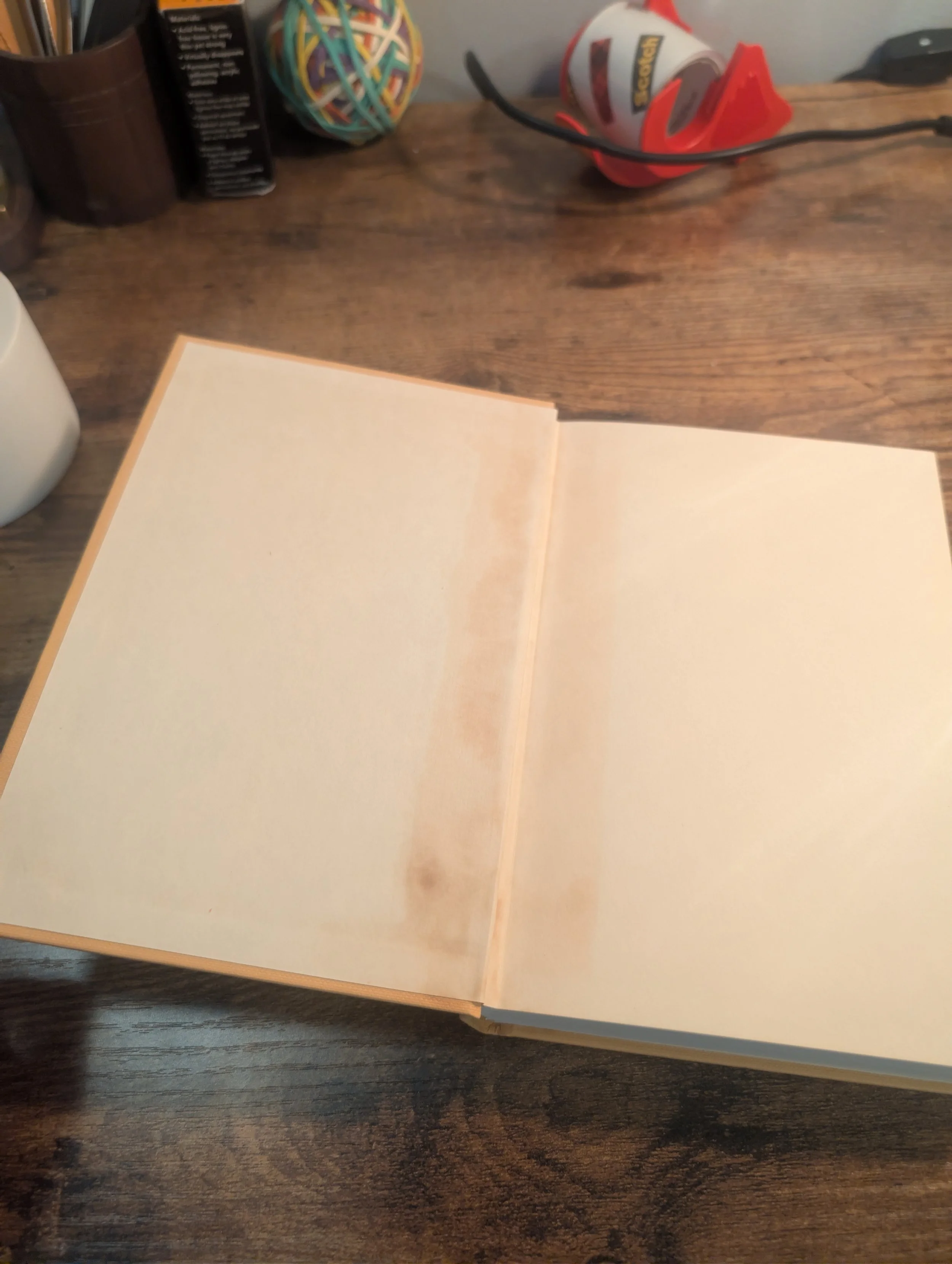 Image 8 of 9
 Image 9 of 9