Story & Significance
Robert Heinlein built his Future History across dozens of stories and novels, but Revolt in 2100 occupies a particular place in that sequence. It’s the volume that asked what happens when theocracy replaces democracy, and whether a man raised inside that system can find his conscience in time to matter. First published by Shasta Publishers in 1953, it collected two novellas, “If This Goes On...” and “Coventry,” along with Heinlein’s own outline of the Future History timeline. It is the kind of book that reads differently depending on when you pick it up.
Shasta Publishers was a small Chicago-based specialty press that, for a few years in the late 1940s and early 1950s, brought some of the most important Golden Age science fiction into hardcover for the first time. Their Heinlein titles, The Man Who Sold the Moon, The Green Hills of Earth, and Revolt in 2100, remain foundational to any serious Heinlein first edition collection or Golden Age SF collection.
Physical Description
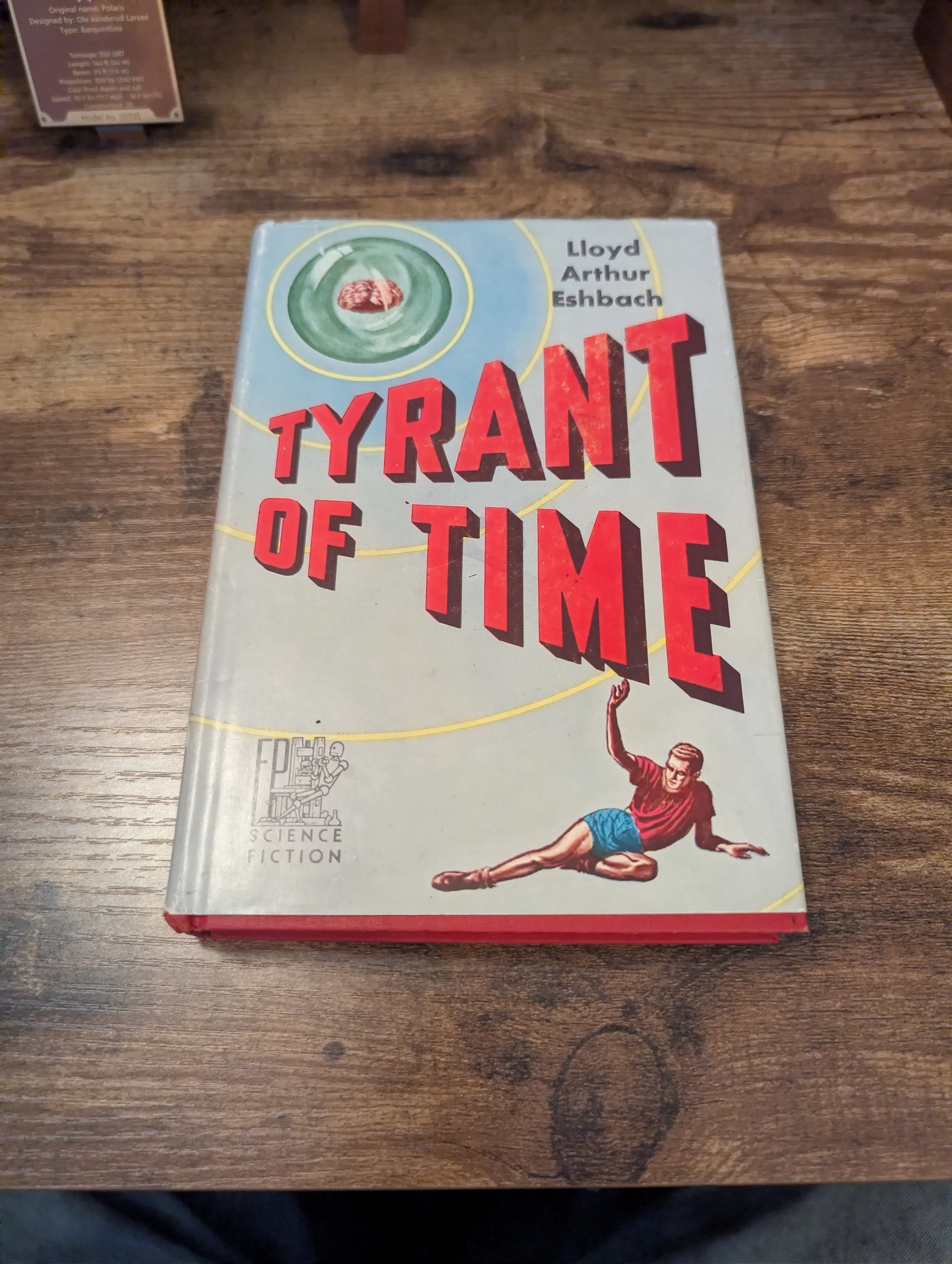
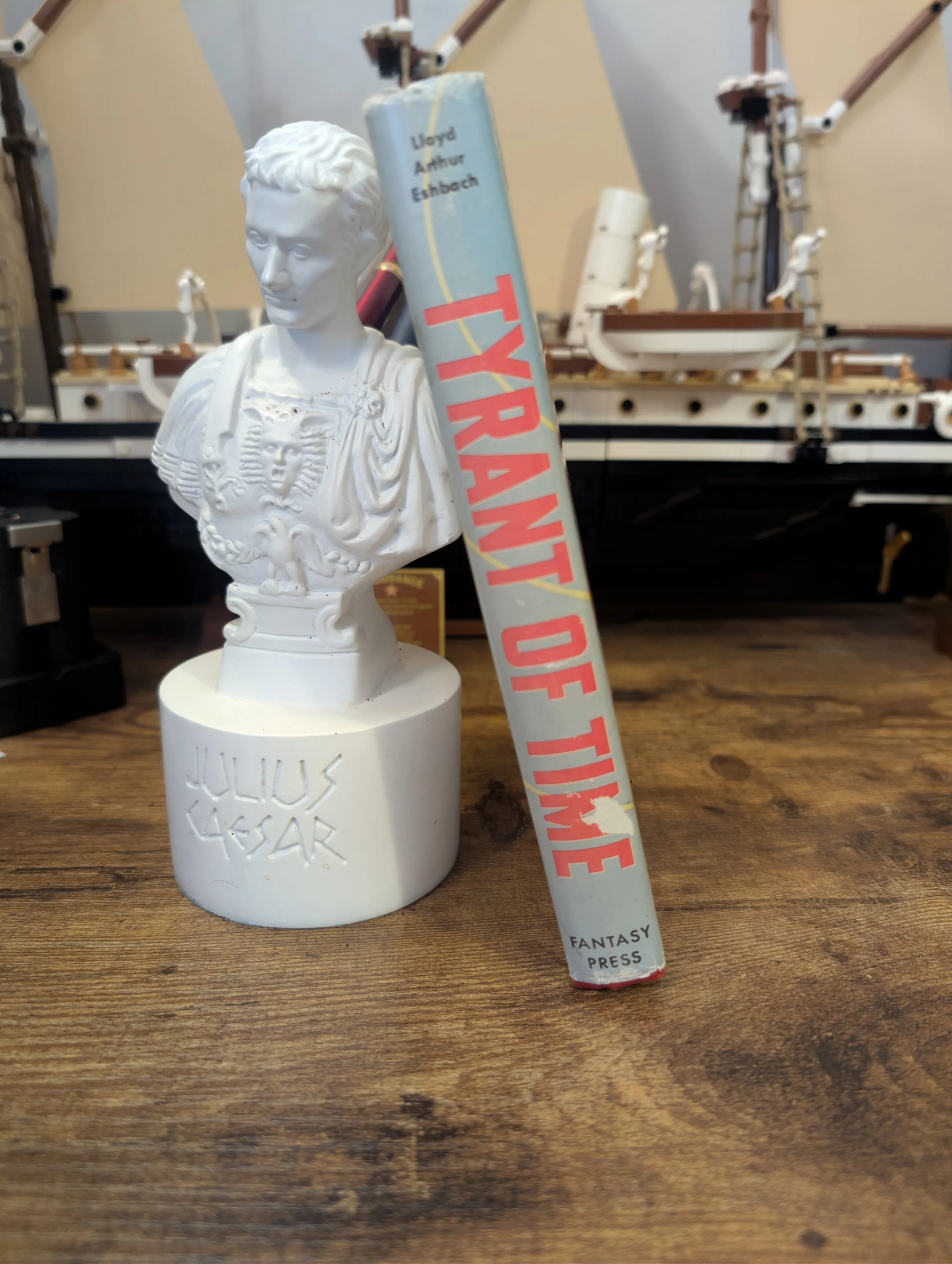
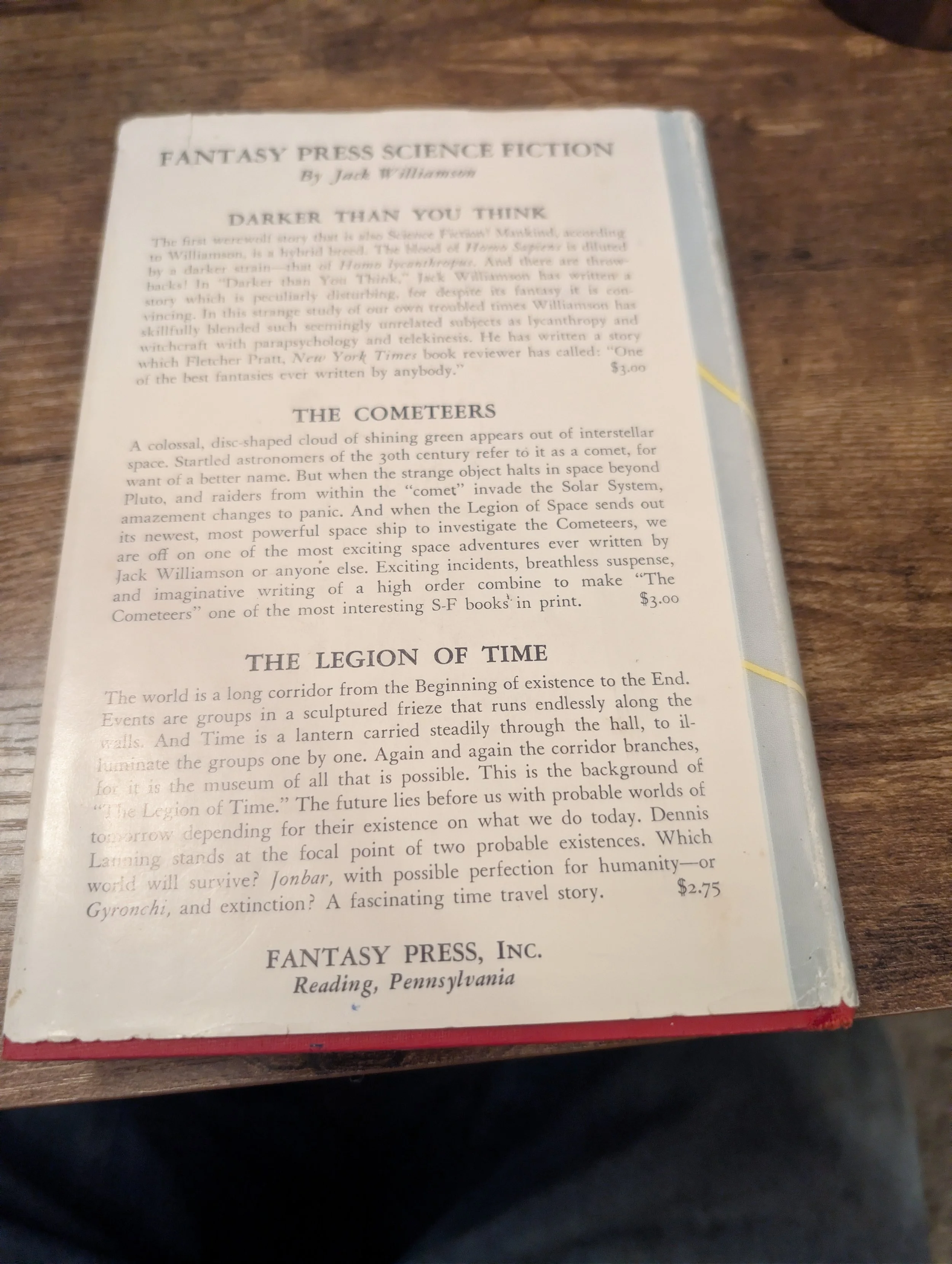
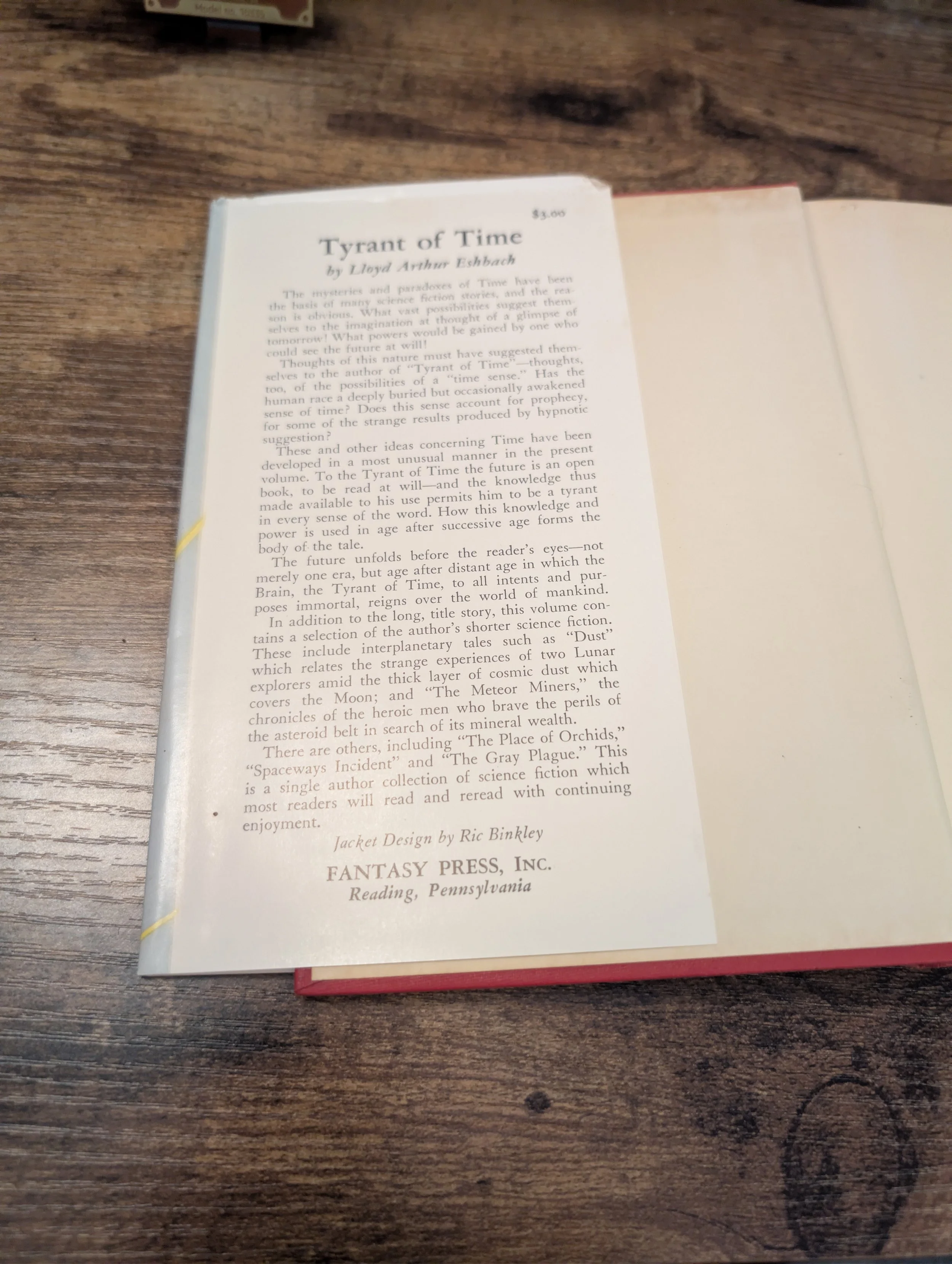
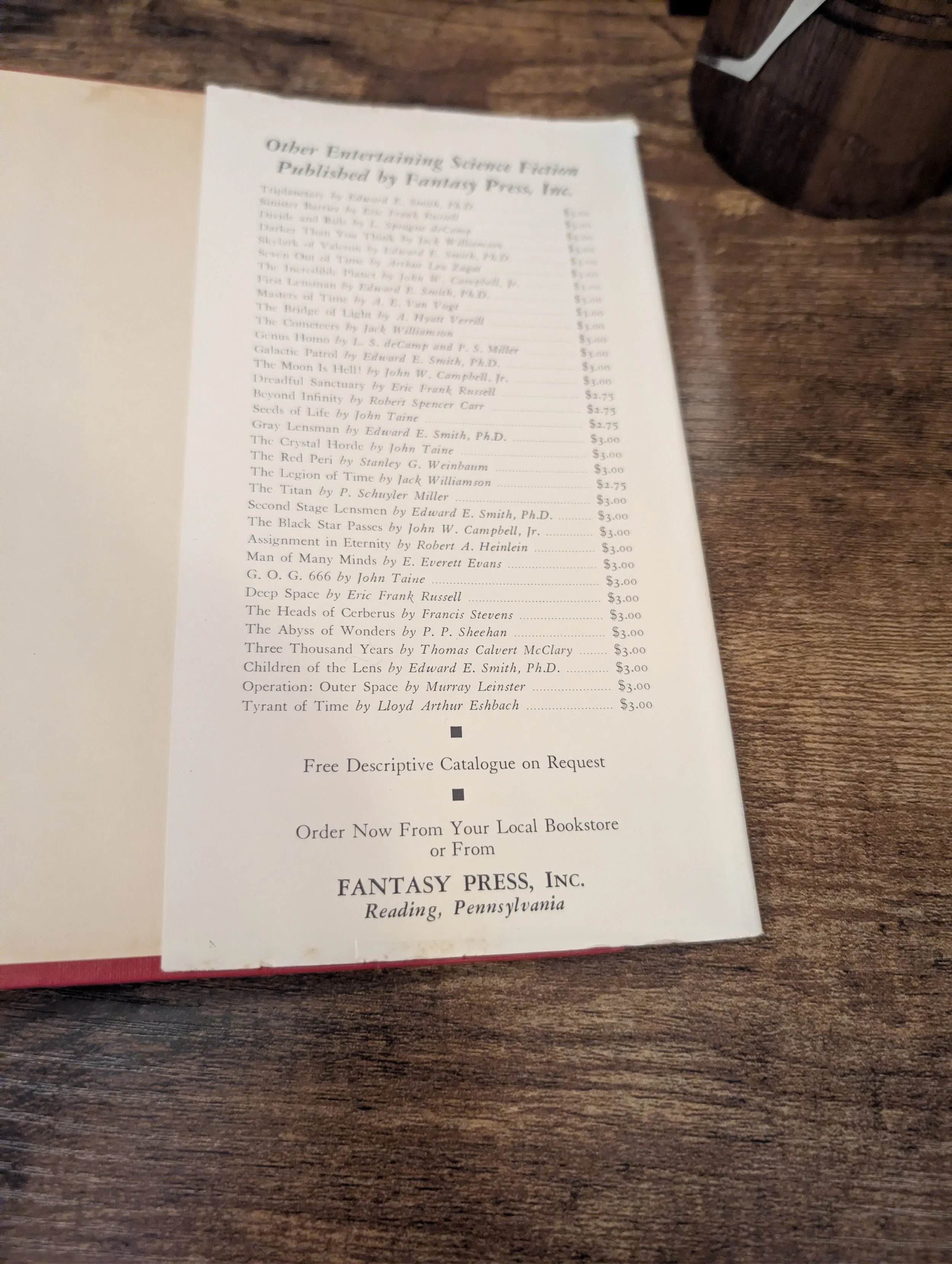
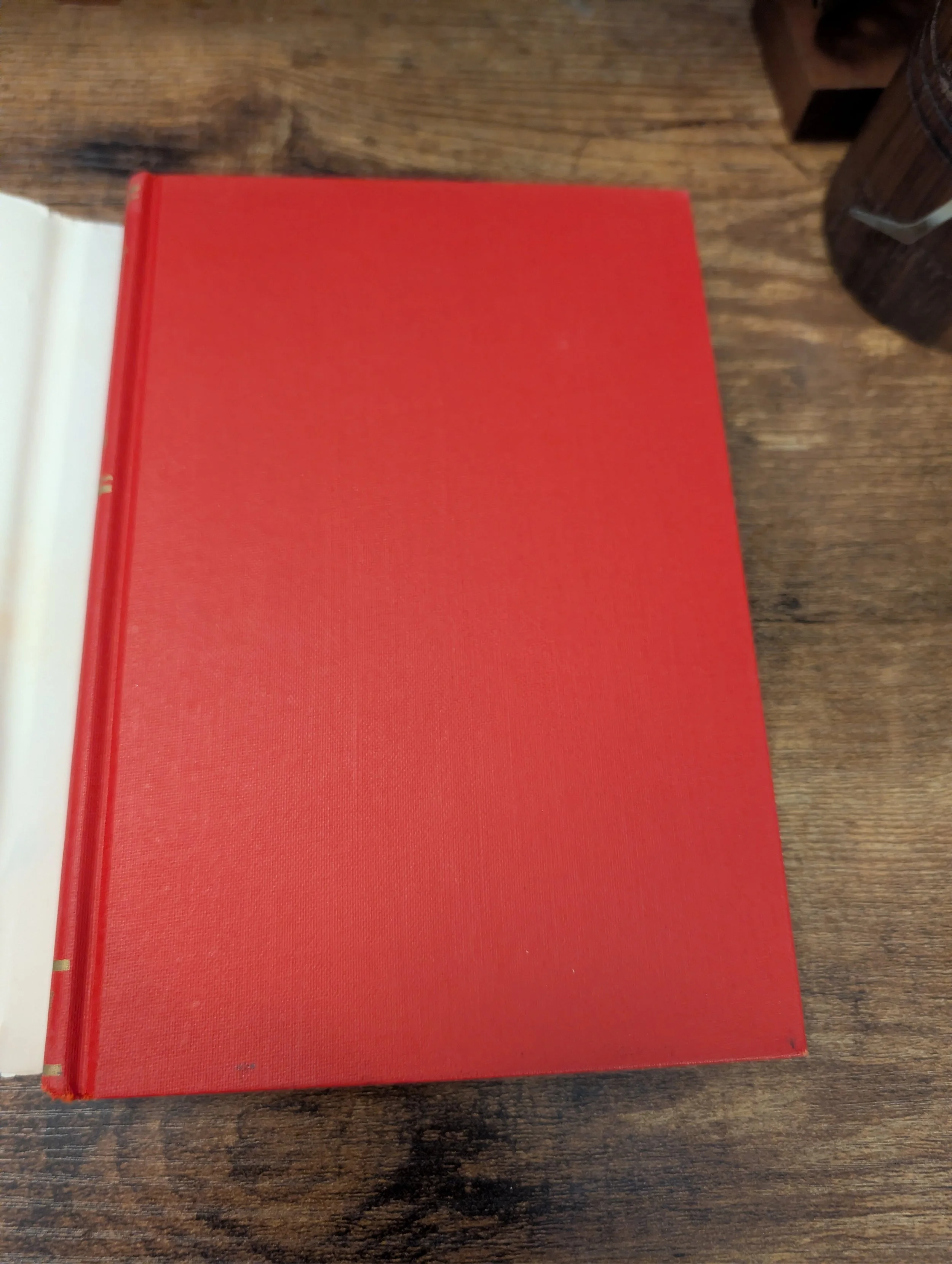
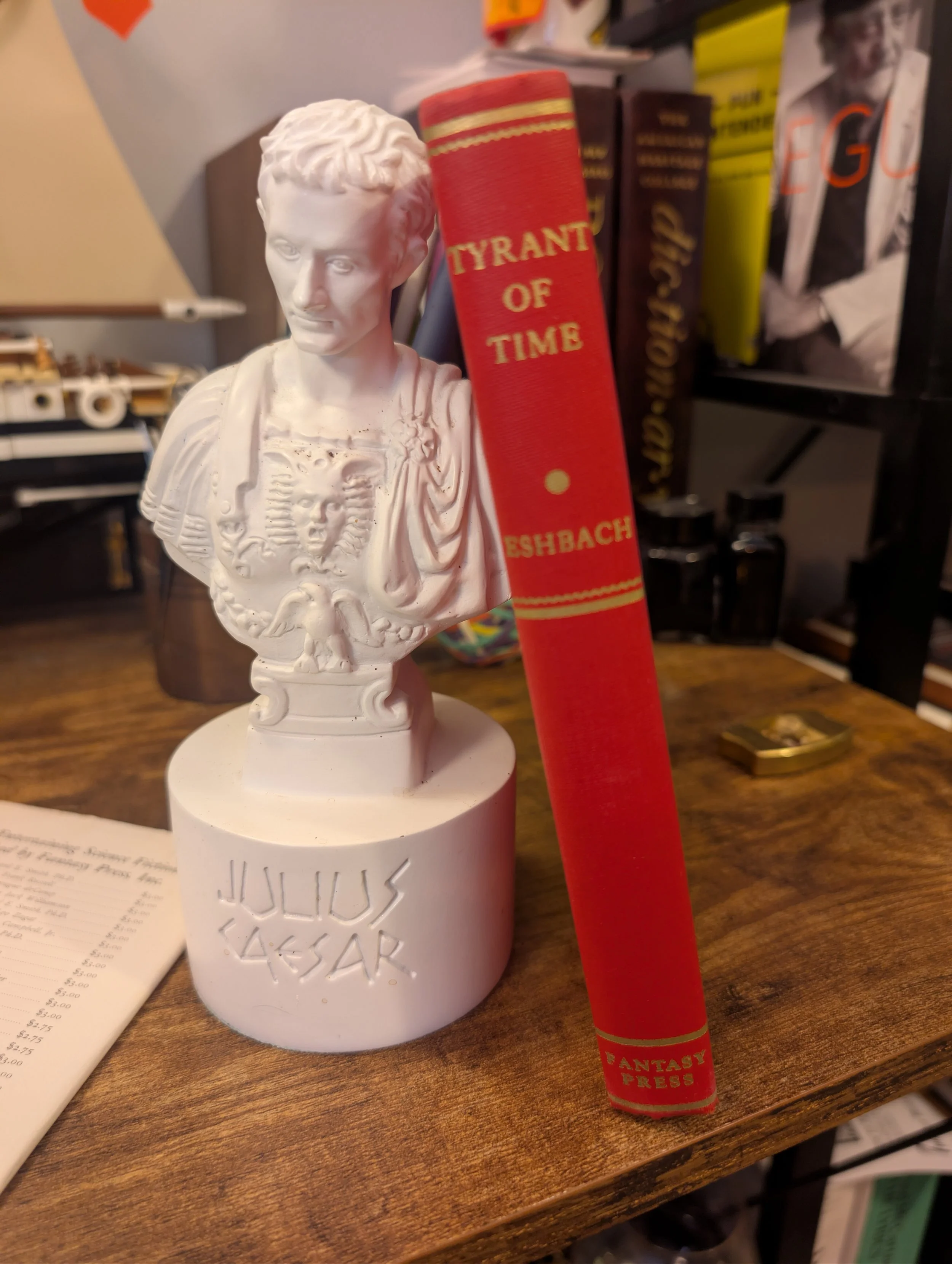
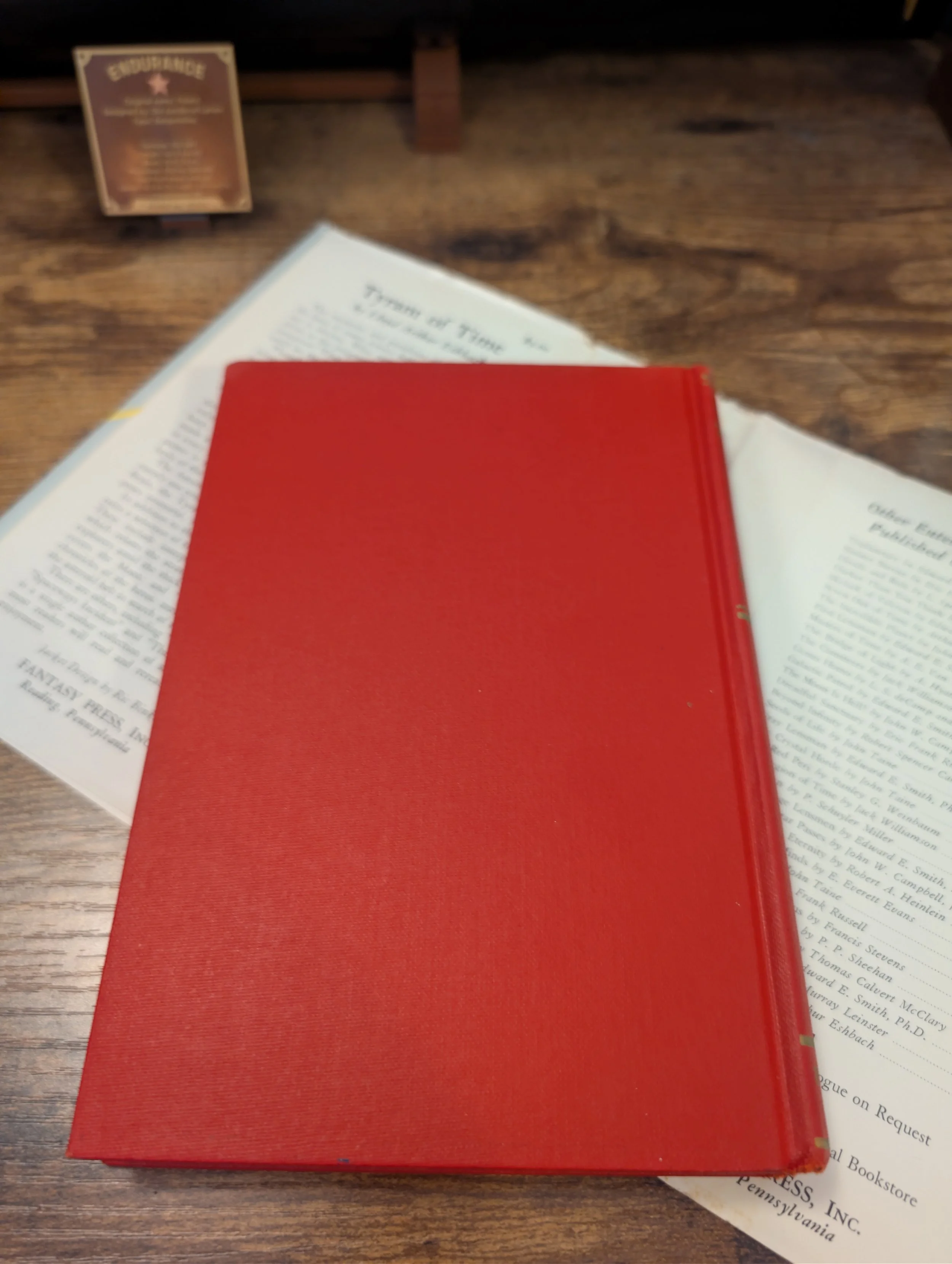
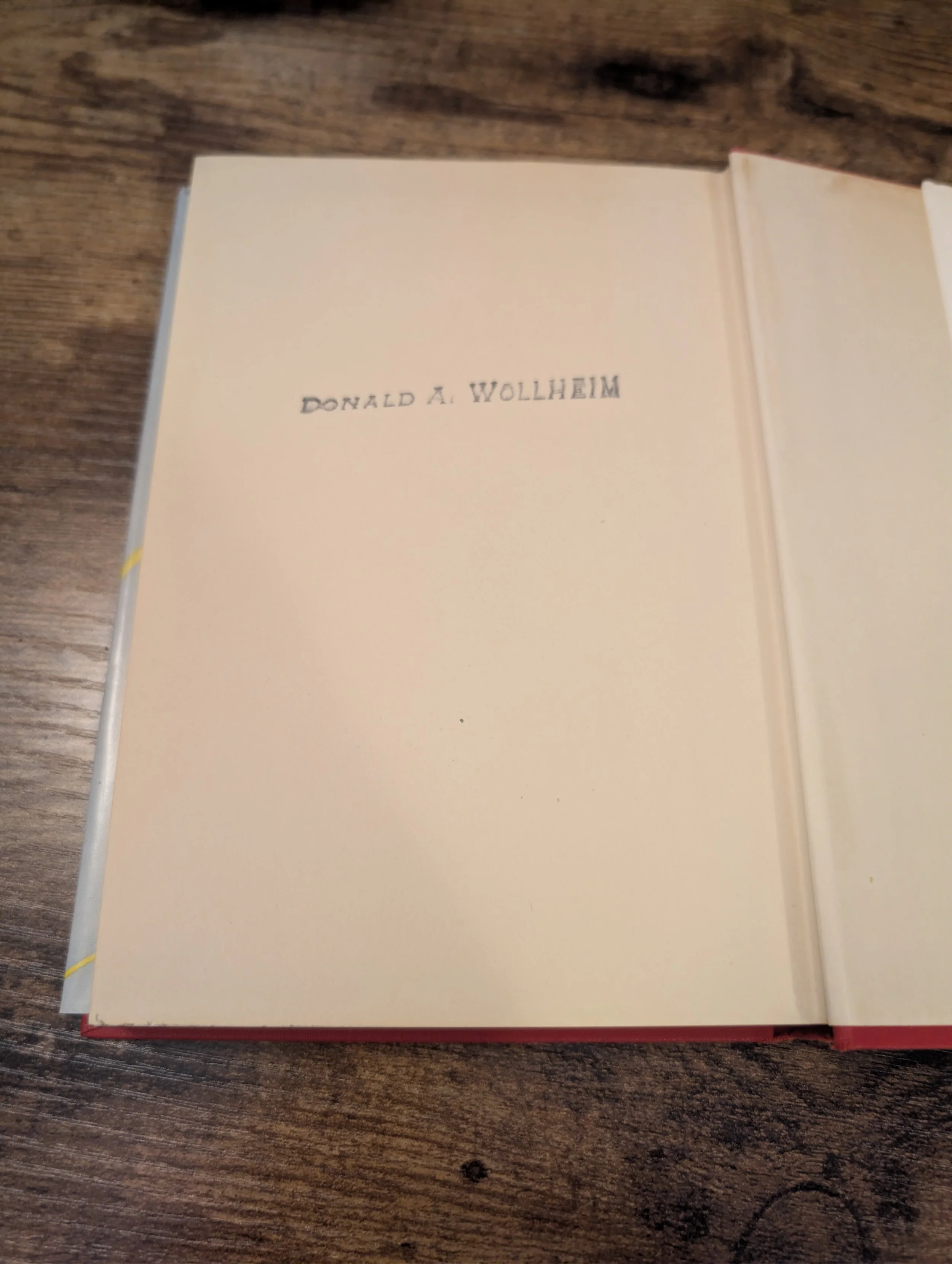
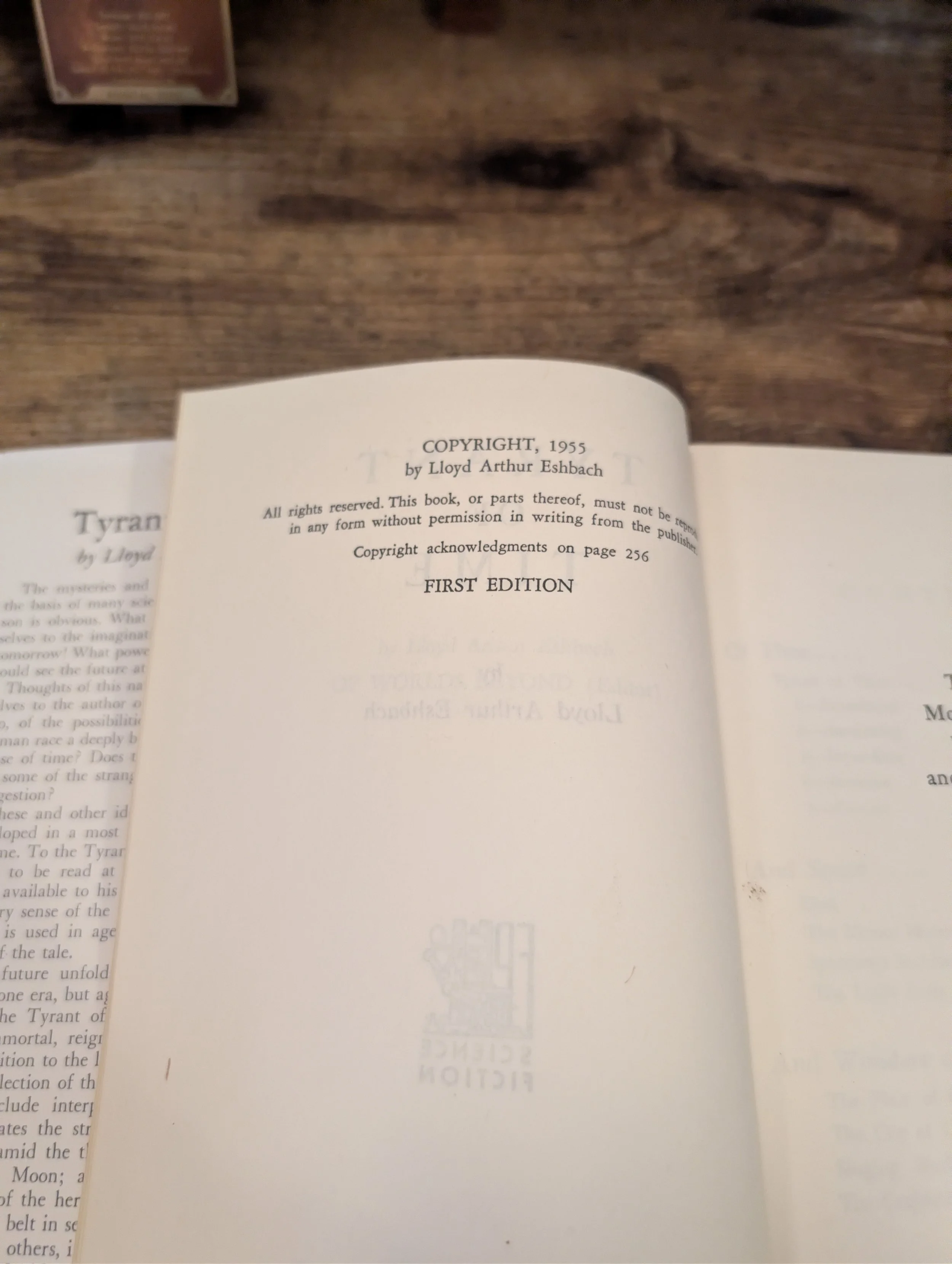
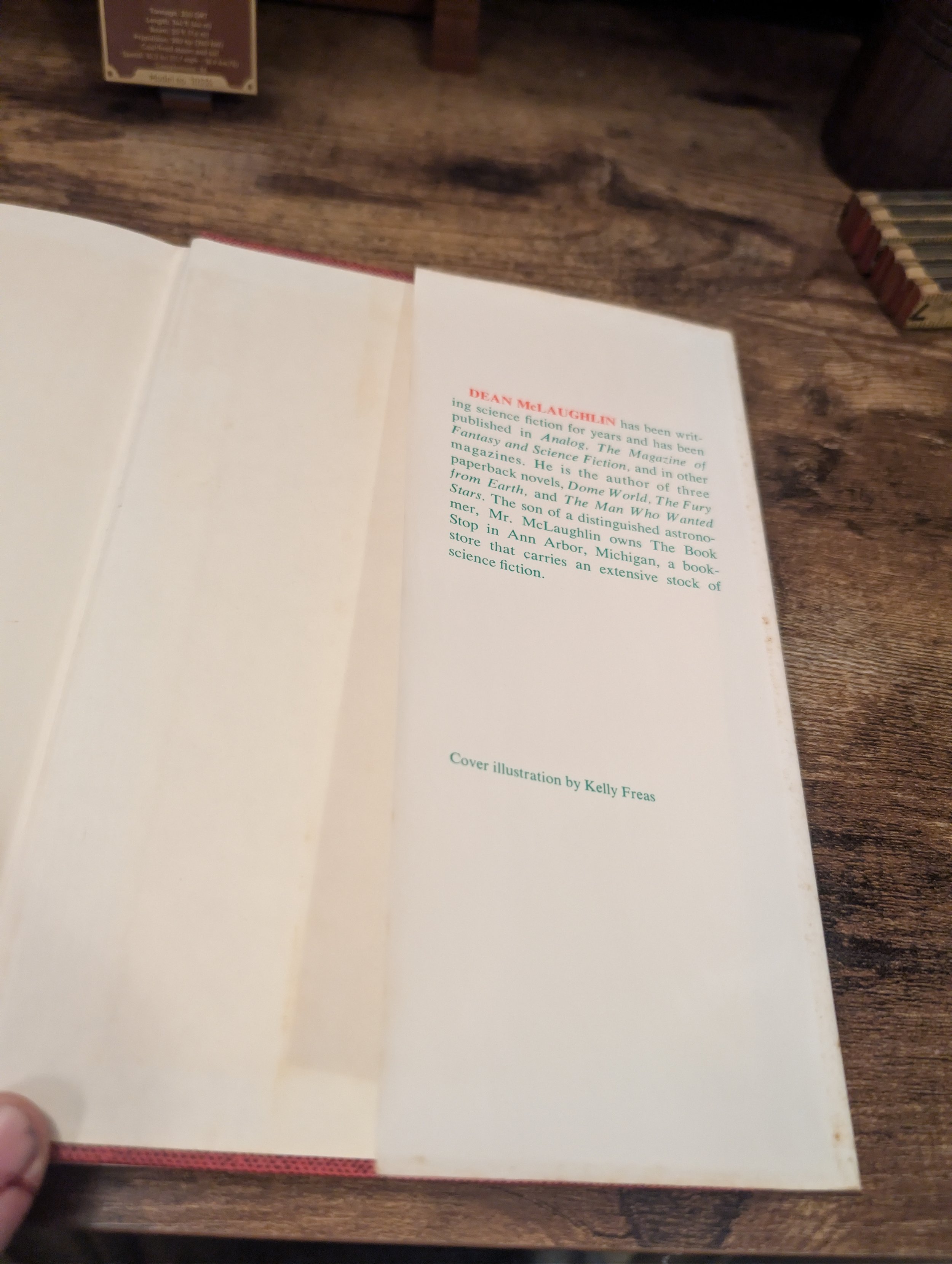
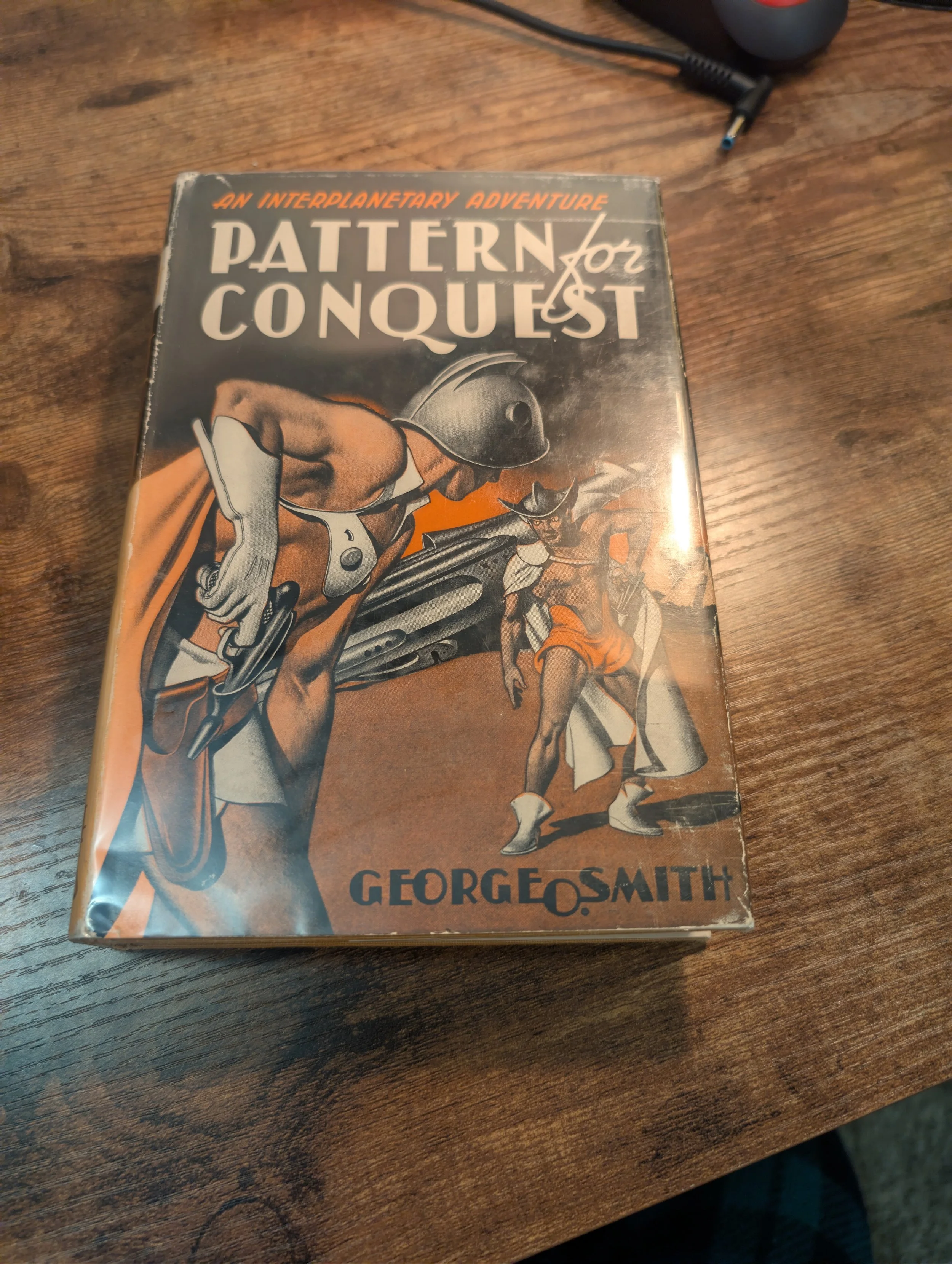
This is the Shasta Publishers second printing, the copyright page reading “Second Printing, 1954.” The book is very good in a very good unclipped dust jacket. The jacket shows minor toning to the spine and very slight shelfwear, with no significant chipping. The boards show the expected light wear for a book of this age, including slight bumping to the corners and minor rubbing. Pages are clean and unmarked throughout, with a crisp text block.
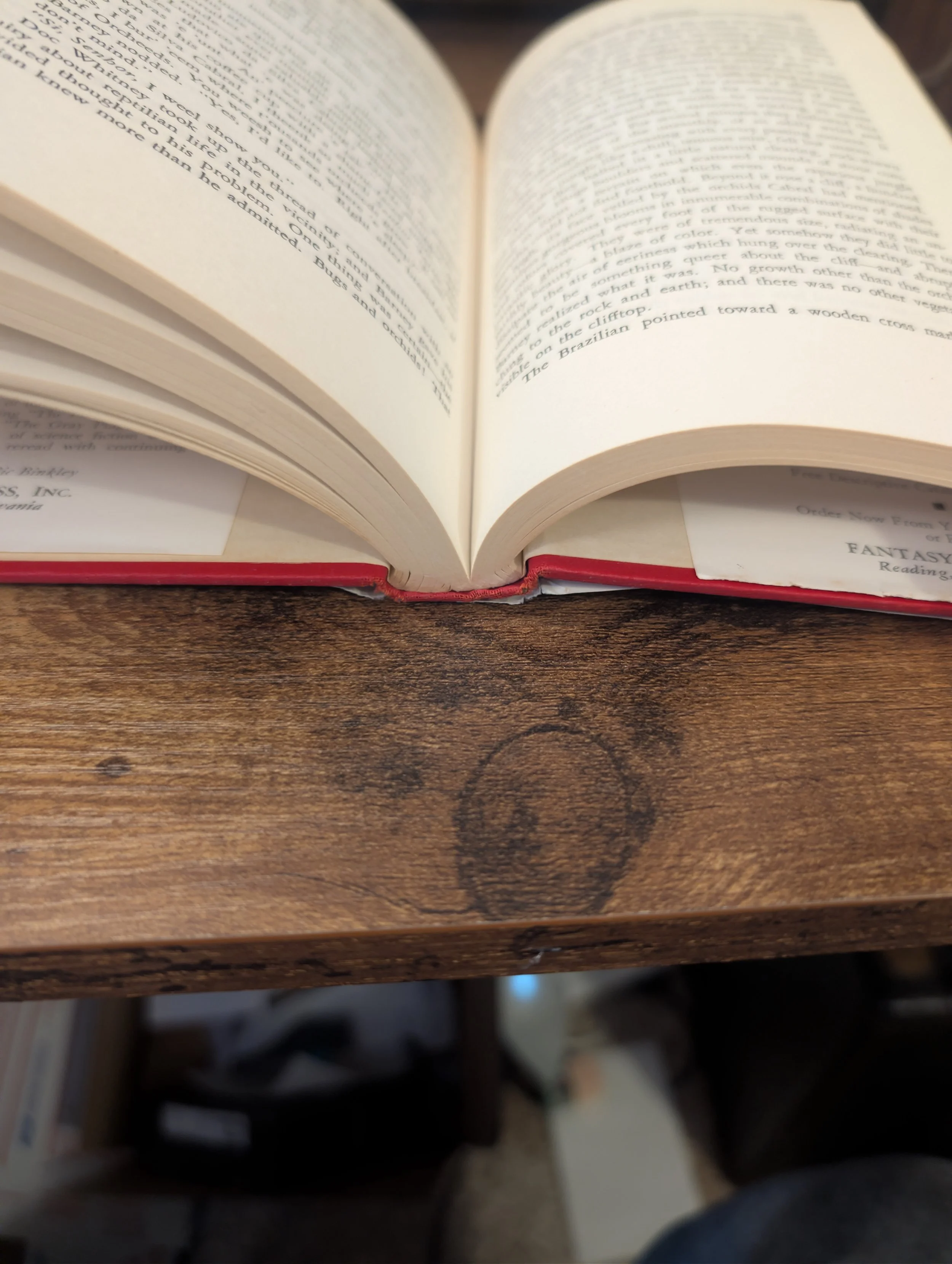
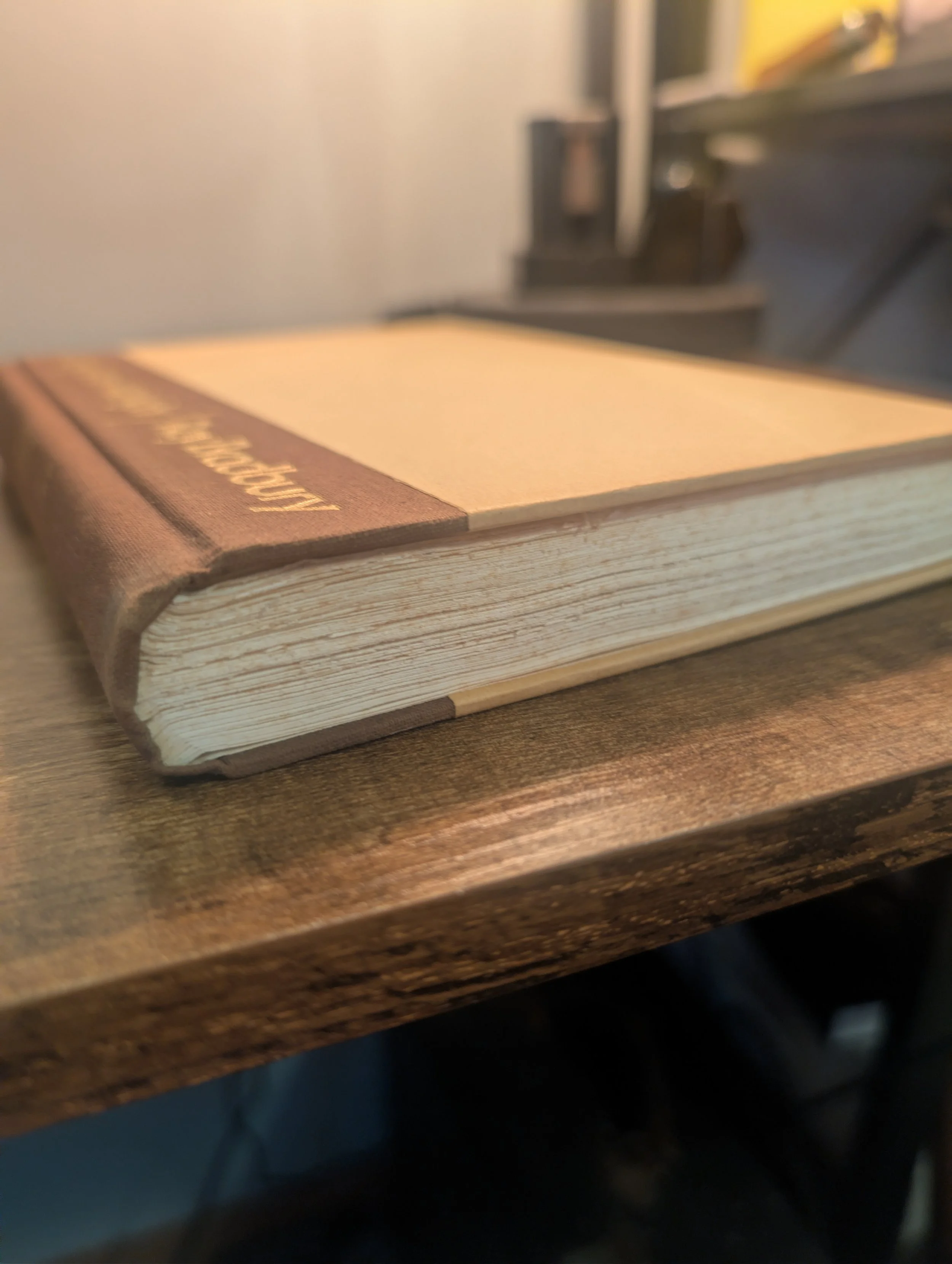
One condition note: the rear free endpaper has separated from the hinge. The binding is otherwise tight and square. A photograph of the hinge is included in the listing images so buyers can assess the issue directly.
Collector’s Note
For collectors focused on Heinlein’s Shasta first editions, the first printing carries the premium. A solid second printing in an unclipped jacket represents the work in genuinely collectible form at a more accessible price point. The unclipped jacket matters here: price-clipped copies of Shasta Heinleins are common, and an intact jacket is a meaningful condition distinction. The separated rear endpaper is disclosed fully and documented in photos. For a reader-collector or someone building a representative Heinlein shelf, this is a copy that presents honestly and well.
Story & Significance
Robert Heinlein built his Future History across dozens of stories and novels, but Revolt in 2100 occupies a particular place in that sequence. It’s the volume that asked what happens when theocracy replaces democracy, and whether a man raised inside that system can find his conscience in time to matter. First published by Shasta Publishers in 1953, it collected two novellas, “If This Goes On...” and “Coventry,” along with Heinlein’s own outline of the Future History timeline. It is the kind of book that reads differently depending on when you pick it up.
Shasta Publishers was a small Chicago-based specialty press that, for a few years in the late 1940s and early 1950s, brought some of the most important Golden Age science fiction into hardcover for the first time. Their Heinlein titles, The Man Who Sold the Moon, The Green Hills of Earth, and Revolt in 2100, remain foundational to any serious Heinlein first edition collection or Golden Age SF collection.
Physical Description
This is the Shasta Publishers second printing, the copyright page reading “Second Printing, 1954.” The book is very good in a very good unclipped dust jacket. The jacket shows minor toning to the spine and very slight shelfwear, with no significant chipping. The boards show the expected light wear for a book of this age, including slight bumping to the corners and minor rubbing. Pages are clean and unmarked throughout, with a crisp text block.
One condition note: the rear free endpaper has separated from the hinge. The binding is otherwise tight and square. A photograph of the hinge is included in the listing images so buyers can assess the issue directly.
Collector’s Note
For collectors focused on Heinlein’s Shasta first editions, the first printing carries the premium. A solid second printing in an unclipped jacket represents the work in genuinely collectible form at a more accessible price point. The unclipped jacket matters here: price-clipped copies of Shasta Heinleins are common, and an intact jacket is a meaningful condition distinction. The separated rear endpaper is disclosed fully and documented in photos. For a reader-collector or someone building a representative Heinlein shelf, this is a copy that presents honestly and well.
 Image 1 of 10
 Image 2 of 10
 Image 3 of 10
 Image 4 of 10
 Image 5 of 10
 Image 6 of 10
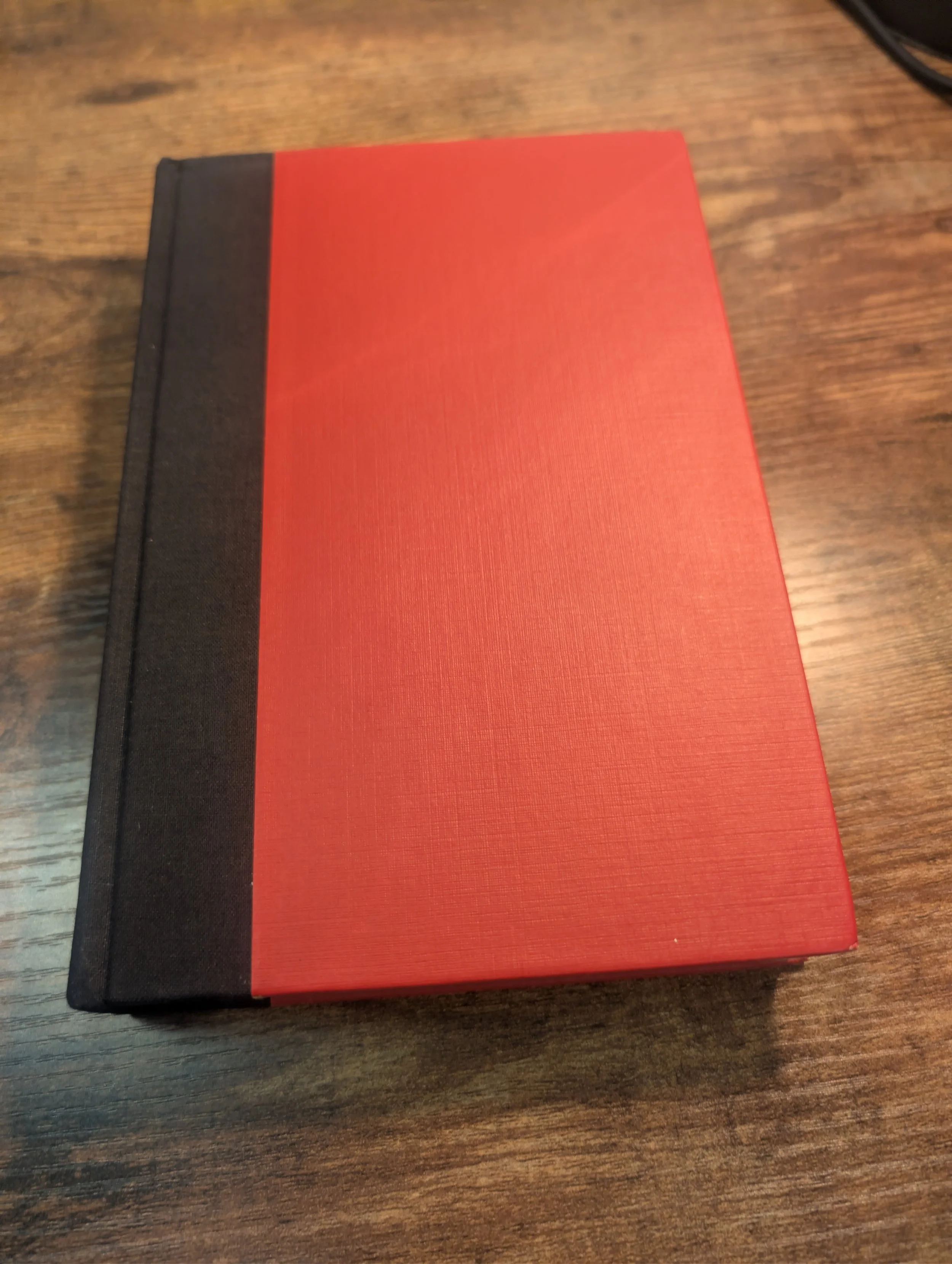 Image 7 of 10
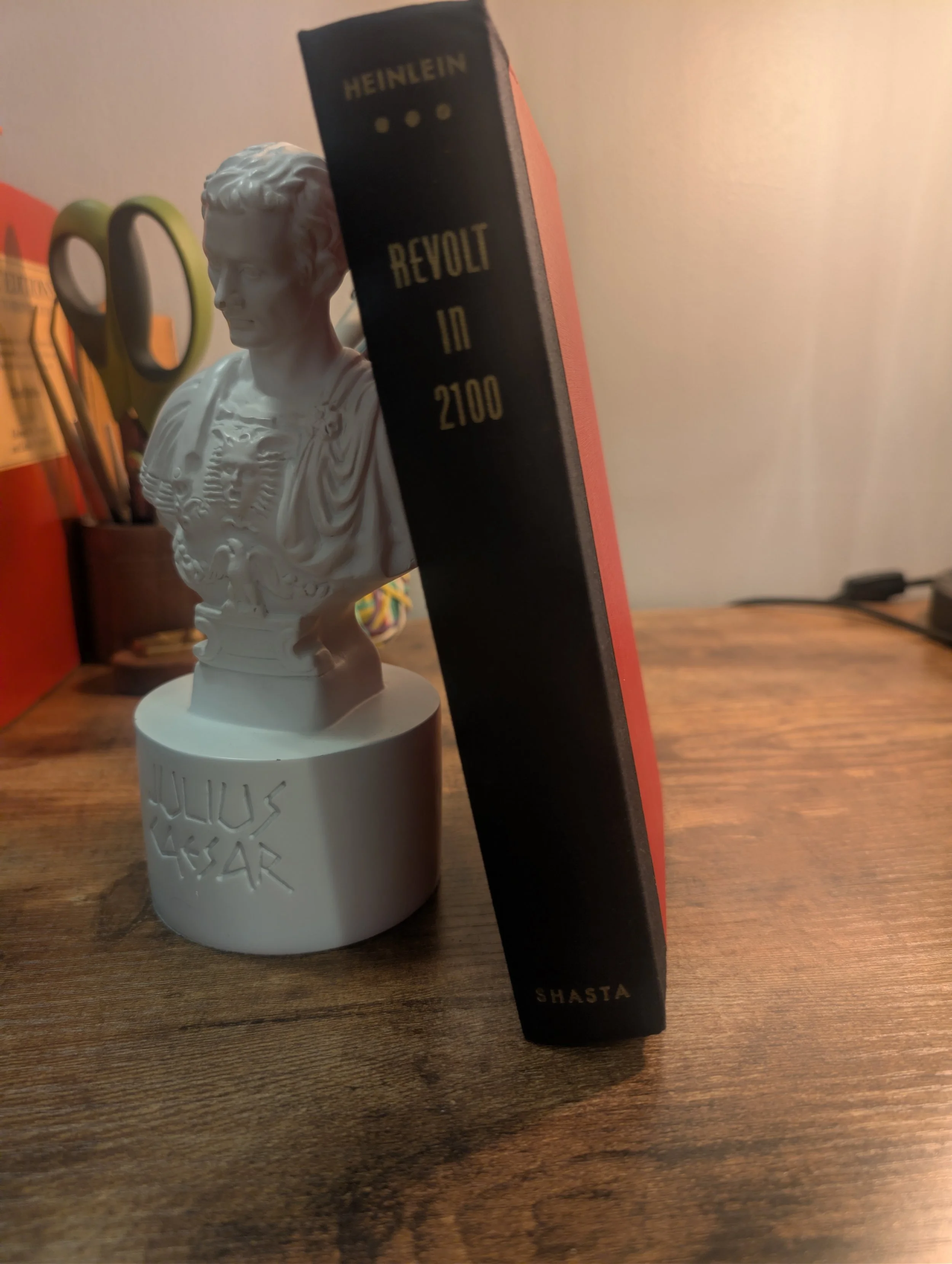 Image 8 of 10
 Image 9 of 10
 Image 10 of 10