Story & Significance
Chalker and Owings heads its entry for this book "Only publication anywhere": the 1983 Phantasia Press printing is the only edition of the text ever issued, and the text is an early version of the novel that became Riverworld. The original is lost, which is what makes this the closest thing collectors will get to it, and the story of how it was lost is one of the ugliest episodes in specialty publishing.
Their account, which they take from Farmer, runs like this. Erle Melvin Korshak of Shasta Publishers announced that he had an agreement with Pocket Books to run a contest for the best science fiction novel of the year, Shasta to do the hardcover and Pocket the paperback. Farmer wrote diligently for hours a day and finished a massive novel, in which everyone who ever lived on Earth wakes on the banks of a monstrous river on an alien world. Shasta announced it as I Owe for the Flesh. It won the contest hands down. Farmer went to Chicago to collect his check, sat through the photographs and the publicity, and was handed a check that was blank and unsigned. Korshak expressed surprise, said he was sure he had mentioned it, and explained that Pocket wanted changes and cuts before it would pay. Farmer went home with nothing. He learned later that Pocket had paid the entire amount up front, before the contest was even announced, and that Korshak had put the money into Shasta's accounts against back bills and printing bills, expecting to earn it back before he had to produce it. He never did. The novel was never published and the manuscript never came back. Farmer writes in his introduction to this book that the first version is likely lost forever, and he can no longer say for certain what he called it: "The original novel, which I think I titled Owe for the Flesh." Thirty years on, the author of the book is reconstructing its title from memory.
What survived is this book. Farmer's introduction and Chalker and Owings agree that River of Eternity is the second version, written from the original as a desperate attempt to get it into print. It failed at the time. Farmer sent the third version, Owe for A River, to Ballantine, which turned it down as "more adventure than anything else," and then to Frederik Pohl, who returned it saying the concept was too big to do justice to in one novel and suggested rewriting it as a series of novelets for one of his magazines. That fourth version is where the Riverworld books come from: two Burton novelets and two Clemens novelets out of it formed the basis for the Putnam editions of To Your Scattered Bodies Go and The Fabulous Riverboat, both of which Currey records as 1971 Putnam firsts carrying no statement of printing. The series collectors know descends from a fourth rewrite, not from the contest manuscript.
Chalker and Owings is blunt that the series is "quite different" from what it came out of, and that the endings of the known variations differ radically from one another. So this is not a variant text in the trivial sense. It is a different book from the one collectors know, by an author writing the same idea before it had been shaped for a series. Farmer, who read the surviving versions, rated a different one highest: "It seemed to me that the third version, Owe for A River, was an improvement over the other two." The version he preferred has never been printed. This one is the only early Riverworld anybody has been able to read.
Physical Description
Phantasia Press, 1983. The signed and numbered issue, number 394 of 500, signed by Farmer on the limitation leaf. Cream cloth binding lettered in gilt, issued in the publisher's slipcase, which is covered in the same cream cloth as the binding. The dust jacket carries cover art by John Pound and is unclipped, with the price printed as "Trade edition: $17/Special edition: $40."
The book is as new. The dust jacket is as new, with no fading to the spine panel, no rubbing at the corners or extremities, and no closed tears. The slipcase is as new, square and unmarked, with no shelf soiling and no bumping to the edges. The text block is clean and unmarked throughout, the binding is tight and square, and there is no previous owner's name, bookplate, or gift inscription anywhere in the book.
Collector's Note
This copy carries two limitation statements, and both are transcribed here verbatim.
The first: "This first edition of RIVER OF ETERNITY by Philip José Farmer is limited to 3,000 copies. The first 500 copies have been signed and numbered by the author."
The second, on the limitation leaf of this copy, which carries Farmer's signature and the number 394: "This specially bound edition of RIVER OF ETERNITY by Philip José Farmer is limited to 500 copies, signed and numbered by the author."
Read alone, those two look as though they might be describing different things. Chalker and Owings settles it: 500 copies in a special binding with a matching slipcase, signed and numbered, at $40.00, and a 2,500 copy trade edition in white cloth over boards at $17.00. The two issues together make up the first edition of 3,000 that the trade statement describes.
That reference also gives a buyer the point of issue that matters here, because the two issues were bound differently. The trade issue is white cloth over boards. The special issue is separately bound and was published with a slipcase covered to match it, which on this copy is cream cloth against the cream cloth binding. A copy in white cloth over boards with no slipcase is the trade issue, whatever else a listing says about it.
Two cautions follow from that. A signature by itself does not make a copy the special edition, since Farmer signed trade copies as well, and copies signed by him with no limitation leaf turn up for sale described simply as signed first editions. That is a real thing worth owning, but it is not this book. And the dust jacket will not settle it either, because it was printed for both issues and priced for both, "Trade edition: $17/Special edition: $40," so jacket photographs alone tell a buyer nothing about which book is inside. The limitation leaf and the binding do settle it, and both are photographed in the images for this listing.
One note on references. Currey does not reach this book: the revised edition covers first printings through the end of 1977, so it stops well short of a 1983 publication and there is no Currey point of issue to cite. Chalker and Owings' The Science-Fantasy Publishers is the authority for Phantasia Press, and the edition and binding details above come from its entry for this title. The account of the manuscript and its versions comes from Farmer's own introduction, bound into this copy, and the two 1971 Putnam entries come from Currey.
Story & Significance
Chalker and Owings heads its entry for this book "Only publication anywhere": the 1983 Phantasia Press printing is the only edition of the text ever issued, and the text is an early version of the novel that became Riverworld. The original is lost, which is what makes this the closest thing collectors will get to it, and the story of how it was lost is one of the ugliest episodes in specialty publishing.
Their account, which they take from Farmer, runs like this. Erle Melvin Korshak of Shasta Publishers announced that he had an agreement with Pocket Books to run a contest for the best science fiction novel of the year, Shasta to do the hardcover and Pocket the paperback. Farmer wrote diligently for hours a day and finished a massive novel, in which everyone who ever lived on Earth wakes on the banks of a monstrous river on an alien world. Shasta announced it as I Owe for the Flesh. It won the contest hands down. Farmer went to Chicago to collect his check, sat through the photographs and the publicity, and was handed a check that was blank and unsigned. Korshak expressed surprise, said he was sure he had mentioned it, and explained that Pocket wanted changes and cuts before it would pay. Farmer went home with nothing. He learned later that Pocket had paid the entire amount up front, before the contest was even announced, and that Korshak had put the money into Shasta's accounts against back bills and printing bills, expecting to earn it back before he had to produce it. He never did. The novel was never published and the manuscript never came back. Farmer writes in his introduction to this book that the first version is likely lost forever, and he can no longer say for certain what he called it: "The original novel, which I think I titled Owe for the Flesh." Thirty years on, the author of the book is reconstructing its title from memory.
What survived is this book. Farmer's introduction and Chalker and Owings agree that River of Eternity is the second version, written from the original as a desperate attempt to get it into print. It failed at the time. Farmer sent the third version, Owe for A River, to Ballantine, which turned it down as "more adventure than anything else," and then to Frederik Pohl, who returned it saying the concept was too big to do justice to in one novel and suggested rewriting it as a series of novelets for one of his magazines. That fourth version is where the Riverworld books come from: two Burton novelets and two Clemens novelets out of it formed the basis for the Putnam editions of To Your Scattered Bodies Go and The Fabulous Riverboat, both of which Currey records as 1971 Putnam firsts carrying no statement of printing. The series collectors know descends from a fourth rewrite, not from the contest manuscript.
Chalker and Owings is blunt that the series is "quite different" from what it came out of, and that the endings of the known variations differ radically from one another. So this is not a variant text in the trivial sense. It is a different book from the one collectors know, by an author writing the same idea before it had been shaped for a series. Farmer, who read the surviving versions, rated a different one highest: "It seemed to me that the third version, Owe for A River, was an improvement over the other two." The version he preferred has never been printed. This one is the only early Riverworld anybody has been able to read.
Physical Description
Phantasia Press, 1983. The signed and numbered issue, number 394 of 500, signed by Farmer on the limitation leaf. Cream cloth binding lettered in gilt, issued in the publisher's slipcase, which is covered in the same cream cloth as the binding. The dust jacket carries cover art by John Pound and is unclipped, with the price printed as "Trade edition: $17/Special edition: $40."
The book is as new. The dust jacket is as new, with no fading to the spine panel, no rubbing at the corners or extremities, and no closed tears. The slipcase is as new, square and unmarked, with no shelf soiling and no bumping to the edges. The text block is clean and unmarked throughout, the binding is tight and square, and there is no previous owner's name, bookplate, or gift inscription anywhere in the book.
Collector's Note
This copy carries two limitation statements, and both are transcribed here verbatim.
The first: "This first edition of RIVER OF ETERNITY by Philip José Farmer is limited to 3,000 copies. The first 500 copies have been signed and numbered by the author."
The second, on the limitation leaf of this copy, which carries Farmer's signature and the number 394: "This specially bound edition of RIVER OF ETERNITY by Philip José Farmer is limited to 500 copies, signed and numbered by the author."
Read alone, those two look as though they might be describing different things. Chalker and Owings settles it: 500 copies in a special binding with a matching slipcase, signed and numbered, at $40.00, and a 2,500 copy trade edition in white cloth over boards at $17.00. The two issues together make up the first edition of 3,000 that the trade statement describes.
That reference also gives a buyer the point of issue that matters here, because the two issues were bound differently. The trade issue is white cloth over boards. The special issue is separately bound and was published with a slipcase covered to match it, which on this copy is cream cloth against the cream cloth binding. A copy in white cloth over boards with no slipcase is the trade issue, whatever else a listing says about it.
Two cautions follow from that. A signature by itself does not make a copy the special edition, since Farmer signed trade copies as well, and copies signed by him with no limitation leaf turn up for sale described simply as signed first editions. That is a real thing worth owning, but it is not this book. And the dust jacket will not settle it either, because it was printed for both issues and priced for both, "Trade edition: $17/Special edition: $40," so jacket photographs alone tell a buyer nothing about which book is inside. The limitation leaf and the binding do settle it, and both are photographed in the images for this listing.
One note on references. Currey does not reach this book: the revised edition covers first printings through the end of 1977, so it stops well short of a 1983 publication and there is no Currey point of issue to cite. Chalker and Owings' The Science-Fantasy Publishers is the authority for Phantasia Press, and the edition and binding details above come from its entry for this title. The account of the manuscript and its versions comes from Farmer's own introduction, bound into this copy, and the two 1971 Putnam entries come from Currey.
 Image 1 of 13
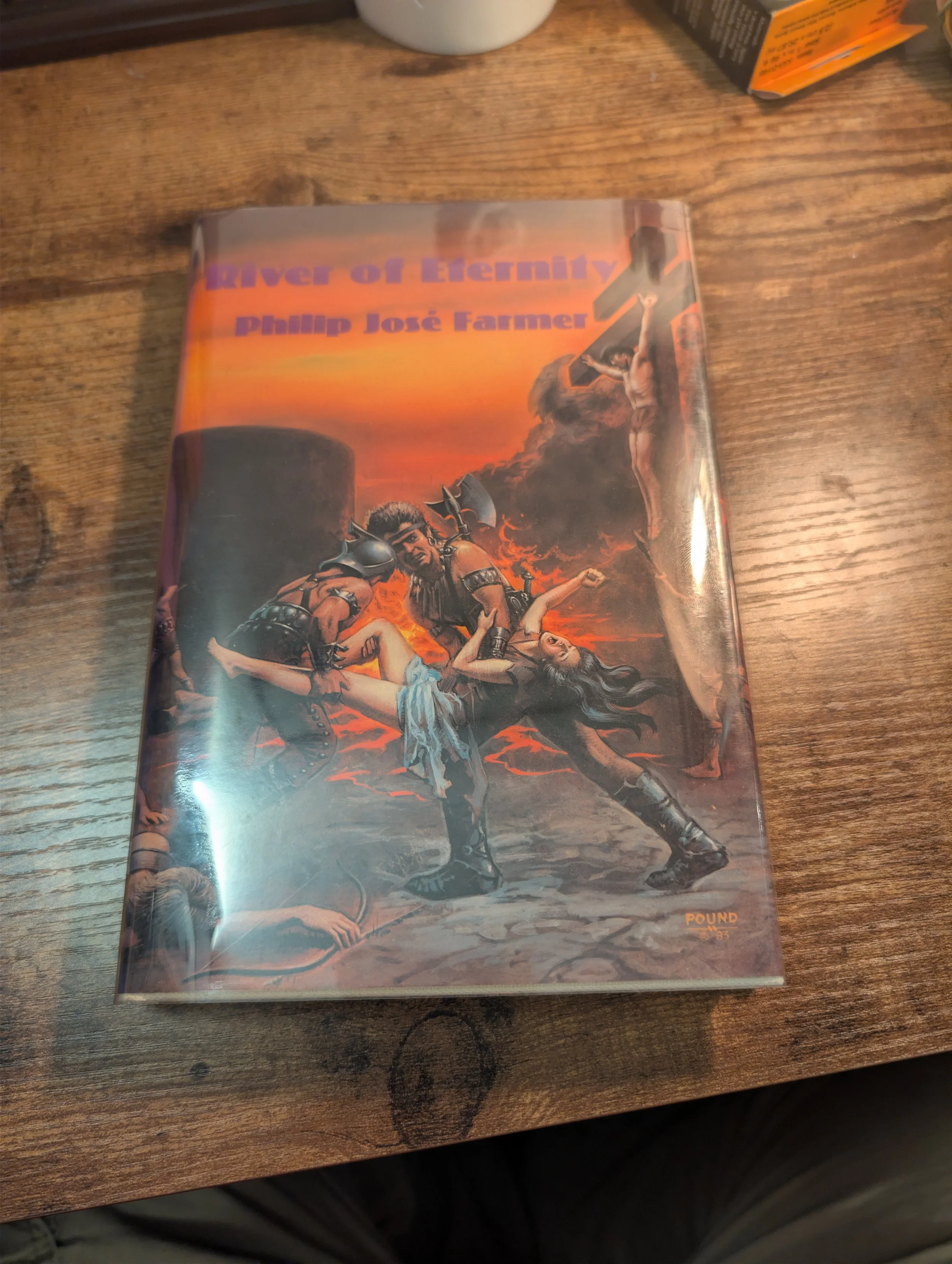 Image 2 of 13
 Image 3 of 13
 Image 4 of 13
 Image 5 of 13
 Image 6 of 13
 Image 7 of 13
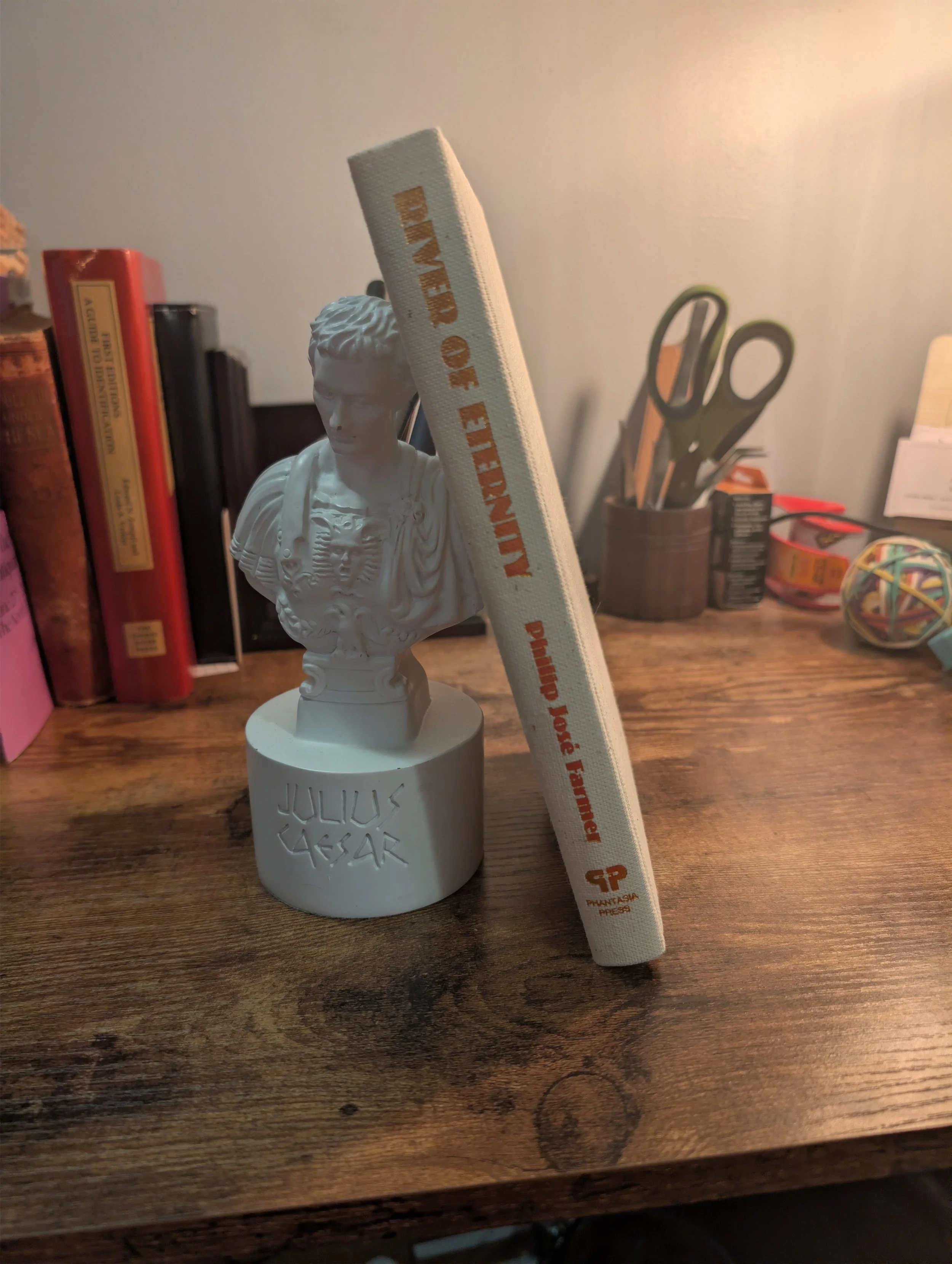 Image 8 of 13
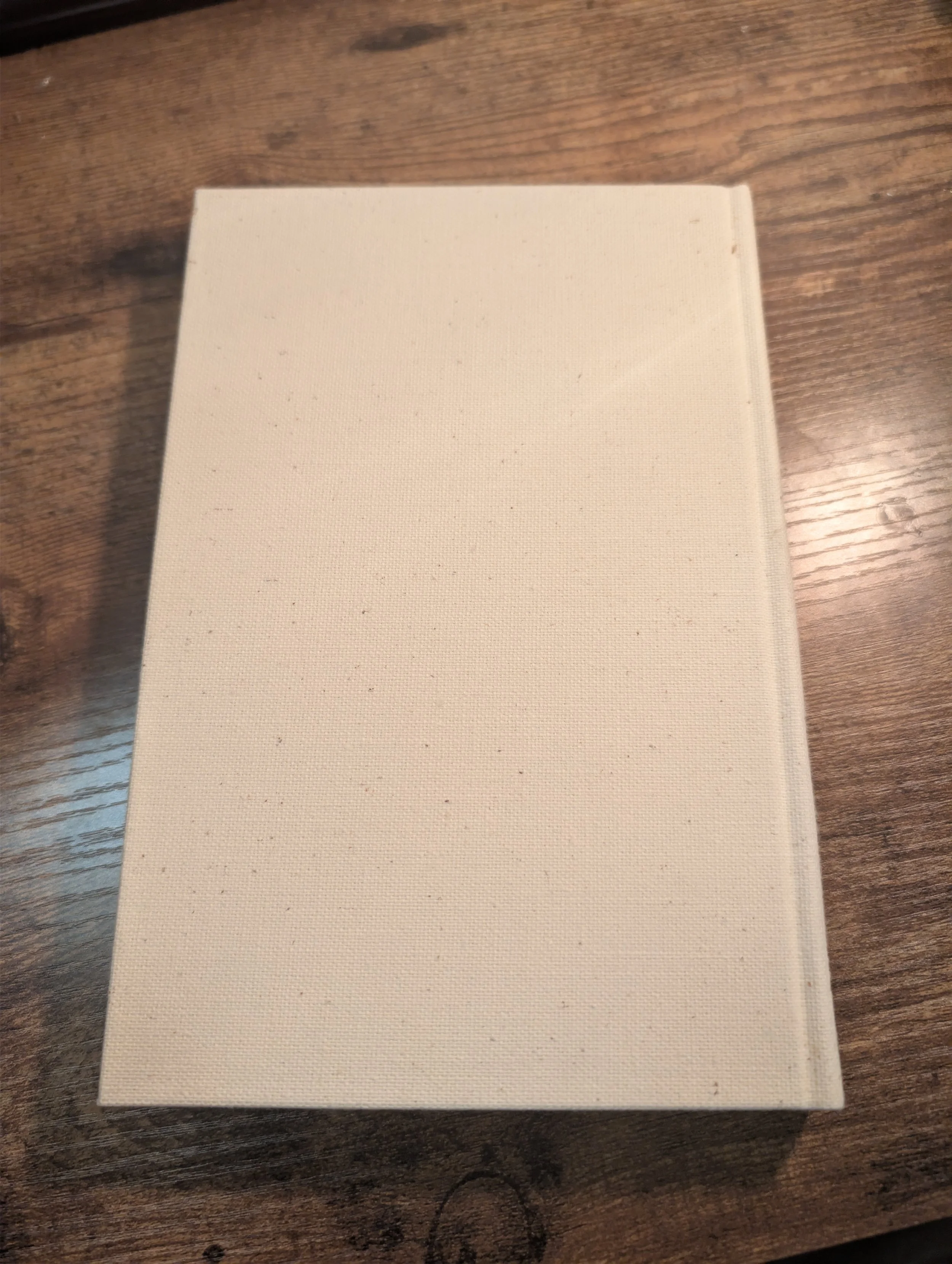 Image 9 of 13
 Image 10 of 13
 Image 11 of 13
 Image 12 of 13
 Image 13 of 13