The Story & Significance
First published posthumously in 1849, Edgar Allan Poe’s The Bells is a rhythmic masterwork of onomatopoeia and phonetic symbolism. The poem traces the arc of a human life through the shifting timber of bells—from the "tinkle, tinkle" of silver childhood sleigh bells and the "golden melody" of wedding bells to the "shriek" of brazen alarm bells and the iron "tolling" of the funeral ghouls. It is one of Poe’s most enduring works, celebrated for its musicality and its haunting exploration of the inescapable passage of time and the cyclical nature of joy and despair.
Physical Description & Provenance
Edition: 1881 Illustrated Edition.
Publisher: Porter & Coates, Philadelphia.
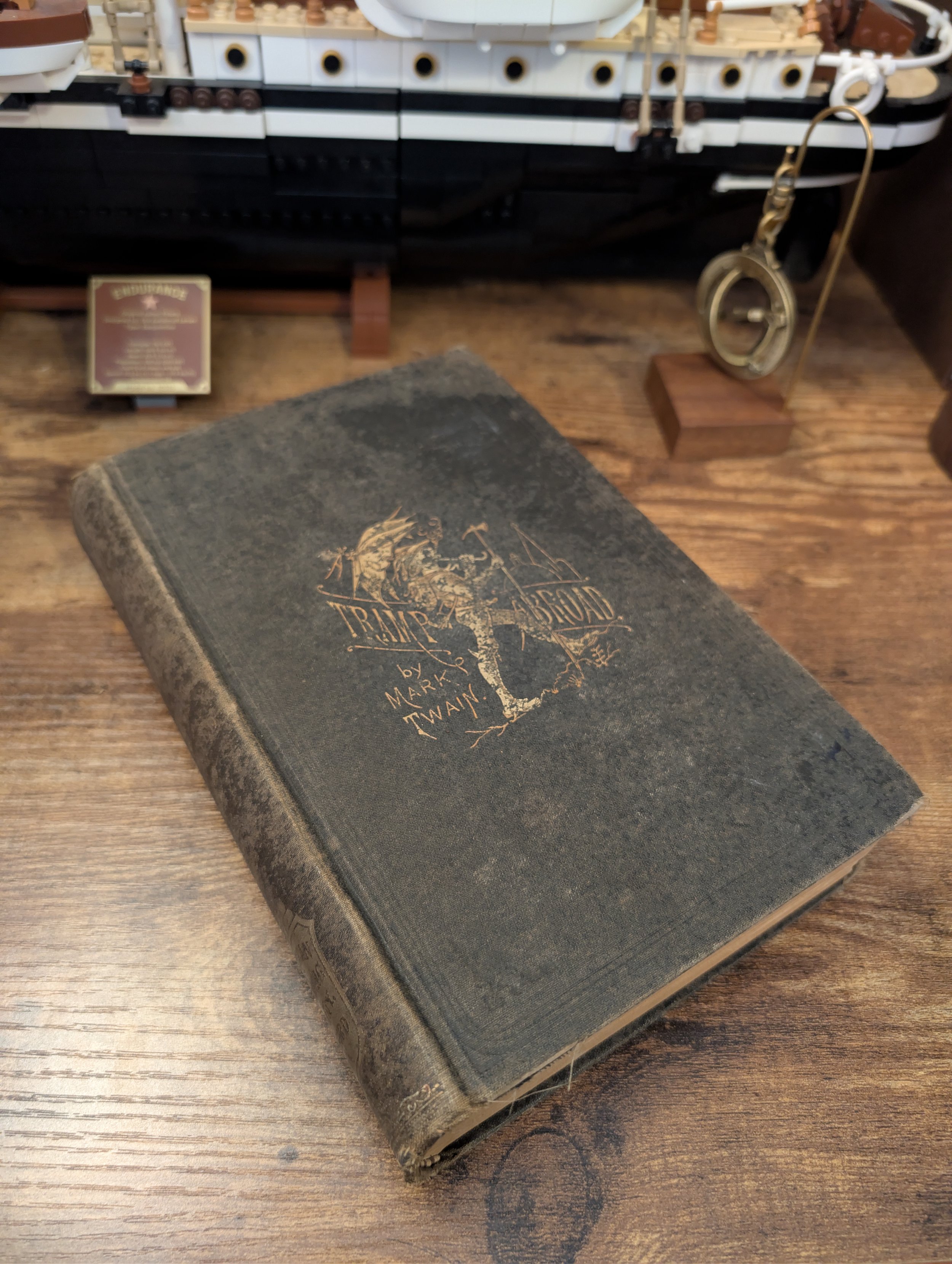
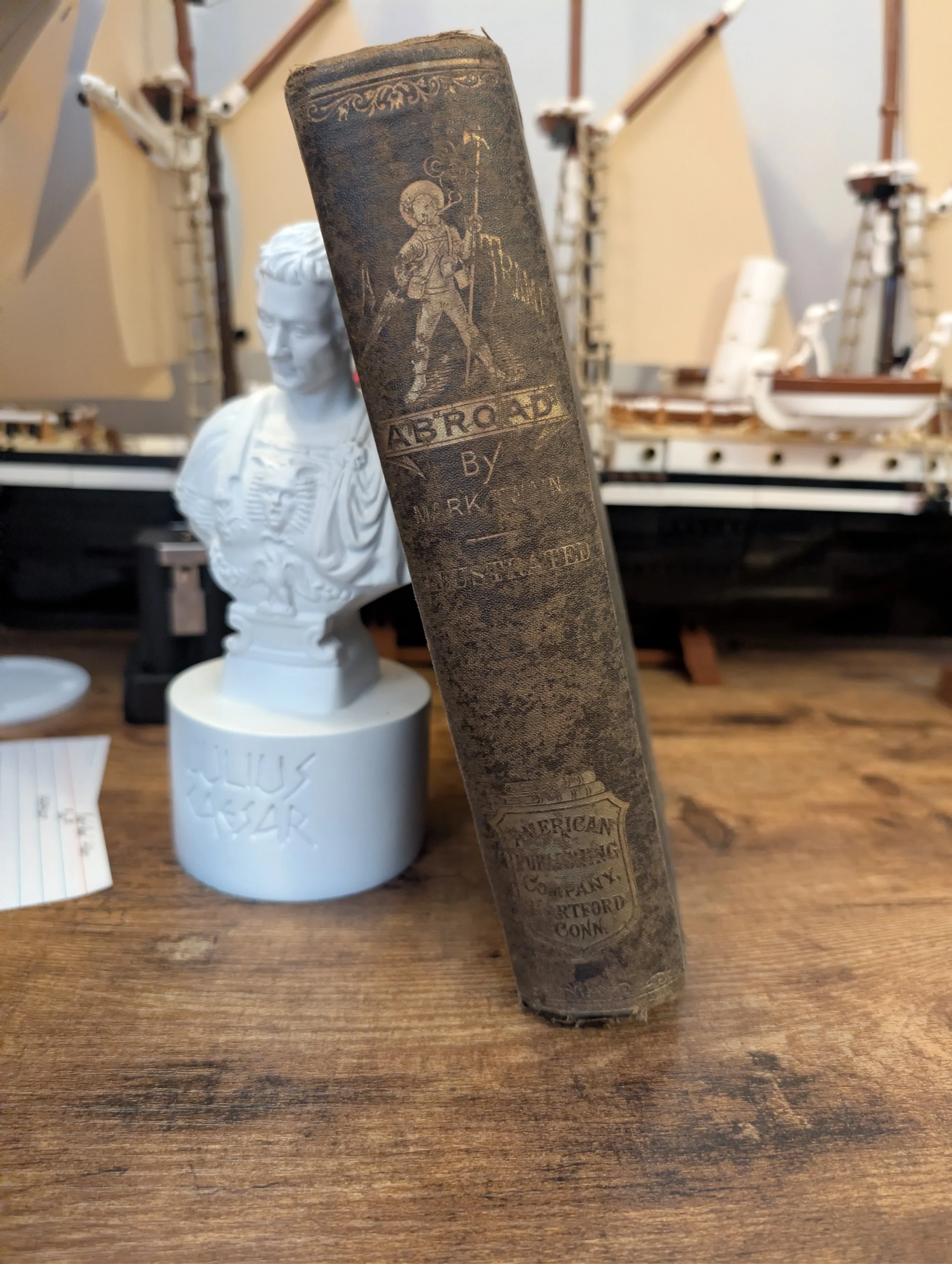
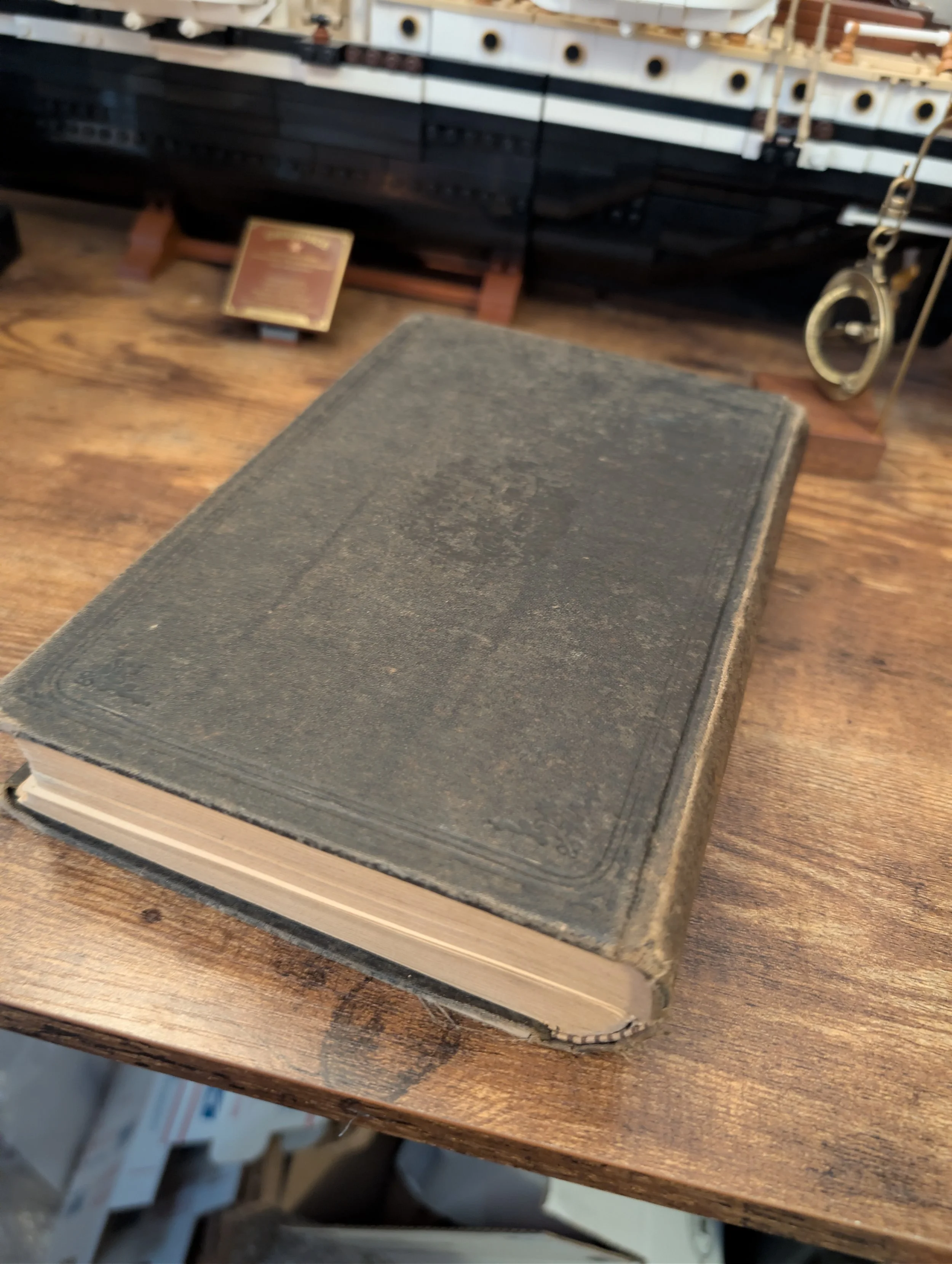
Binding: Original publisher's cloth with elaborate gilt and black-stamped Victorian pictorial decorations. The cover art and gilt remain vibrant and unfaded.
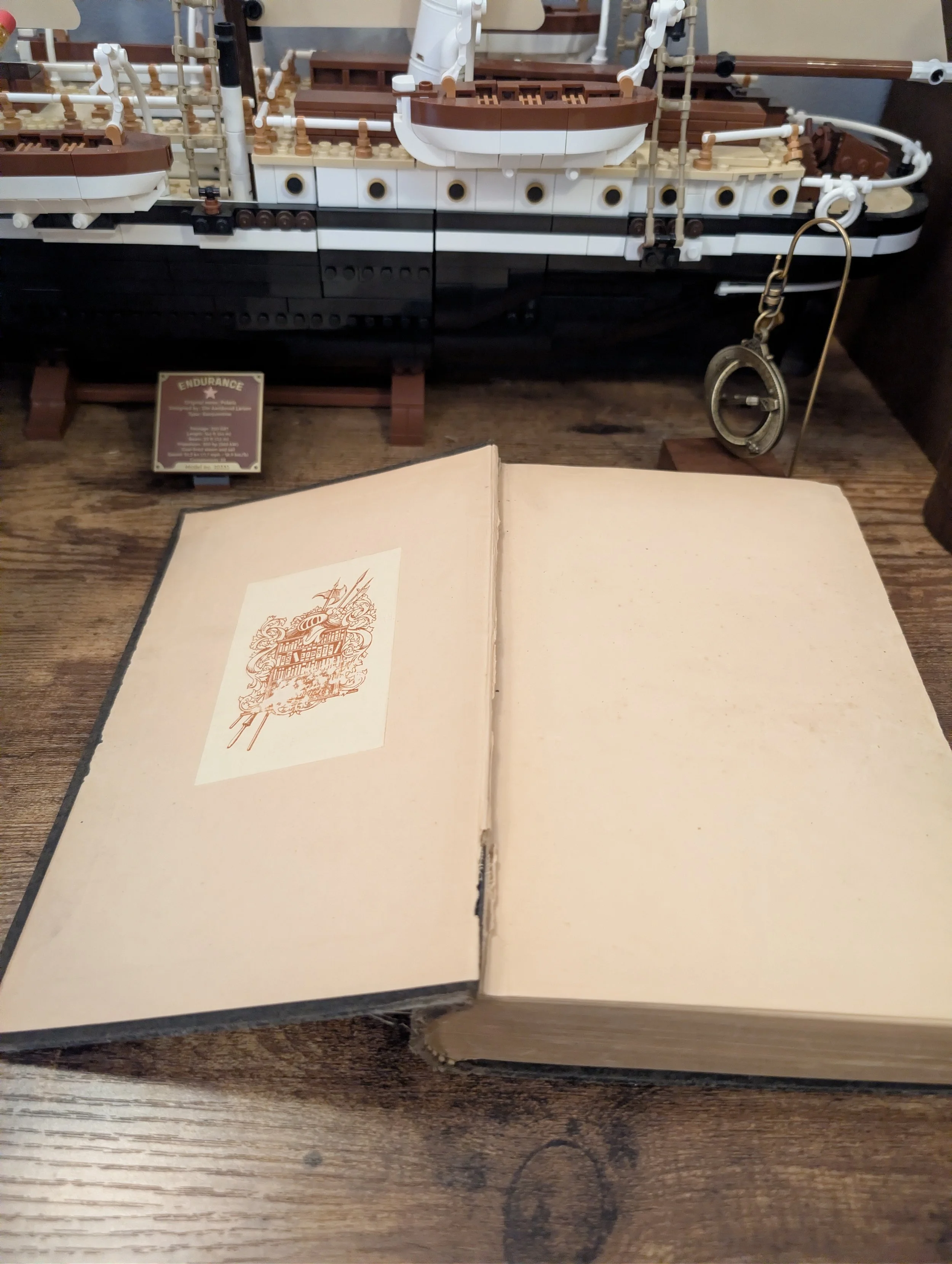
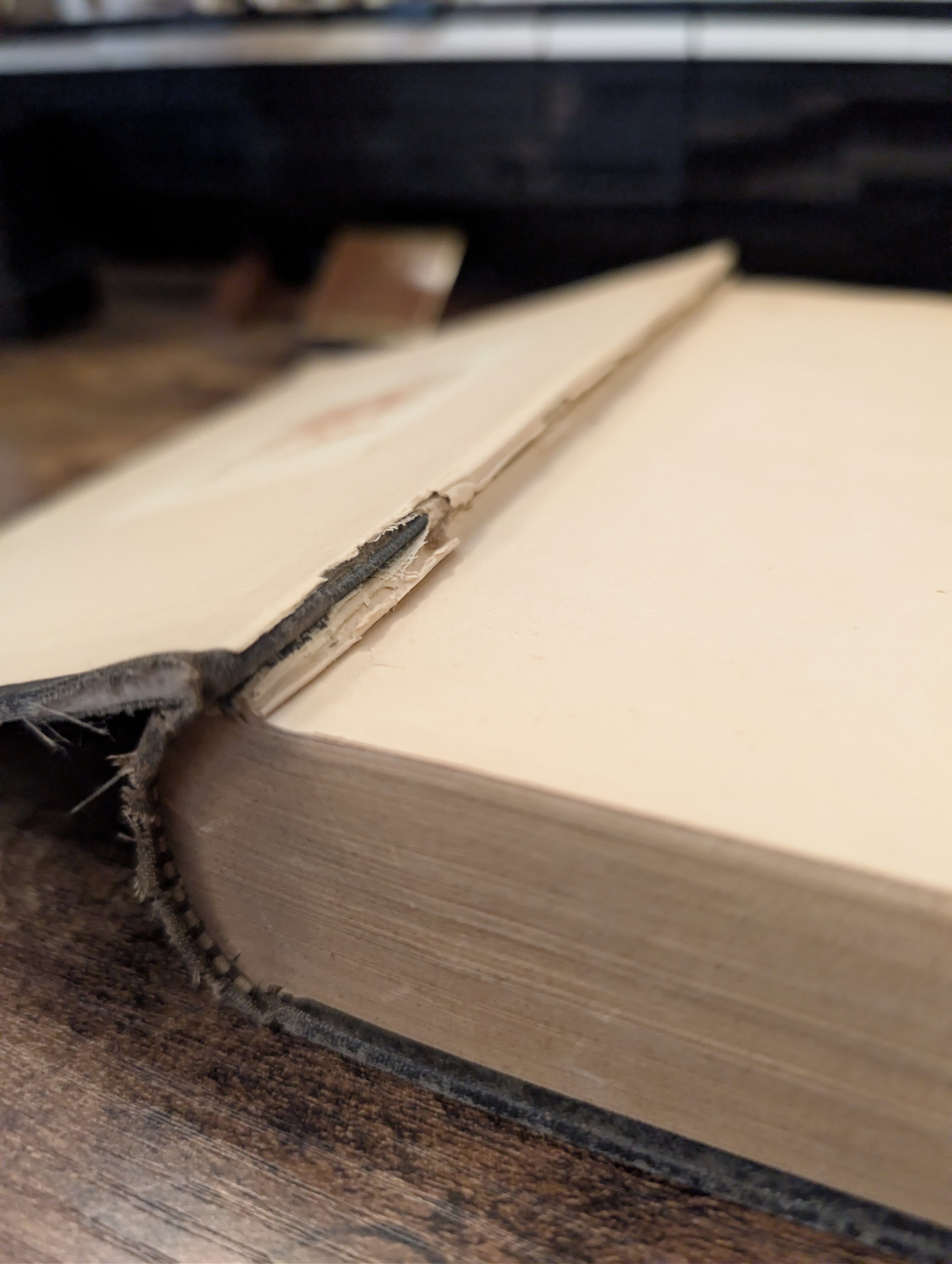
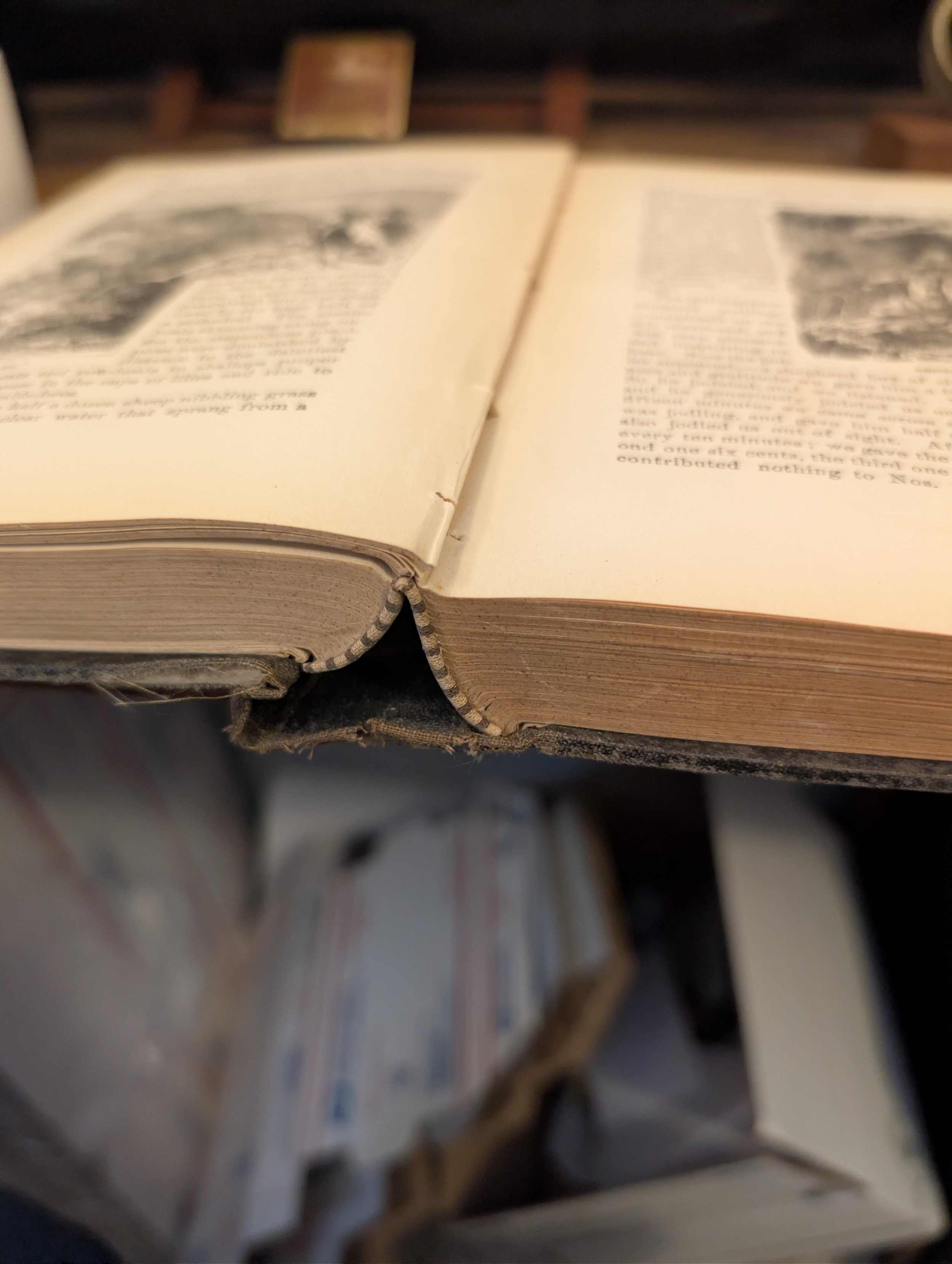
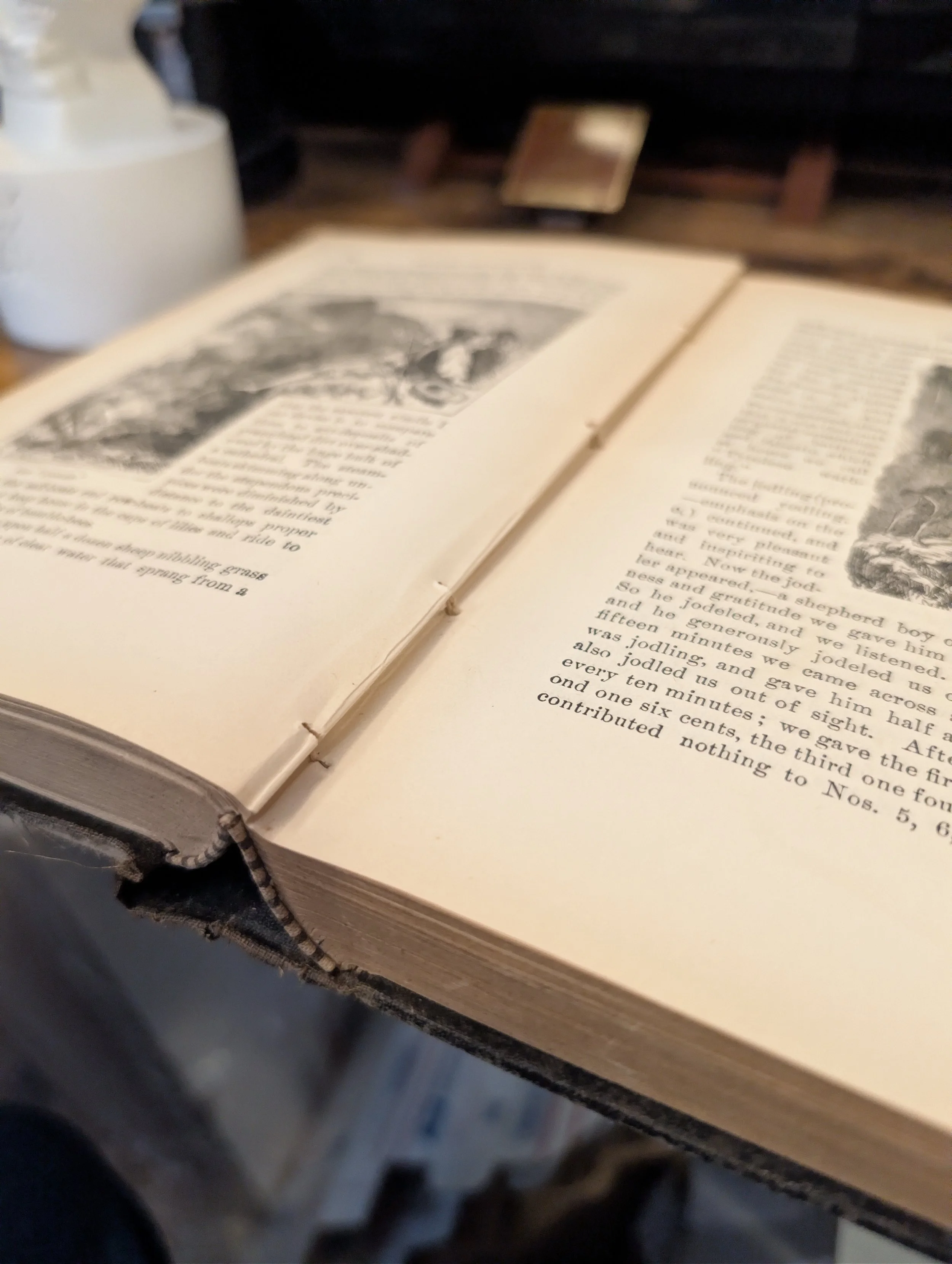
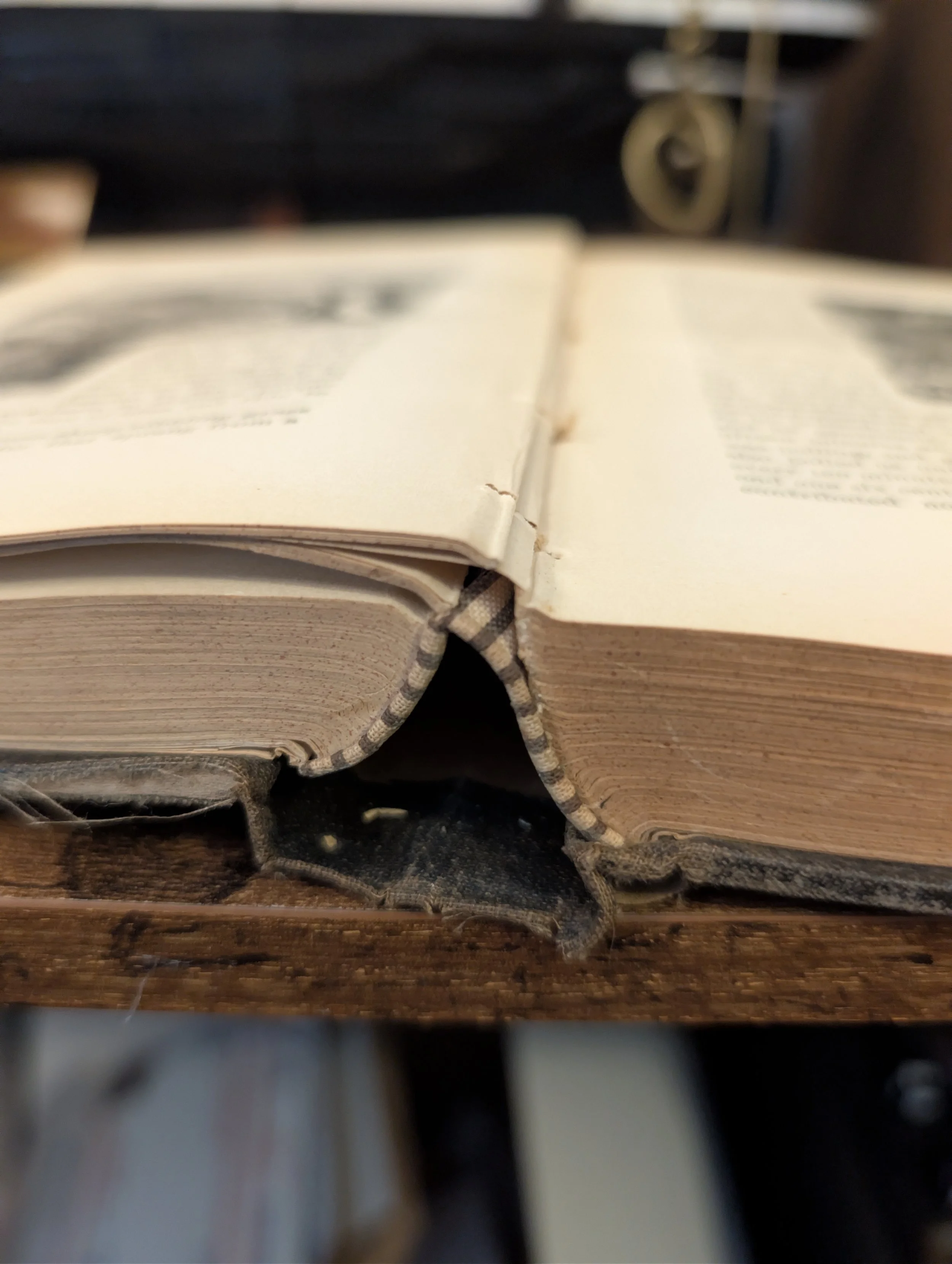
Condition Points: The volume is in Good condition overall. The binding is slightly loose, with the front board and endpaper beginning to separate; however, all pages remain intact. There is typical bumping to the corners and light scratching to the boards.
Provenance: This copy carries a charming "domestic" history; it appears a previous owner used the volume for pressing flowers, leaving behind faint botanical stains on a few pages. Light pencil marks are also present on the rear boards and endpapers.
Collector’s Note
This 1881 Porter & Coates edition is a premier example of the "Gift Book" aesthetic that dominated the late Victorian era. While many copies from this period suffer from severe "soiling" or significant gilding loss, the exceptional brightness of the cover illustrations on this specimen makes it a standout display piece. The internal staining from pressed flowers—while technically a defect—adds a layer of romantic Victorian provenance that many collectors of 19th-century poetry find deeply evocative. It is a sturdy, visually striking artifact of Poe’s enduring 19th-century legacy.
Check out our other classic literature selections.
The Story & Significance
First published posthumously in 1849, Edgar Allan Poe’s The Bells is a rhythmic masterwork of onomatopoeia and phonetic symbolism. The poem traces the arc of a human life through the shifting timber of bells—from the "tinkle, tinkle" of silver childhood sleigh bells and the "golden melody" of wedding bells to the "shriek" of brazen alarm bells and the iron "tolling" of the funeral ghouls. It is one of Poe’s most enduring works, celebrated for its musicality and its haunting exploration of the inescapable passage of time and the cyclical nature of joy and despair.
Physical Description & Provenance
Edition: 1881 Illustrated Edition.
Publisher: Porter & Coates, Philadelphia.
Binding: Original publisher's cloth with elaborate gilt and black-stamped Victorian pictorial decorations. The cover art and gilt remain vibrant and unfaded.
Condition Points: The volume is in Good condition overall. The binding is slightly loose, with the front board and endpaper beginning to separate; however, all pages remain intact. There is typical bumping to the corners and light scratching to the boards.
Provenance: This copy carries a charming "domestic" history; it appears a previous owner used the volume for pressing flowers, leaving behind faint botanical stains on a few pages. Light pencil marks are also present on the rear boards and endpapers.
Collector’s Note
This 1881 Porter & Coates edition is a premier example of the "Gift Book" aesthetic that dominated the late Victorian era. While many copies from this period suffer from severe "soiling" or significant gilding loss, the exceptional brightness of the cover illustrations on this specimen makes it a standout display piece. The internal staining from pressed flowers—while technically a defect—adds a layer of romantic Victorian provenance that many collectors of 19th-century poetry find deeply evocative. It is a sturdy, visually striking artifact of Poe’s enduring 19th-century legacy.
Check out our other classic literature selections.
 Image 1 of 14
 Image 2 of 14
 Image 3 of 14
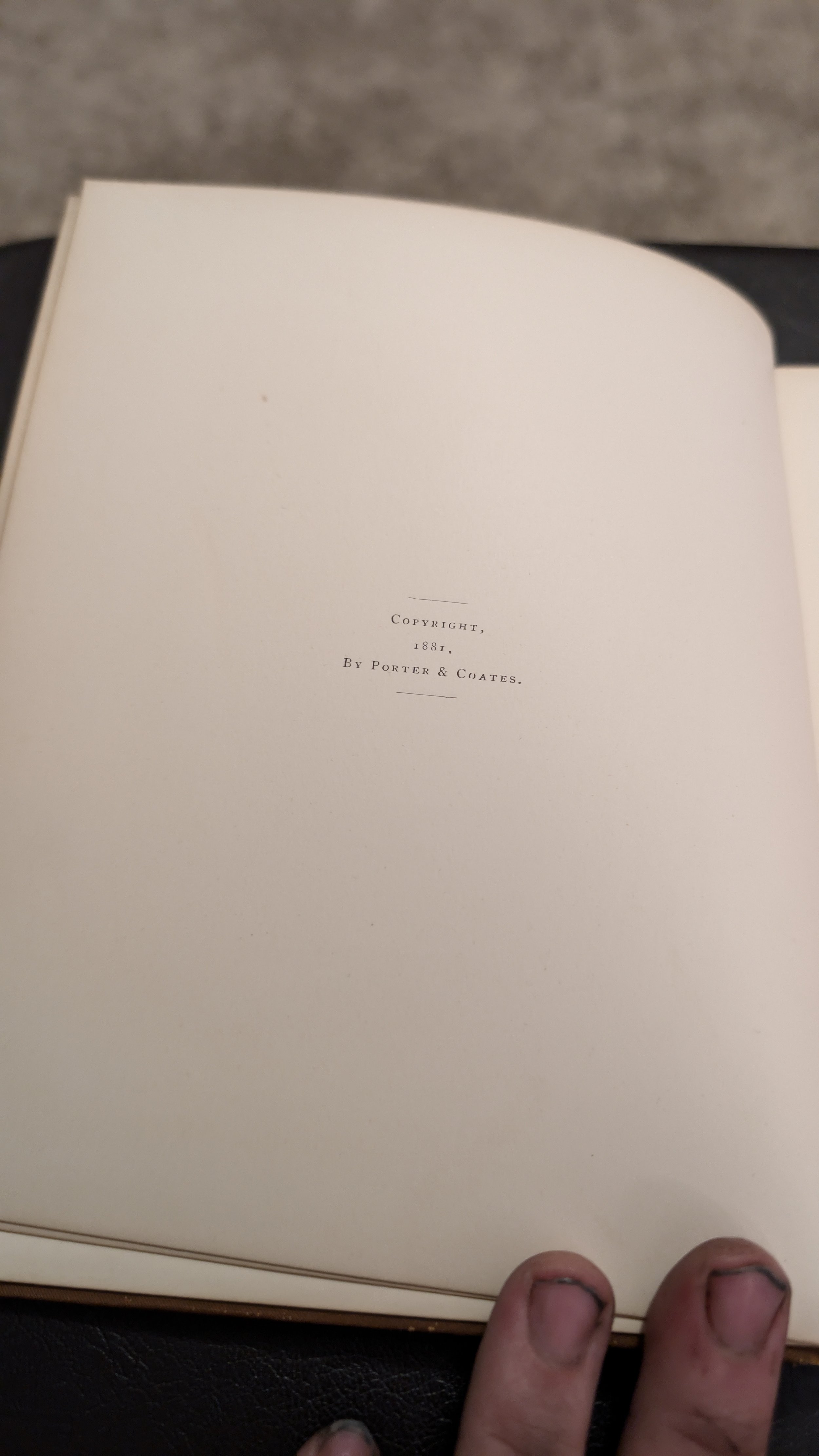 Image 4 of 14
 Image 5 of 14
 Image 6 of 14
 Image 7 of 14
 Image 8 of 14
 Image 9 of 14
 Image 10 of 14
 Image 11 of 14
 Image 12 of 14
 Image 13 of 14
 Image 14 of 14