Story & Significance
This is a first edition of The Moon Is Down in a later state, and the difference comes down to two small details. Ahearn identifies the earliest copies of the Viking first edition by a copyright page with no printer's name and by a large period between "talk" and "this" on page 112, line 11. This copy has neither. Its copyright page names the Haddon Craftsmen as printer, and the period is gone.
What it does have is Viking's own mark of a first edition. The publisher's 1937 statement, reprinted in Zempel and Verkler's First Editions: A Guide to Identification, reads: "Our first editions can be distinguished by the fact that there is no indication to the contrary on the copyright page." Viking said it marked the date and number of every reprinting, and its 1947 statement refers back to the 1937 one, so the method covers 1942. This copyright page carries the 1942 date and no reprinting notice.
Later copies of the Viking first edition are not all alike. Some name the Haddon Craftsmen as printer, as this one does, and others name the Kingsport Press, and we have found no reference that puts those later copies in order. So we call this copy what the evidence supports: a first edition, later state. It is not a first issue, and we do not claim a second issue or second state that no source we have consulted assigns.
Steinbeck wrote the novel in 1942 about a small coastal town under occupation by an unnamed invading army, and it was quickly translated and passed hand to hand in occupied Europe. It was a wartime book in the most literal sense, and the Viking first edition is the form in which it first reached readers.
Physical Description
Viking Press, New York, copyright 1942. First edition, later state: the Haddon Craftsmen named as printer on the copyright page, and no large period between "talk" and "this" on page 112, line 11. No reprinting notice appears on the copyright page, and the title page is dated MCMXLII, matching the 1942 copyright.
Bound in blue cloth, with the spine lettered in silver. There is a very slight lean to the spine and bumping at the head and foot of the spine; the corners are unbumped. The text block is slightly faded. The pages are crisp and clean. An illegible previous owner's signature is on the front pastedown, and there is no other writing or marking.
The dust jacket, with illustration by Frank Lieberman, is price-clipped, so the original price is not present. It shows minor chipping.
Very Good book in a Very Good dust jacket.
Collector's Note
Two checks sort copies of this book, and both can be made from photographs if the seller will take them: the copyright page, for the printer's name, and page 112, line 11, for the period between "talk" and "this." A listing that shows neither has not told you whether you are looking at an early copy or a later state. Keep the British edition apart as well: Ahearn lists a London and Toronto edition of the same year, bound in terra-cotta cloth, which is a separate edition and not a variant of the Viking.
On condition, the faults are modest and typical of a wartime book of this age. The spine shows the most, with the slight lean and the bumps at head and foot. The jacket is clipped and lightly chipped, but present. The previous owner's name on the pastedown is the only mark inside, and the pages themselves are crisp and clean. A sound reading and shelf copy of a Steinbeck first edition, honestly described.
Story & Significance
This is a first edition of The Moon Is Down in a later state, and the difference comes down to two small details. Ahearn identifies the earliest copies of the Viking first edition by a copyright page with no printer's name and by a large period between "talk" and "this" on page 112, line 11. This copy has neither. Its copyright page names the Haddon Craftsmen as printer, and the period is gone.
What it does have is Viking's own mark of a first edition. The publisher's 1937 statement, reprinted in Zempel and Verkler's First Editions: A Guide to Identification, reads: "Our first editions can be distinguished by the fact that there is no indication to the contrary on the copyright page." Viking said it marked the date and number of every reprinting, and its 1947 statement refers back to the 1937 one, so the method covers 1942. This copyright page carries the 1942 date and no reprinting notice.
Later copies of the Viking first edition are not all alike. Some name the Haddon Craftsmen as printer, as this one does, and others name the Kingsport Press, and we have found no reference that puts those later copies in order. So we call this copy what the evidence supports: a first edition, later state. It is not a first issue, and we do not claim a second issue or second state that no source we have consulted assigns.
Steinbeck wrote the novel in 1942 about a small coastal town under occupation by an unnamed invading army, and it was quickly translated and passed hand to hand in occupied Europe. It was a wartime book in the most literal sense, and the Viking first edition is the form in which it first reached readers.
Physical Description
Viking Press, New York, copyright 1942. First edition, later state: the Haddon Craftsmen named as printer on the copyright page, and no large period between "talk" and "this" on page 112, line 11. No reprinting notice appears on the copyright page, and the title page is dated MCMXLII, matching the 1942 copyright.
Bound in blue cloth, with the spine lettered in silver. There is a very slight lean to the spine and bumping at the head and foot of the spine; the corners are unbumped. The text block is slightly faded. The pages are crisp and clean. An illegible previous owner's signature is on the front pastedown, and there is no other writing or marking.
The dust jacket, with illustration by Frank Lieberman, is price-clipped, so the original price is not present. It shows minor chipping.
Very Good book in a Very Good dust jacket.
Collector's Note
Two checks sort copies of this book, and both can be made from photographs if the seller will take them: the copyright page, for the printer's name, and page 112, line 11, for the period between "talk" and "this." A listing that shows neither has not told you whether you are looking at an early copy or a later state. Keep the British edition apart as well: Ahearn lists a London and Toronto edition of the same year, bound in terra-cotta cloth, which is a separate edition and not a variant of the Viking.
On condition, the faults are modest and typical of a wartime book of this age. The spine shows the most, with the slight lean and the bumps at head and foot. The jacket is clipped and lightly chipped, but present. The previous owner's name on the pastedown is the only mark inside, and the pages themselves are crisp and clean. A sound reading and shelf copy of a Steinbeck first edition, honestly described.

 Image 1 of 10
 Image 2 of 10
 Image 3 of 10
 Image 4 of 10
 Image 5 of 10
 Image 6 of 10
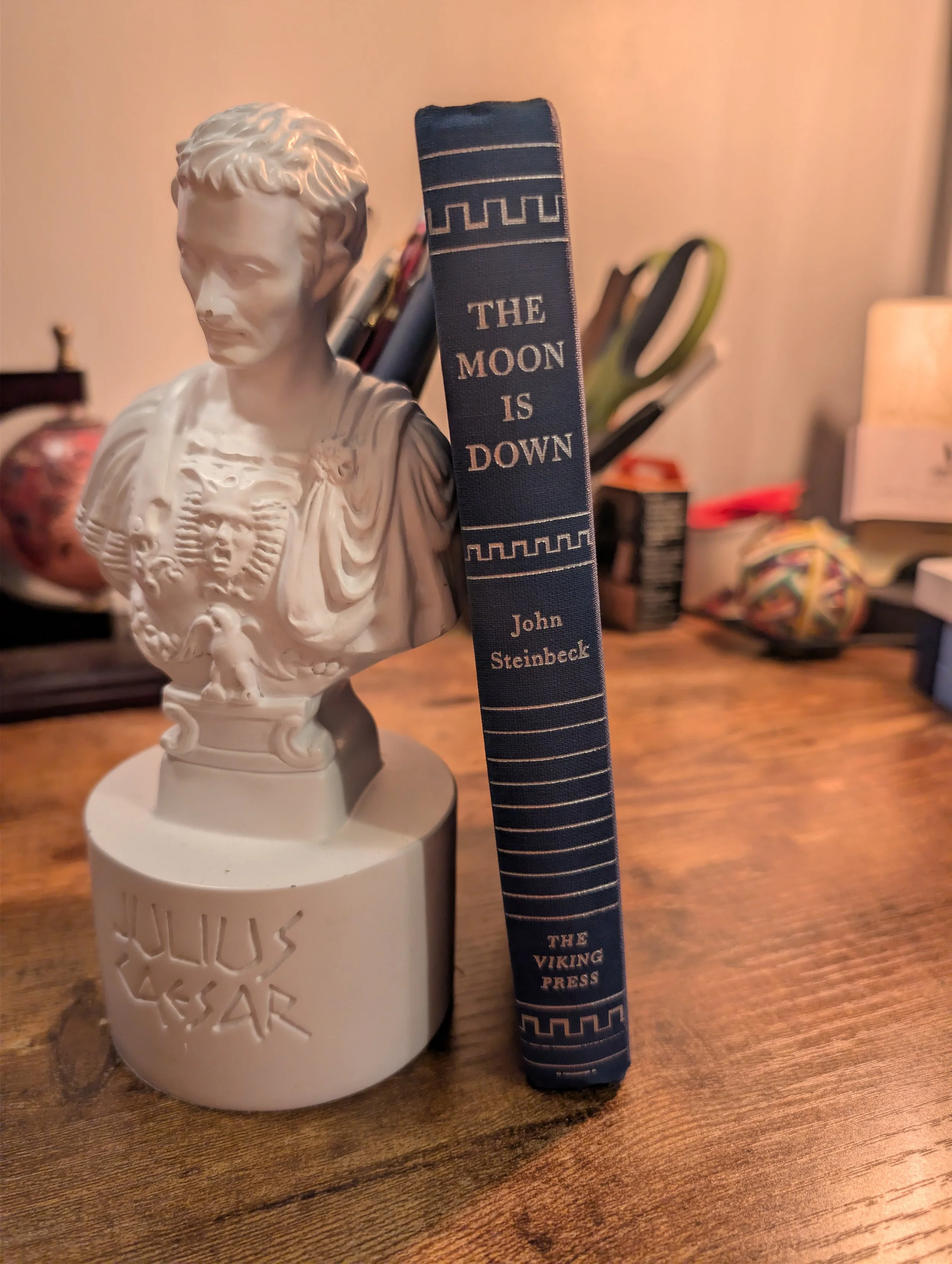 Image 7 of 10
 Image 8 of 10
 Image 9 of 10
 Image 10 of 10