 Image 1 of 5
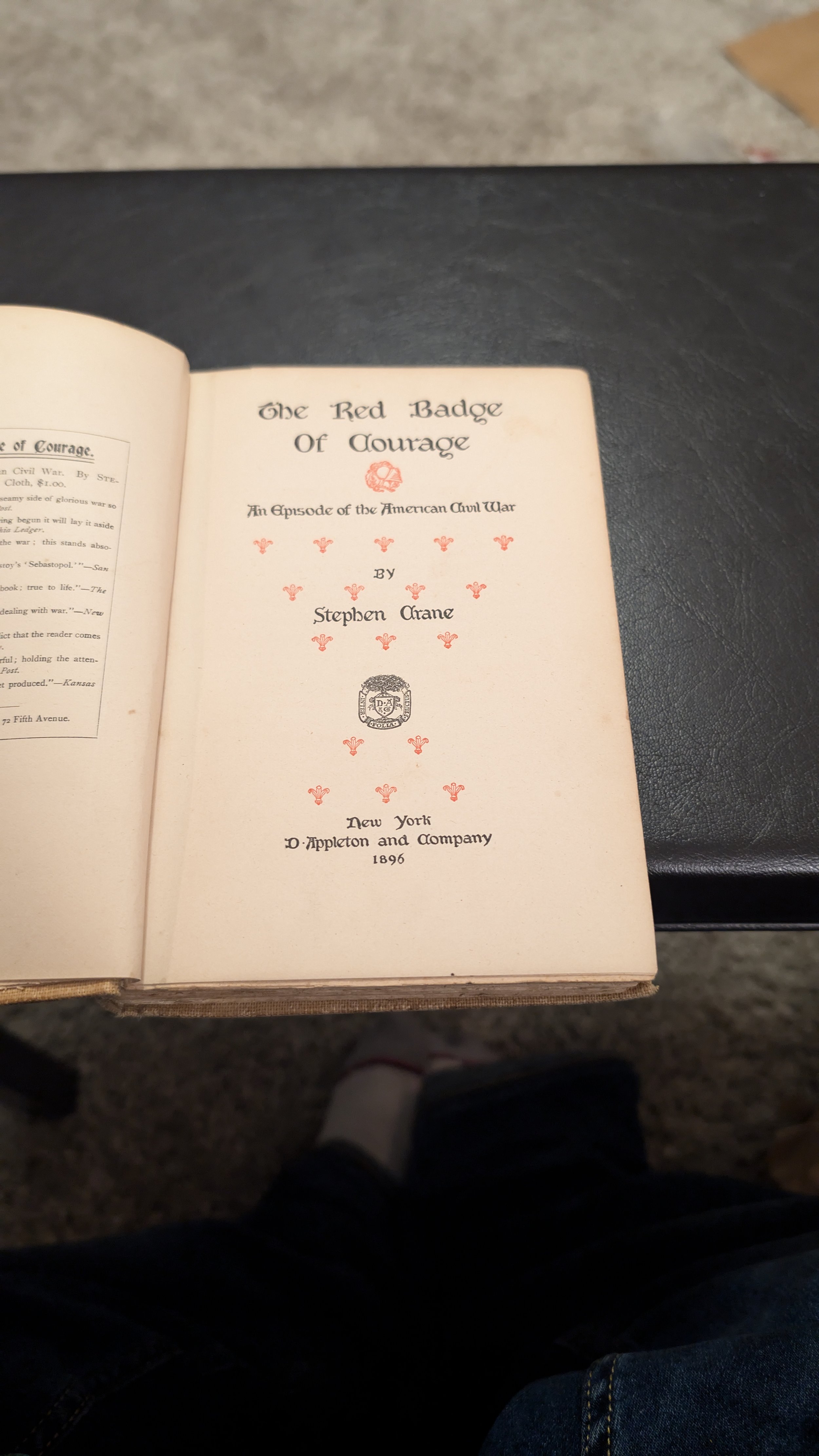 Image 2 of 5
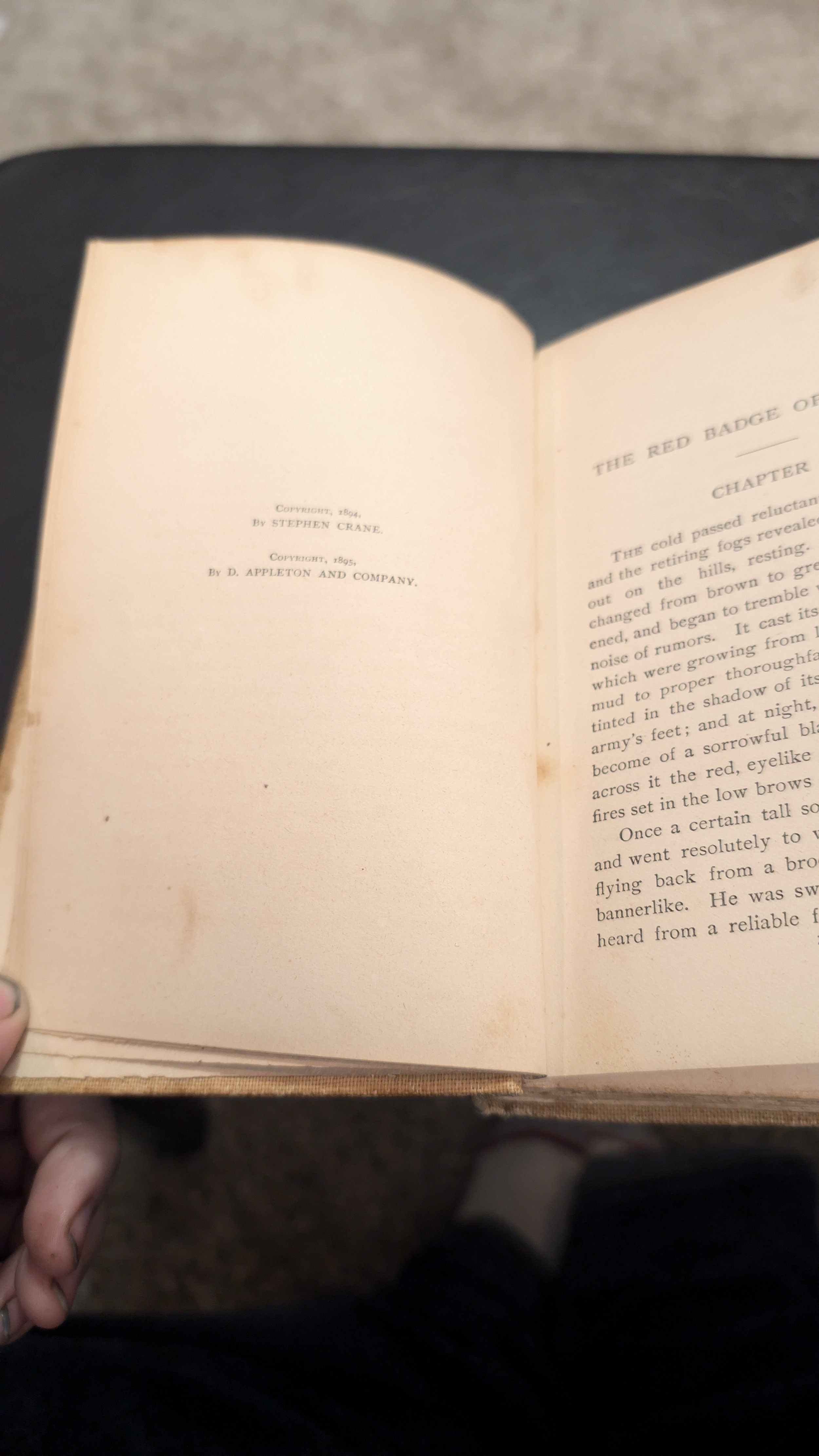 Image 3 of 5
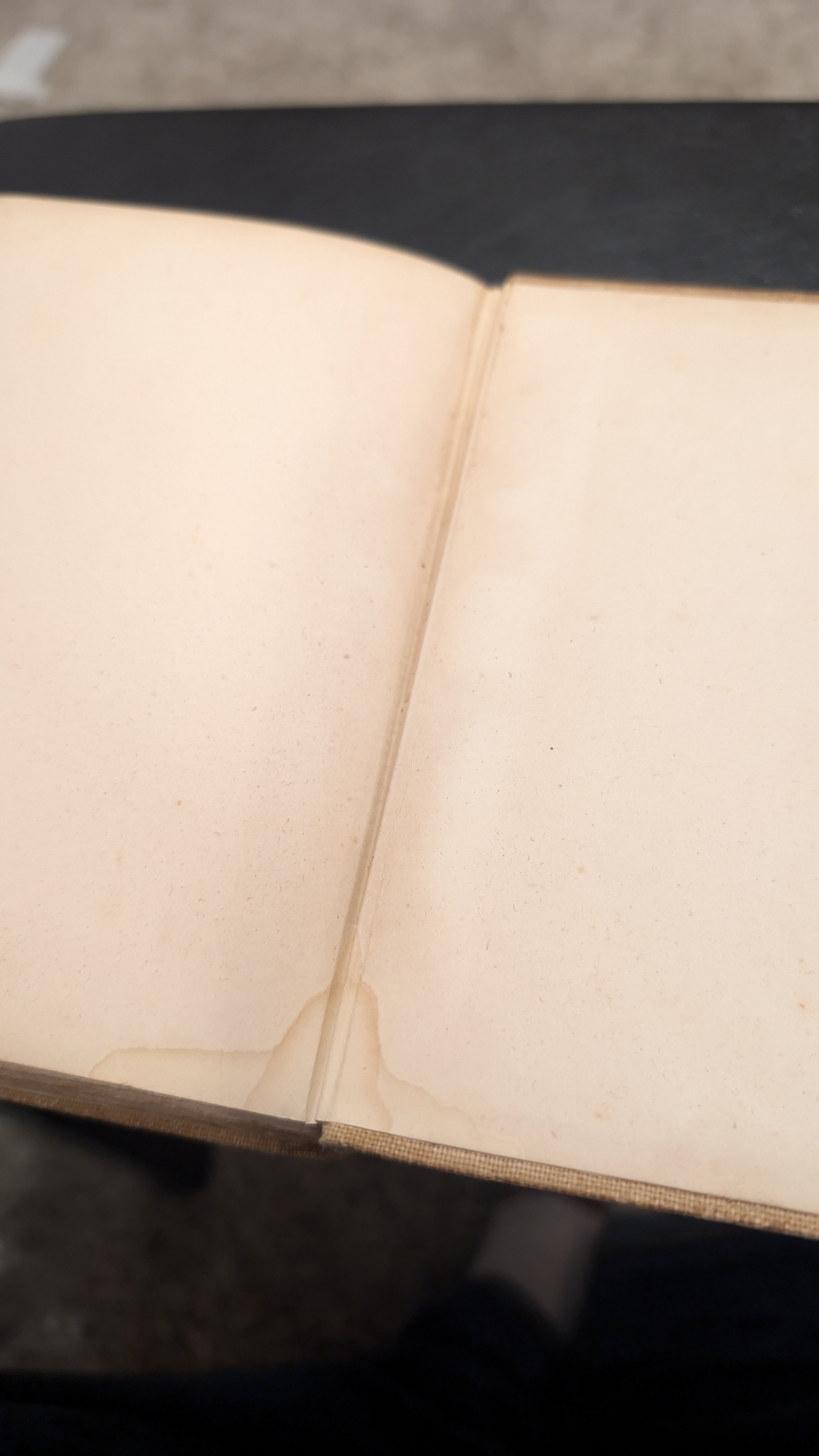 Image 4 of 5
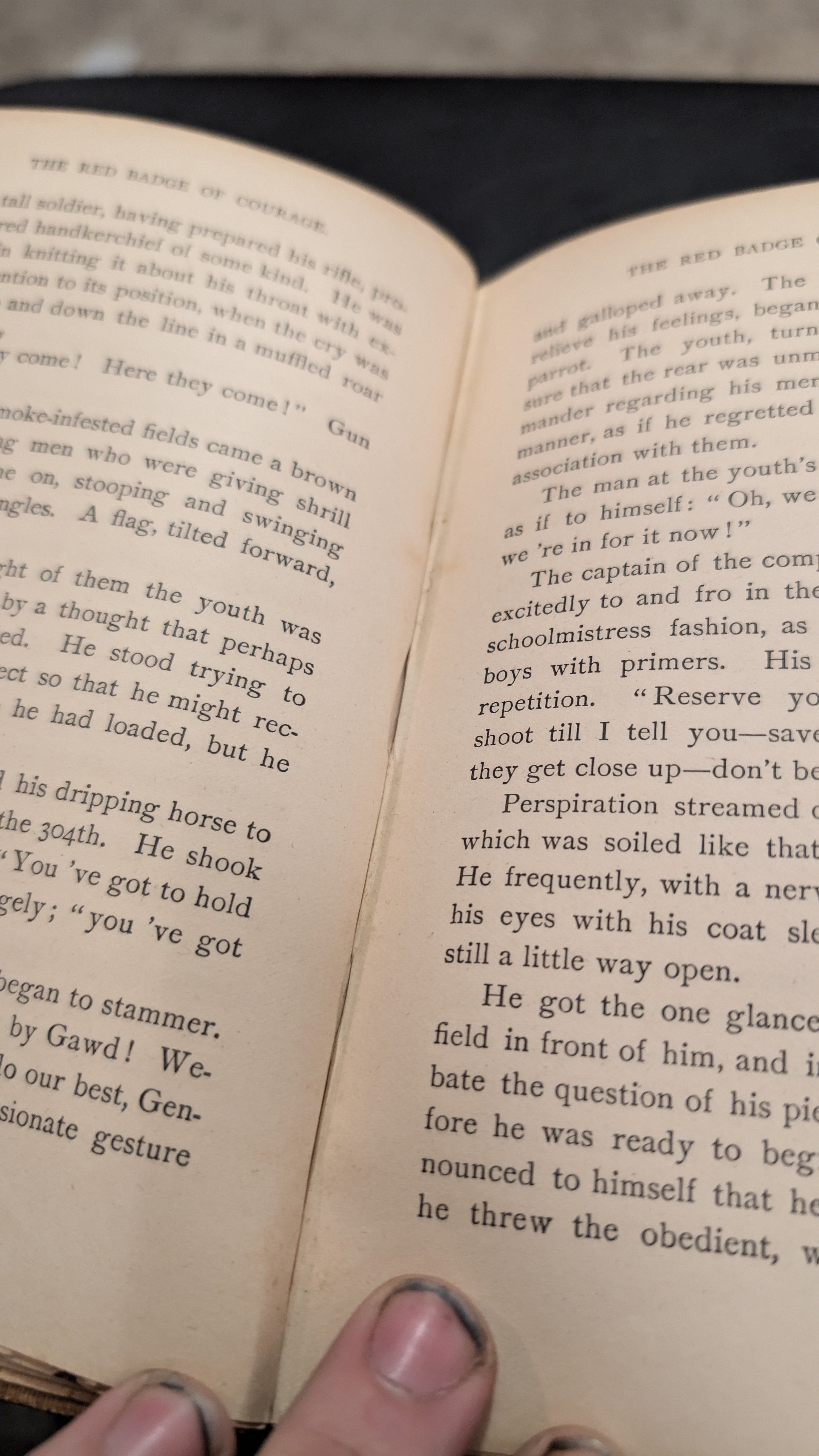 Image 5 of 5
First published in 1895, Stephen Crane’s The Red Badge of Courage is a masterpiece of psychological realism that fundamentally changed American war literature. Unlike the romanticized battle narratives of the late 19th century, Crane—who had never seen combat at the time of writing—focused on the internal "mental struggle" of Private Henry Fleming. The novel’s raw depiction of fear, cowardice, and the eventual transition into a weary, hollowed-out courage remains one of the most accurate literary portrayals of the soldier's experience. This 1896 second edition was released during the height of the book's initial sensational success, capturing the moment Crane became an international literary phenomenon.
Edition: Second Edition (1896).
Publisher: D. Appleton and Company, New York.
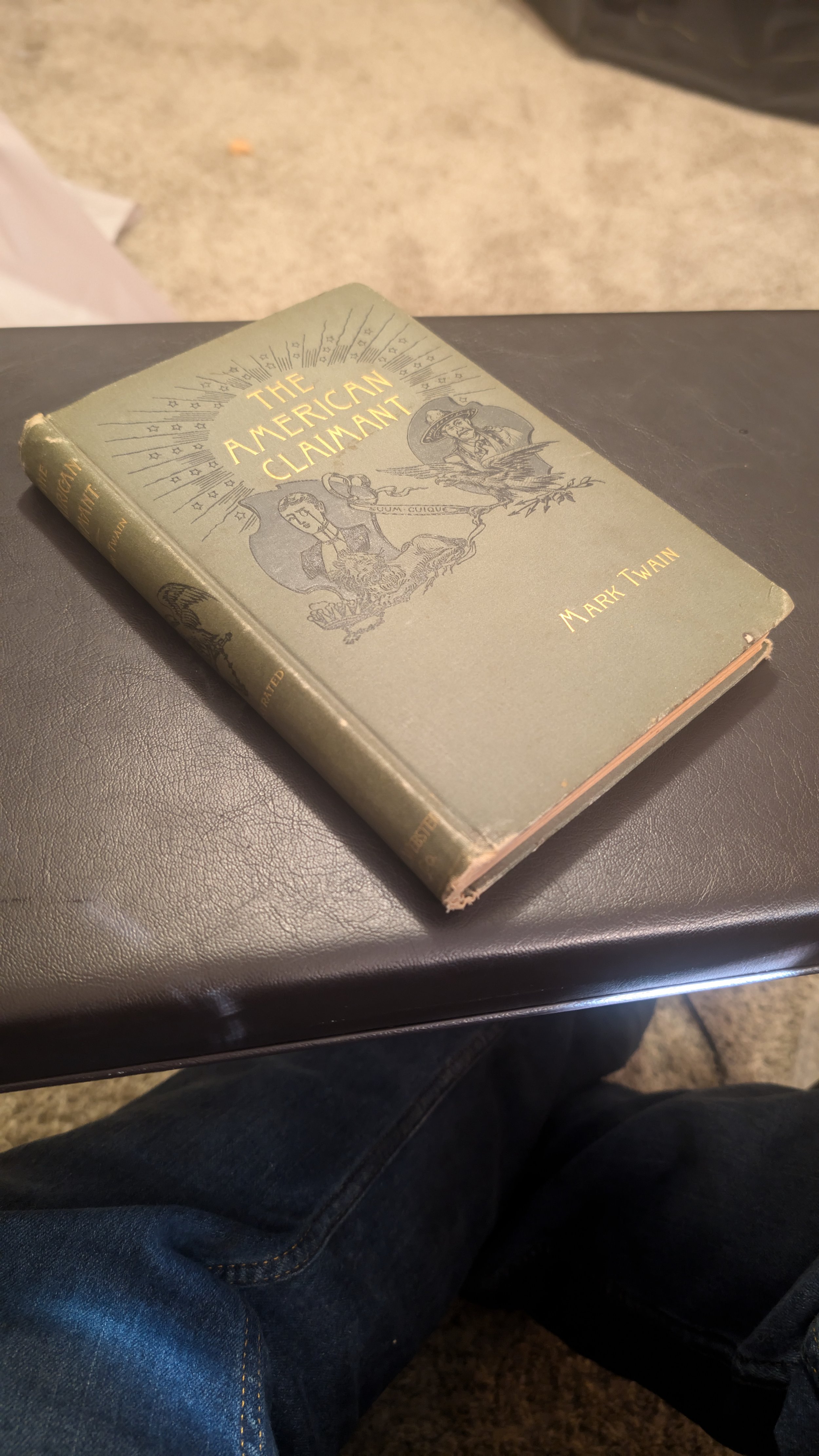
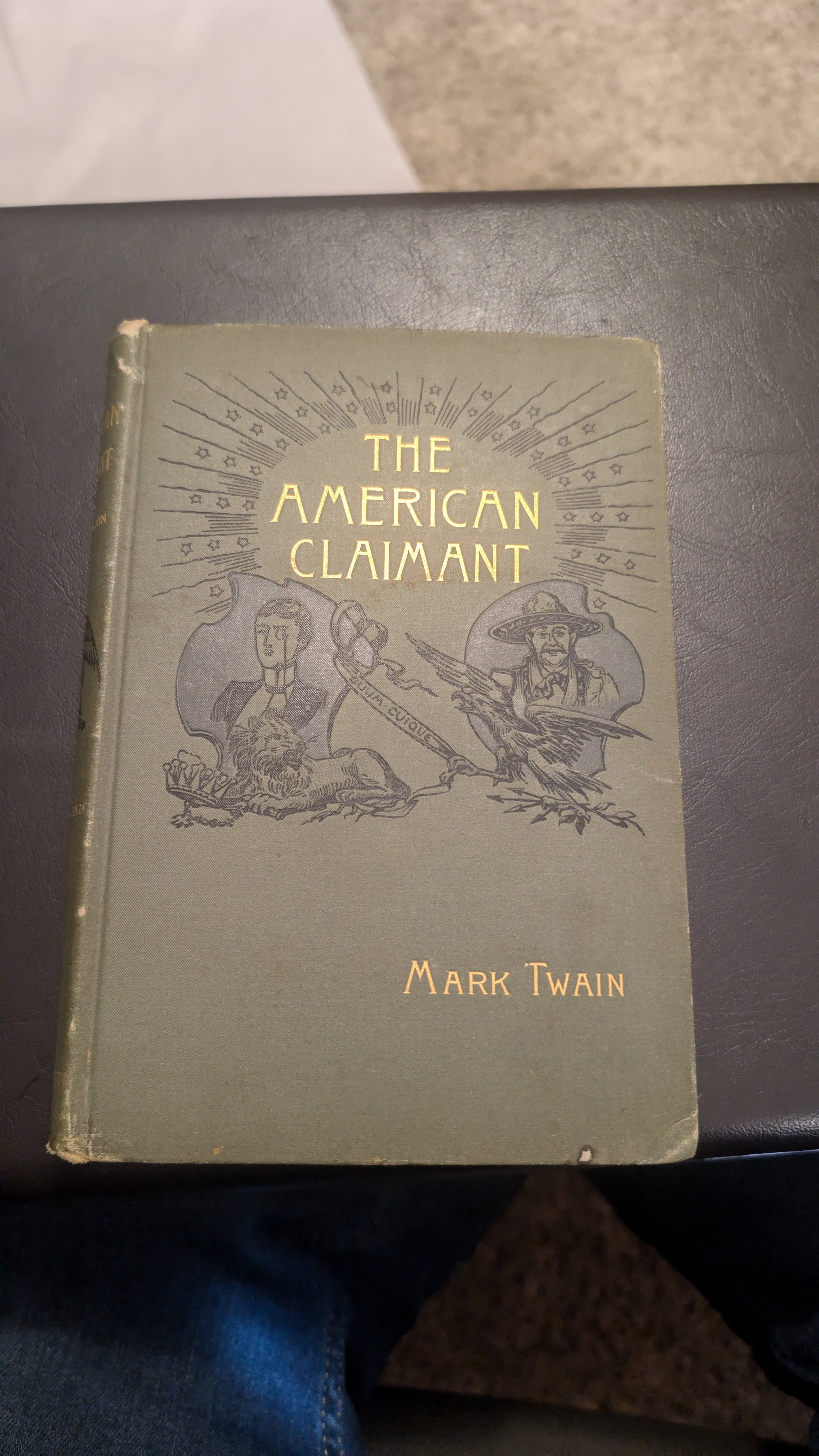
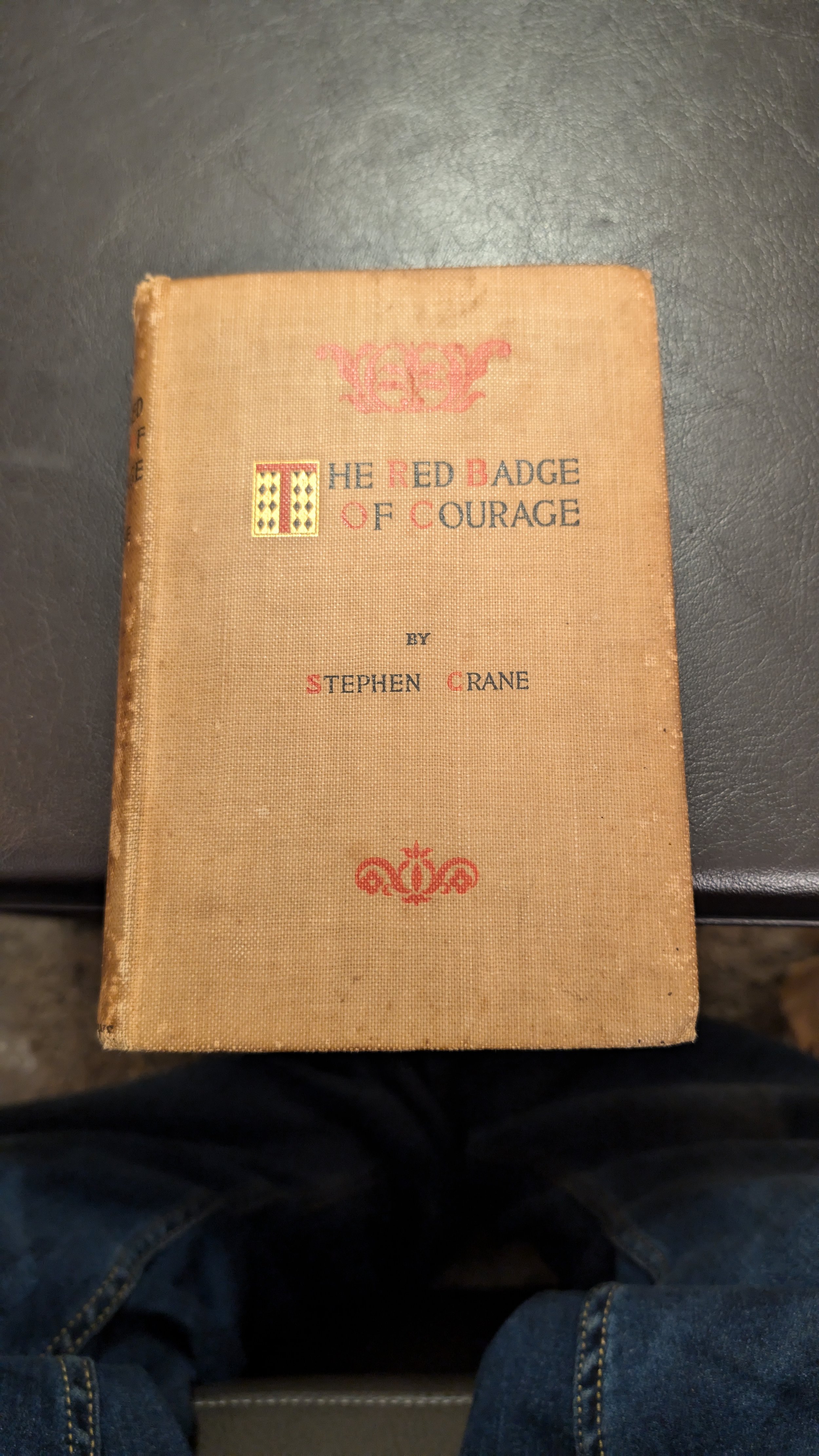
Binding: Original tan buckram cloth with black and gold-stamped decorations on the front board and spine.
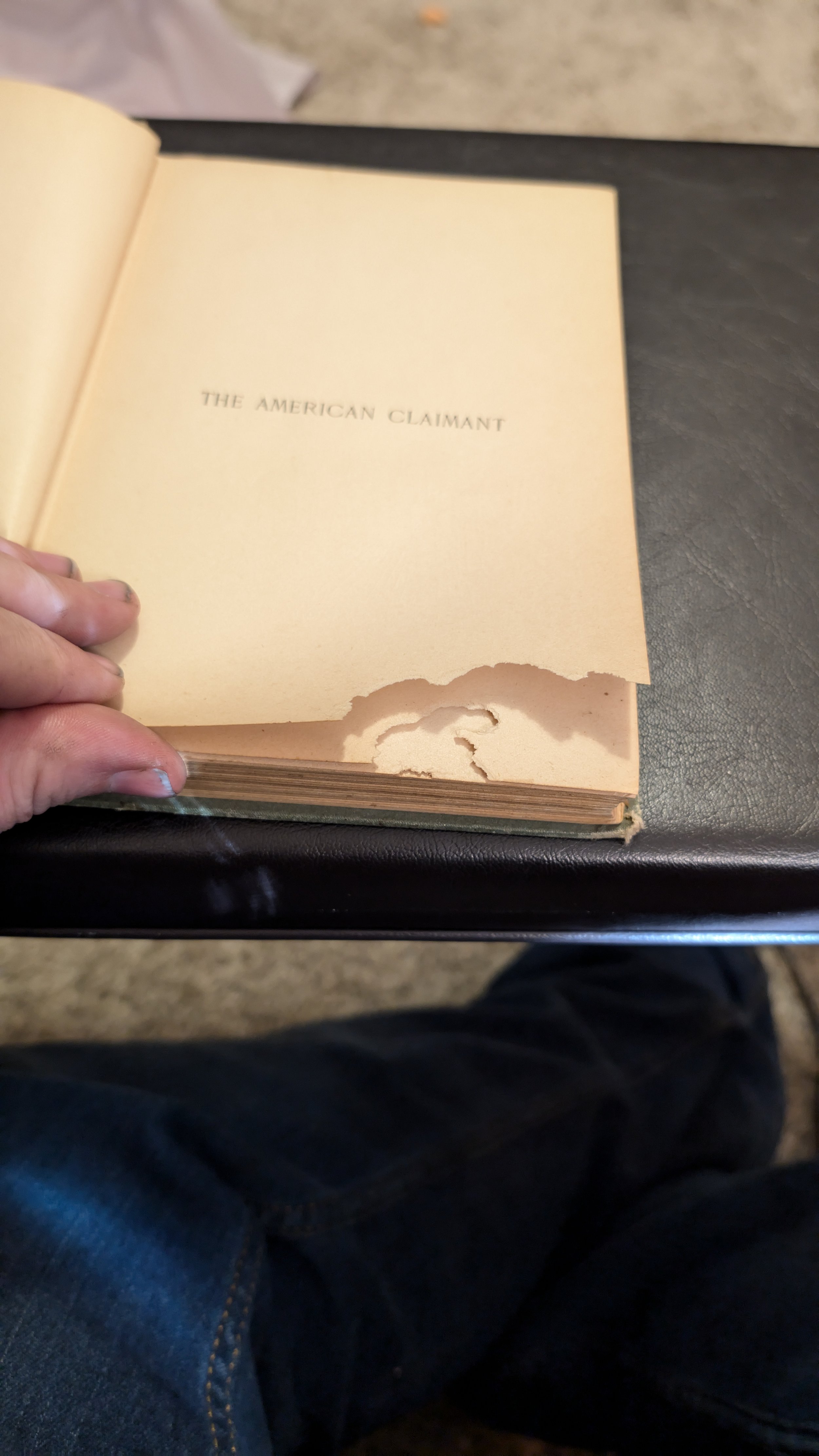
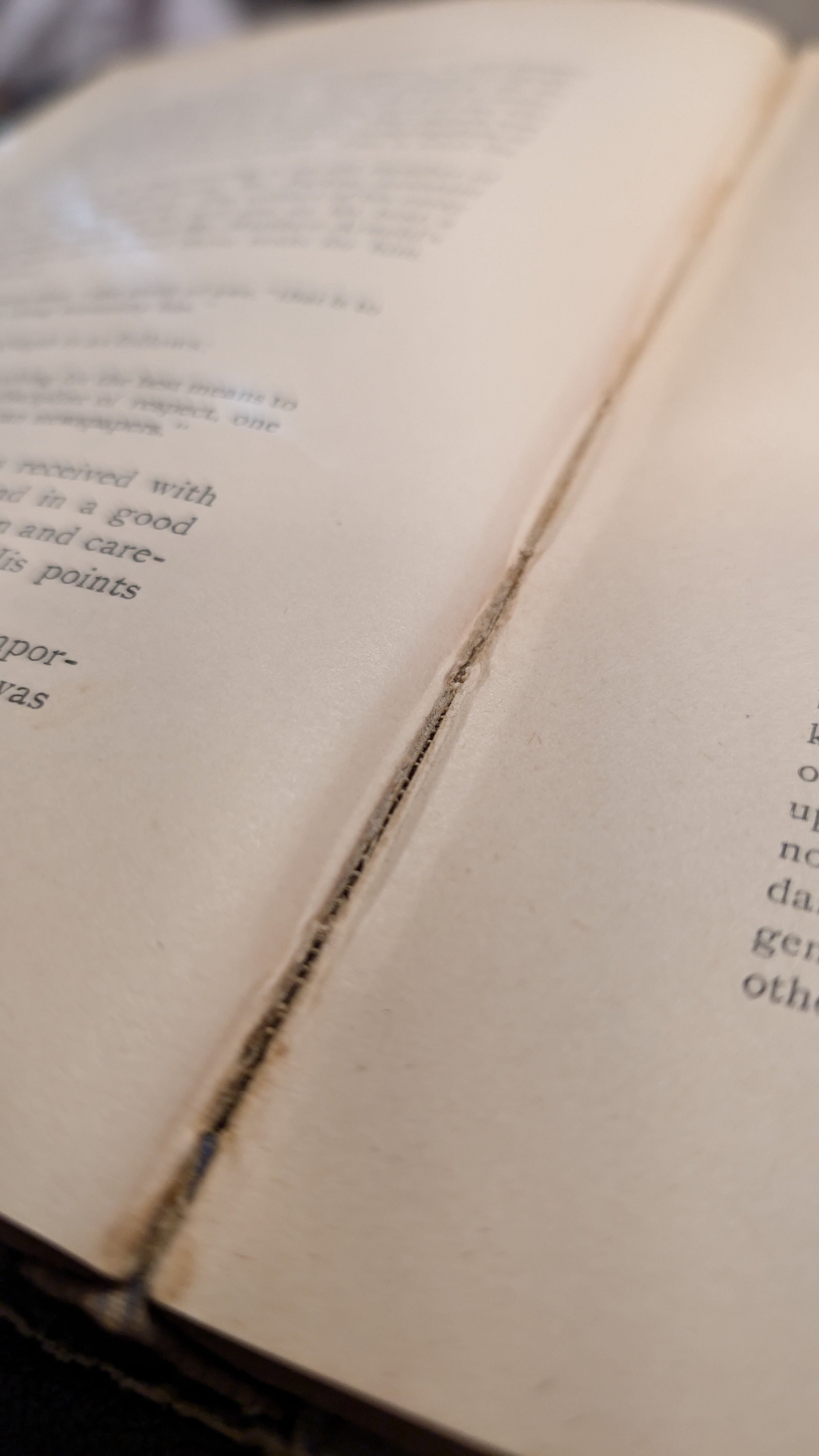
Condition Points: This copy is in Good condition. The binding remains remarkably tight and the text block is square. The boards show only slight bumping to the corners. There is visible staining and age-related discoloration to the fabric on the spine, which is common for this light-colored buckram.
Provenance: Includes a previous owner's name neatly inscribed on the front pastedown. Internally, the pages are clean, bright, and free of foxing or marginalia.
For the collector of Civil War literature or American classics, an 1896 Appleton printing is a highly desirable early state. While the 1895 first edition commands a high premium, this second edition features the identical iconic cover design and typography of the original. The structural soundness of this particular copy—specifically the tight binding—makes it a superior example for display. The minor spine discoloration is a characteristic mark of its 130-year journey, lending an authentic antiquarian patina to a volume that helped define modern American realism.
First published in 1895, Stephen Crane’s The Red Badge of Courage is a masterpiece of psychological realism that fundamentally changed American war literature. Unlike the romanticized battle narratives of the late 19th century, Crane—who had never seen combat at the time of writing—focused on the internal "mental struggle" of Private Henry Fleming. The novel’s raw depiction of fear, cowardice, and the eventual transition into a weary, hollowed-out courage remains one of the most accurate literary portrayals of the soldier's experience. This 1896 second edition was released during the height of the book's initial sensational success, capturing the moment Crane became an international literary phenomenon.
Edition: Second Edition (1896).
Publisher: D. Appleton and Company, New York.
Binding: Original tan buckram cloth with black and gold-stamped decorations on the front board and spine.
Condition Points: This copy is in Good condition. The binding remains remarkably tight and the text block is square. The boards show only slight bumping to the corners. There is visible staining and age-related discoloration to the fabric on the spine, which is common for this light-colored buckram.
Provenance: Includes a previous owner's name neatly inscribed on the front pastedown. Internally, the pages are clean, bright, and free of foxing or marginalia.
For the collector of Civil War literature or American classics, an 1896 Appleton printing is a highly desirable early state. While the 1895 first edition commands a high premium, this second edition features the identical iconic cover design and typography of the original. The structural soundness of this particular copy—specifically the tight binding—makes it a superior example for display. The minor spine discoloration is a characteristic mark of its 130-year journey, lending an authentic antiquarian patina to a volume that helped define modern American realism.