One of Steinbeck’s lesser-known works, this copy of “The Moon is Down,” is a later printing of the first edition, as evidenced by the lack of a period between “talk” and “this” on page 112. The book is in acceptable condition, with slight fading to the tops of the boards, slight shelf ware, some shelf ware to the price-clipped dust jacket, and bumping to the corners. Otherwise, the pages are very clean with no writing or marking.
The novel is a terse, morally urgent novella about occupation, resistance, and the quiet heroism of ordinary people. Set in a small, unnamed coastal town during an unspecified war, the story follows the arrival of invading troops who quickly seize control: the mayor, several town officials, shopkeepers, miners, and families find their daily lives upended by the presence of foreign soldiers.
The invaders—efficient, disciplined, and initially noncruel—establish order, arrest a few leaders, and attempt to run the town with military logic. The townspeople react in varied ways: some try to accommodate or collaborate out of fear or pragmatism; others resist through small acts of defiance and sabotage. Steinbeck concentrates on a handful of characters to show the moral texture of occupation: the thoughtful town mayor, who is proud and dignified yet ultimately powerless; Colonel Lanser, the commander, who is competent and humane but bound by duty; Captain Loft, who is more calculating; and Alex Morden, a quiet, principled schoolteacher whose son’s fate becomes a catalyst for local resistance.
Tension escalates as acts of sabotage—damaged machinery, disrupted supply lines, a railroad derailment—begin to erode the invaders’ control. The occupying force responds with increasing severity, including arrests and public executions, hoping to deter further unrest. Rather than crushing the spirit of the town, these measures deepen resentment and strengthen an emerging, collective resolve. Resistance becomes less about one leader and more about shared conscience: ordinary citizens take dangerous, often anonymous steps to reclaim dignity and freedom.
Steinbeck’s prose emphasizes moral questions over action: what it means to be free, how occupation dehumanizes both conqueror and conquered, and how courage can be found in the most unassuming people. The narrative resists neat resolution; victory and defeat are ambiguous. The invaders maintain military strength, yet the human will to resist persists and spreads, implying that moral victory belongs to those who refuse to be broken.
“The Moon Is Down” is both a specific wartime allegory and a universal meditation on oppression and resistance—an appeal to empathy, solidarity, and the quiet, cumulative power of everyday courage. Steinbeck’s spare, clear style and focus on character make the novella a poignant exploration of conscience under occupation.
This copy is perfect for the budget-conscious collector, for whom a first state may be out of reach.
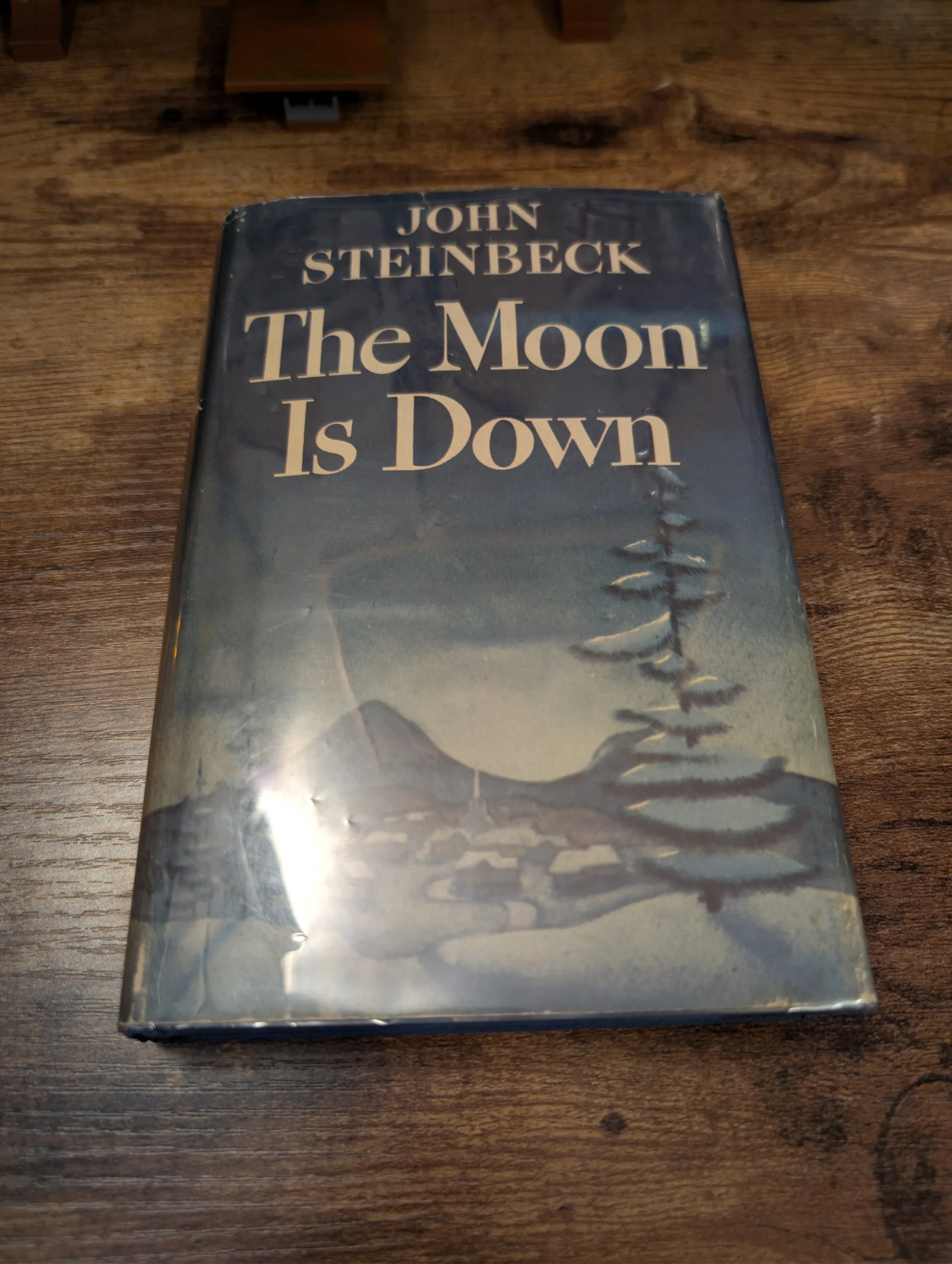 Image 1 of 7
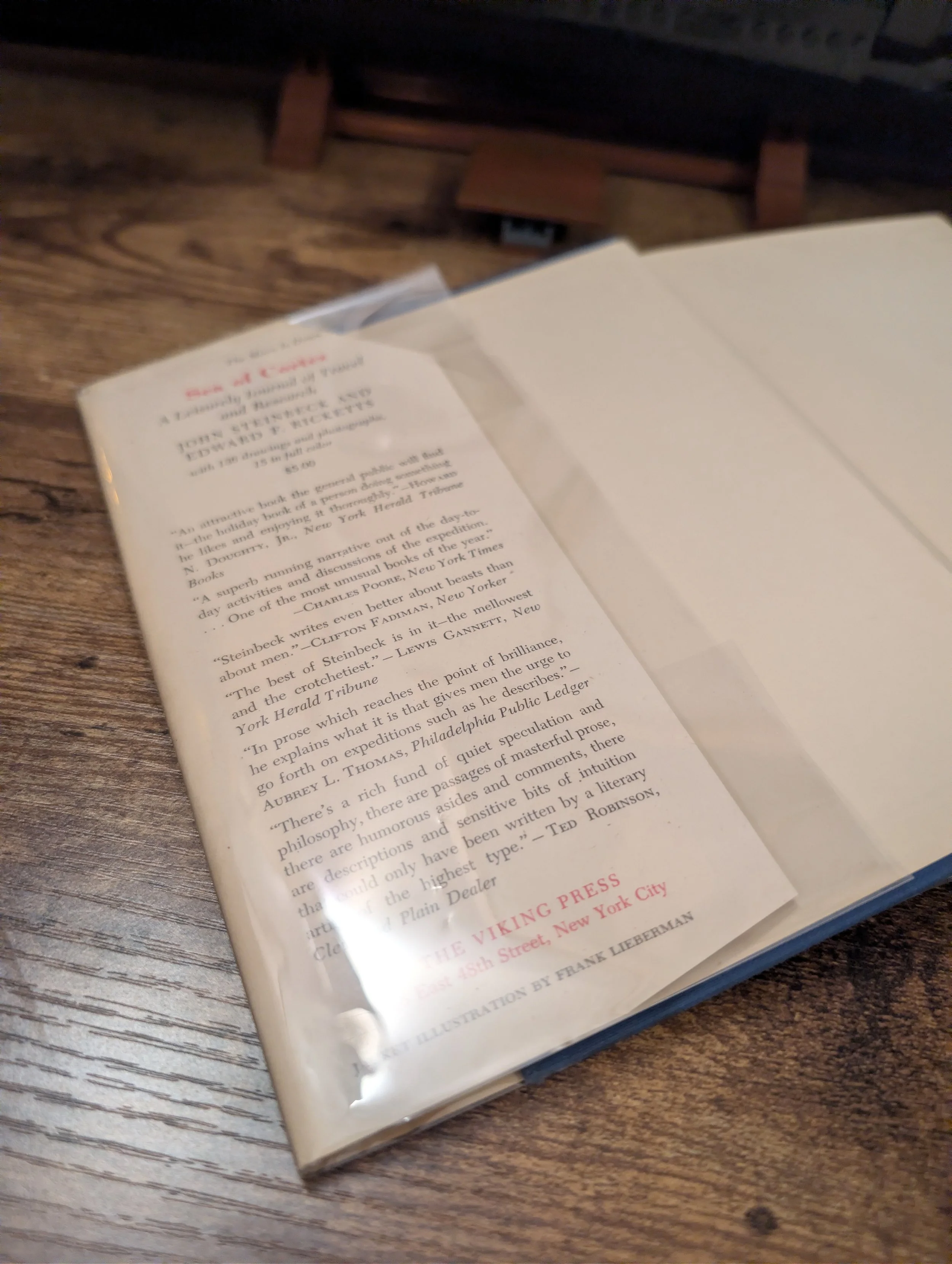 Image 2 of 7
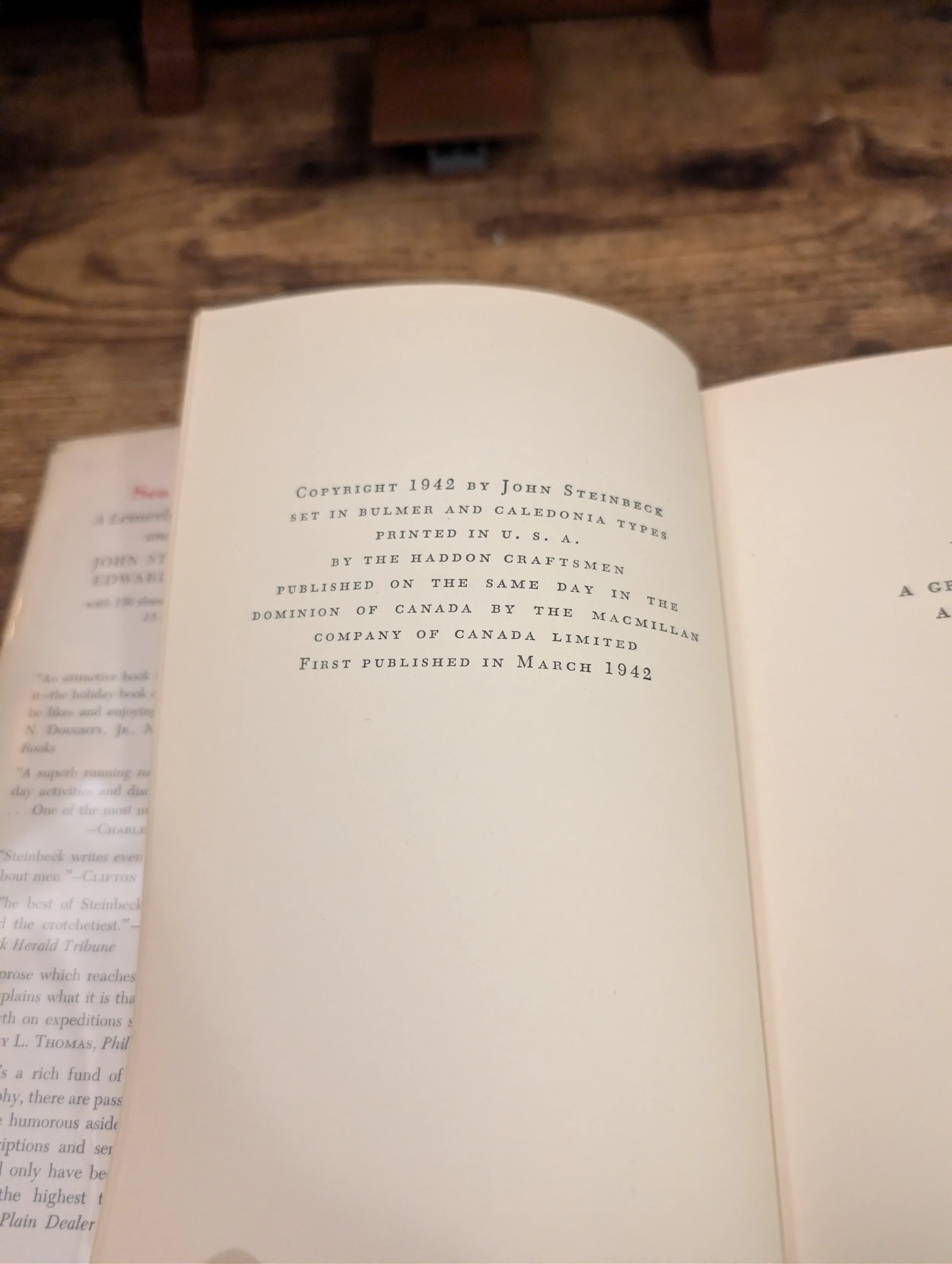 Image 3 of 7
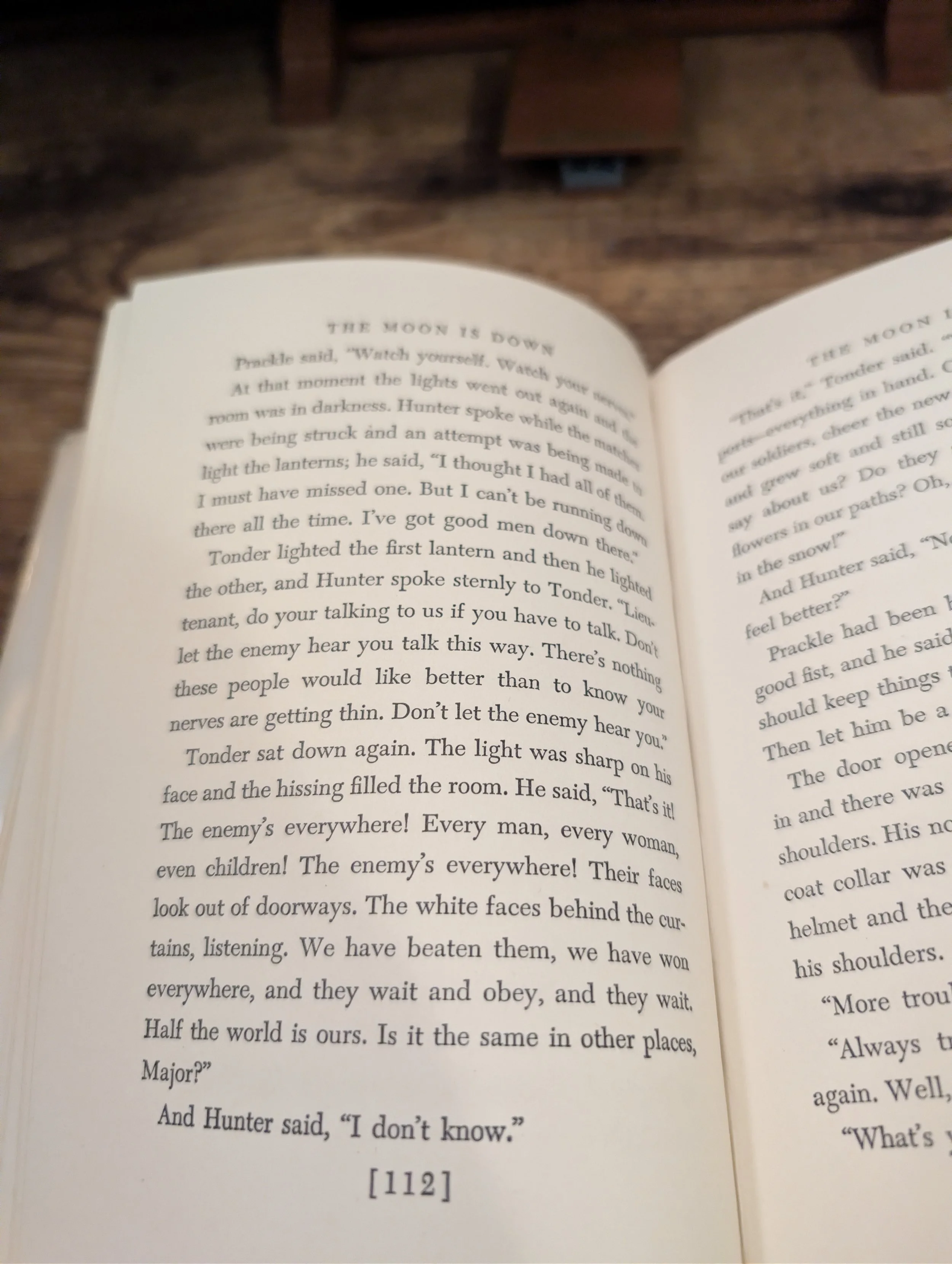 Image 4 of 7
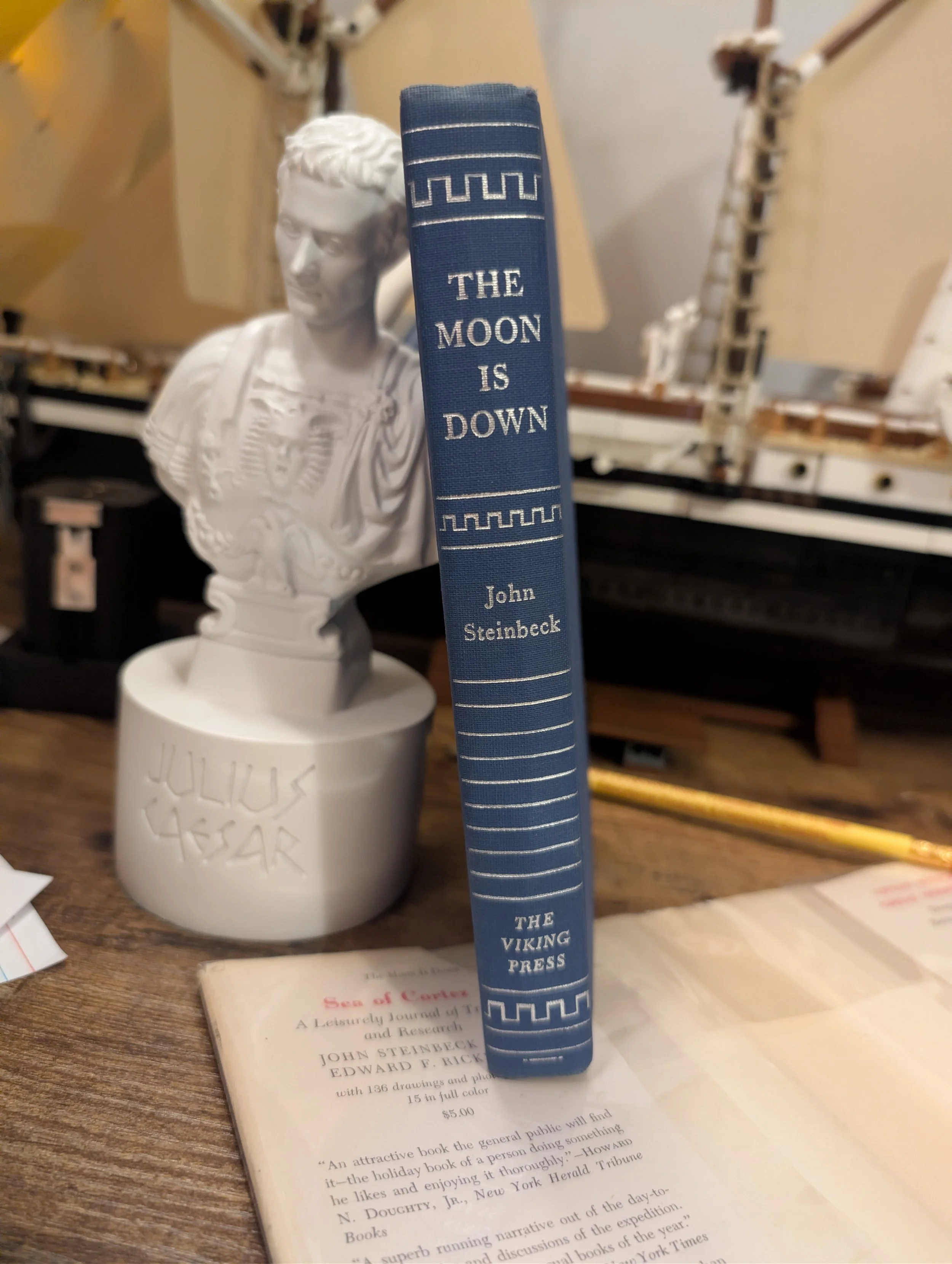 Image 5 of 7
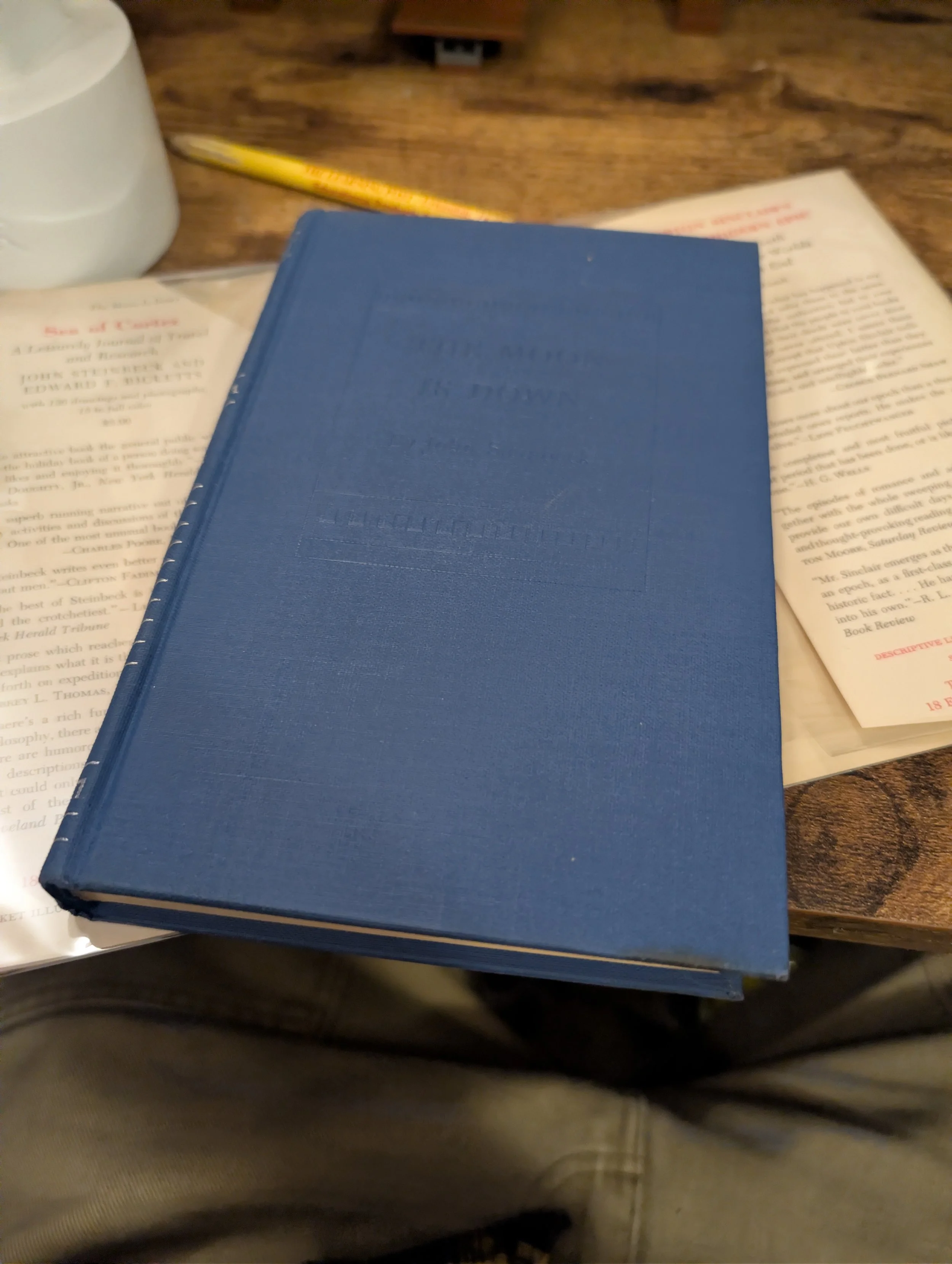 Image 6 of 7
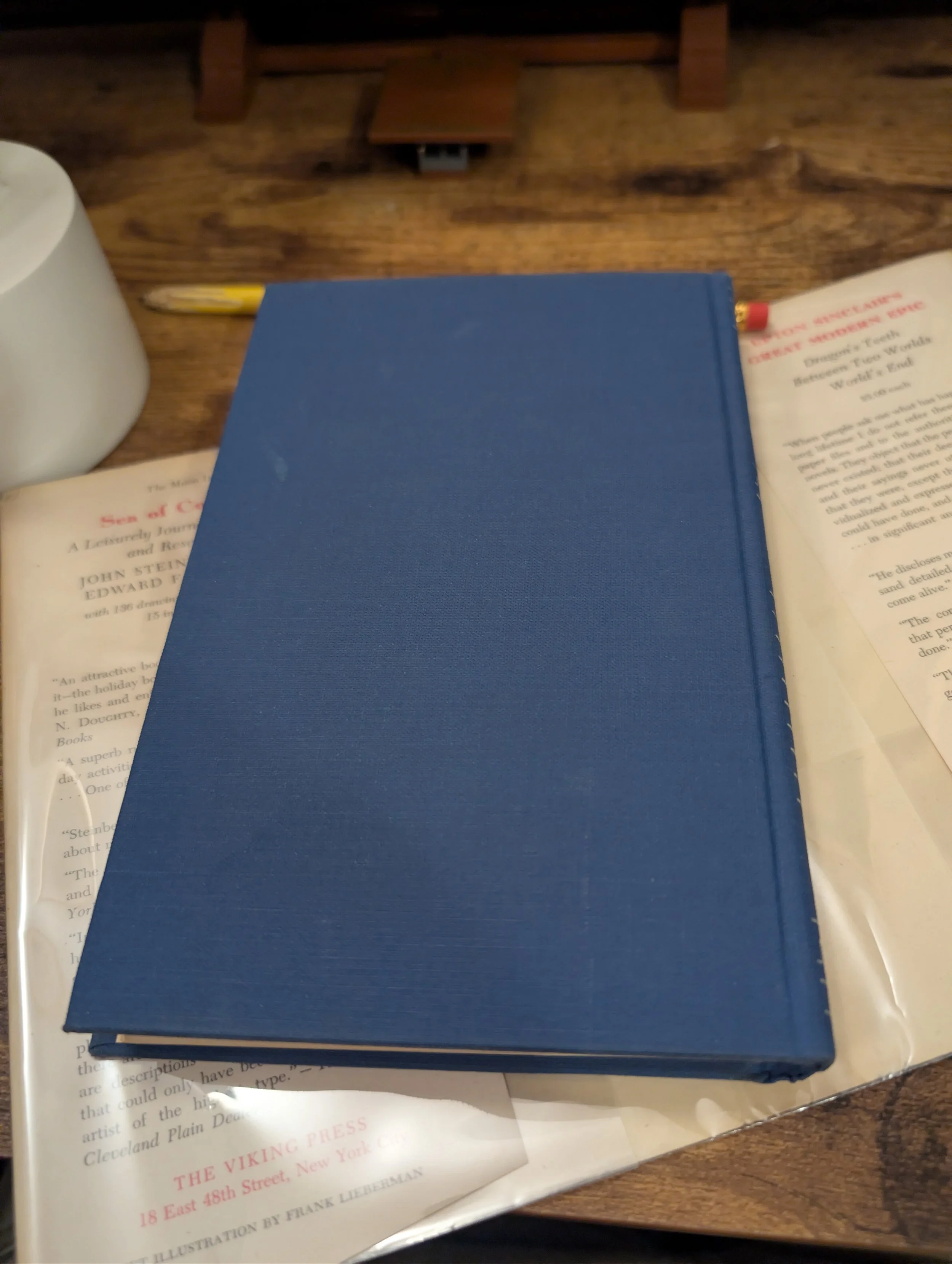 Image 7 of 7